
 close
close


 LOGIN
LOGINA deep dive into a goalkeeper's roles
The four principles of effective shot-stopping - defending the goal and space, starting and supporting build-up play and communicating.
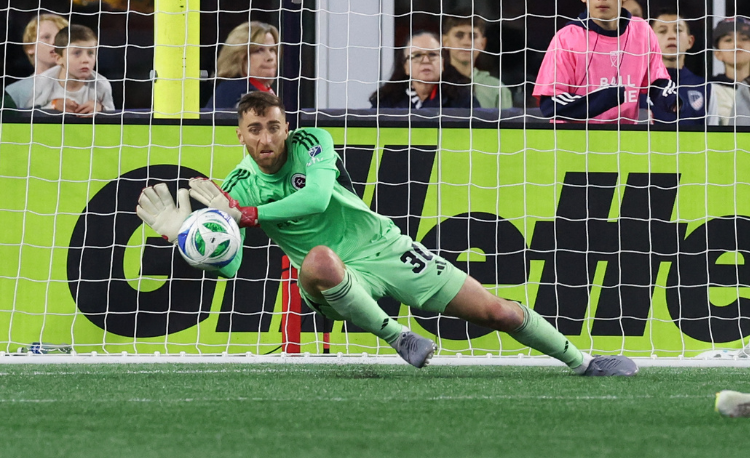
While this may sound obvious, it is vital to clearly understand the role of the goalkeeper before jumping ahead to training sessions or matchday preparation.
By having a clear understanding of what a ’keeper must do, specialist goalkeeping coaches can design training sessions and long-term development programmes to help maximise a shot-stopper’s development to ensure all game-relevant aspects of their performance are enhanced.
Likewise, outfield coaches will have a better understanding of how to best integrate ’keepers into team sessions to further aide their development, as well as how to incorporate goalkeepers into their game model to improve the overall performance of the team.
While the role a goalkeeper plays within a team is constantly evolving and becoming more complex as the demands placed on the position within the modern game increase, their primary role remains to keep the ball out of the goal.
It is possible to divide the goalkeeper’s duties into four distinct areas.
Out of possession, they must defend both the goal itself and the space in front of the goal. In possession, they must start and support build-up play. In both phases, they should communicate with team-mates to provide clear and relevant information.
"They must defend both the goal itself and the space in front of the goal..."
The exact actions performed by a goalkeeper will depend on a team’s style of play. A goalkeeper in a team which prioritises direct play may need a different skillset to one in a team which tries to dominate possession through short passing.
However, the four areas above remain vital to the role every goalkeeper will perform.
Out of possession - defend the goal
Keeping the ball out of the goal, fairly obviously, is the most important aspect of the goalkeeper’s primary role.
A keeper’s capacity to defend the goal is often referred to as their shot-stopping ability, a phrase which covers a wide range of goalkeeping actions.
To effectively defend the goal, goalkeepers must be capable of making saves from a variety of scenarios, including 1v1s, long-range shots, reaction saves and shots from cutbacks or crosses.
This requires a broad skillset, including...
- Physical skills: speed and power
- Technical skills: footwork, diving, handling and punching
- Psychological skills: concentration and confidence
- Tactical skills: decision-making and positioning
Ideally, a goalkeeper should be capable of making match-defining saves as well as limiting errors when dealing with less challenging shots.
Be a more effective, more successful youth soccer coach
- Win more games, without sacrificing the crucial element of fun
- Develop every player, regardless of vast differences in ability
- Run a respected, professional programme - even with a full-time job and limited time
Subscribe for full access
Or register and unlock 2 free articles,
receive our weekly newsletter, and
get a FREE coaching e-book.
Or if you are already a subscriber login for full access.

James Mayley
Latest Issue
Subscribe Today
Subscriber Testimonials
Gerald Kearney, Downtown Las Vegas Soccer Club

Paul Butler, Florida, USA

Rick Shields, Springboro, USA

Tony Green, Pierrefonds Titans, Quebec, Canada
Subscribe Today
Newsletter Sign Up
Coaches Testimonials
Gerald Kearney, Downtown Las Vegas Soccer Club
Paul Butler, Florida, USA
Rick Shields, Springboro, USA
Tony Green, Pierrefonds Titans, Quebec, Canada
Subscribe Today
Latest Issue
Discover the simple way to become a more effective, more successful soccer coach
In a recent survey 89% of subscribers said Soccer Coach Weekly makes them more confident, 91% said Soccer Coach Weekly makes them a more effective coach and 93% said Soccer Coach Weekly makes them more inspired.
*includes 3 coaching manuals
Get Weekly Inspiration
All the latest techniques and approaches


Soccer Coach Weekly offers proven and easy to use soccer drills, coaching sessions, practice plans, small-sided games, warm-ups, training tips and advice.
We've been at the cutting edge of soccer coaching since we launched in 2007, creating resources for the grassroots youth coach, following best practice from around the world and insights from the professional game.
