
 close
close


 LOGIN
LOGINYou are viewing 1 of 1 free articles
Academy rewards
Ex-Luton Town foundation-phase lead ROSS O’KANE tells SCOTT MOWBERRY about getting the best out of young players at both elite and grassroots levels


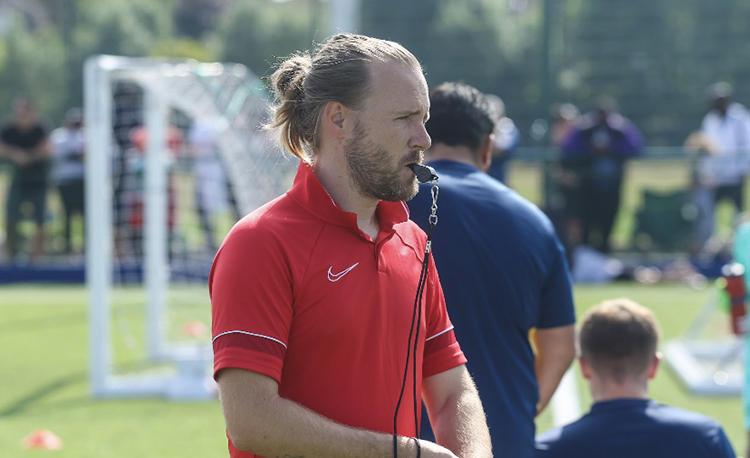
The work of elite academies can seem a world away from the organised chaos of grassroots youth soccer.
But there is plenty to be taken from the way coaches in that selective environment go about developing their players.
Scott Mowberry, from the Soccer Coaching Podcast, has been speaking to Ross O’Kane, who until last month was foundation-phase lead at Luton Town, where he oversaw the progress of the club’s very youngest players.
He discusses his passion for putting smiles on young faces, discloses his recruitment approach and gives advice to grassroots coaches working with similar ages…
SM: A lot of coaches aspire to work up the age groups and rush to get to the older ones. But your passion seems to lie more with the younger players?
RO’K: “I did a little bit of coaching with 16 and 17-year-olds and, if I’m honest, it didn’t give me something. I think with any job you do, you’ve got to get something in return, and I didn’t get that passion at the time.
"Coaching the youngsters was brilliant, because they looked up to you - and I think having a male role model for some children was really important.
"I got lots back from working with young players that just wanted to learn. Over the years, I’ve understood that I want to be a specialist in the foundation phase, and an advocate for the idea that the best coaches should work with the youngest players."
SM: What does player development mean to you?
RO’K: "The individual is at the heart of everything. How they fit into the team is more important later on.
"We used to take our U8s away on tour. Coming back from that, you knew they were comfortable with us as staff, they bought into how we wanted to do things and I think we lit a bit of their fire for the game.
"When you’re inspiring these young people, if you can light that fire or show how much you love something, it’s incredible.
"If you only train and play, and there’s nothing outside of that - no life skills, no bonding sessions, no tournaments where the group are together - I think you’re missing something for the players’ development.
"From the psychological and social side, it allows you to see the player in a more rounded way. If you see someone on the periphery, you might make them captain for the weekend, because you’re going to bring something out of them - you’re going to give them a belonging, and a purpose, which sometimes they question.
"When you’re inspiring these young people, if you can light that fire, then it’s incredible..."
"If we say there’s a 1% chance of someone playing in the Premier League, then for the 99%, what is it we’re putting in place for them when they leave us?
"If they leave at 13 or 14, have we given them stability? Have we given them experiences? Have we given them memories?
"I’ve seen some good coaches get some of that stuff wrong and I’ve seen some under-qualified coaches do that unbelievably well.
"I would always pin my badge to someone that is able to engage with a young person over someone that’s qualified."
SM: How do you describe your approach? Some of the stuff you do is a bit different to your average foundation-phase session...
RO’K: "Everyone can put on a really good session. I think how you put on your session is important.
"[It’s about] the interaction from them walking in the gate. Ask questions about them - how’s your day been?
What have you been doing? And they smile. The engagement factor on turning up is king.
"Every session would be high energy, lots of competition, massively engaging for players and short and sharp - 15-20 minutes.
"In the foundation phase, the balance was 75% or 80% technical practice. That might be unopposed, it might be opposed. I personally lean more towards opposed, so there’s more pictures, space and understanding.
"We’re trying to tick more boxes, not just that technical part. But you can’t go into a practice teaching something if they haven’t got the technical understanding.
"So a six-week block might have some parts that are highly unopposed. I hide that in the arrival activity. They just think an arrival activity is going to get us warmed up, but I know the repetition value - so when we go into the ’part’ of the whole-part-hole, it allows them to put the jigsaw in place.
"Some it takes a little bit longer for, but you’ve got to understand that. They will be ahead somewhere else, mark my words.
"You’ve got to understand their backgrounds, their parents and you’ve got to have an interest in what they’re doing."

SM: Sometimes the work in an academy is a bit cloak-and-dagger. What are you looking for in the players?
RO’K: "A lot of the players at Luton were recruited by me personally. We look at it in terms of what qualities do they have and what positions do we think we’re going to play them in through the foundation phase?
"One player was not the best mover, but had a good football brain, could play with both feet and was at the time quite gangly.
"So we said we can sign him and play him as a centre-half. We saw no value in playing him as a winger or centre-forward. Centre-half and centre-forward would be quite similar for some, but we thought his mobility would stop it, longer term.
"There’s other players we still mix and match, but we don’t waste their development time. To be a full-back or a winger, you need to be agile, quick and track back - If you can’t be, we’re not playing you out there.
"If you can finish, you’re playing up front, because that is gold dust. I remember reading something about Michael Owen, at Liverpool, playing a year down so he could score more goals. That makes sense to me.
"Luton had [future Ireland international] Kevin Foley, who was in a year group that had three or four very good central midfielders.
"They played him down for two years. And when he went back in his own age group, he played up two years. He went on to Wolves, so it works.
"Some players are signed to help others. One of the lads in our U15s now, we signed as a seven-year-old - he’s big, strong, powerful, very athletic.
"We knew he would help others because he would go around being physical, kicking them, making them think and check their shoulders.
"A session may look great but how much learning goes on? There has to be chaos..."
"We took what we would class as a project player and, later on, he’s the first one that gets scholared. Fair play to him, because he’s been brilliant every year, getting better and hungrier, so the program helped him.
"But I do think if different people were in charge, maybe that wouldn’t have happened. Clubs want the here and now, I don’t think they look at later on down the line. That’s why there is a lot of turnovers in academies."
SM: What advice would you give grassroots coaches, working with U8s, U9s and U10s?
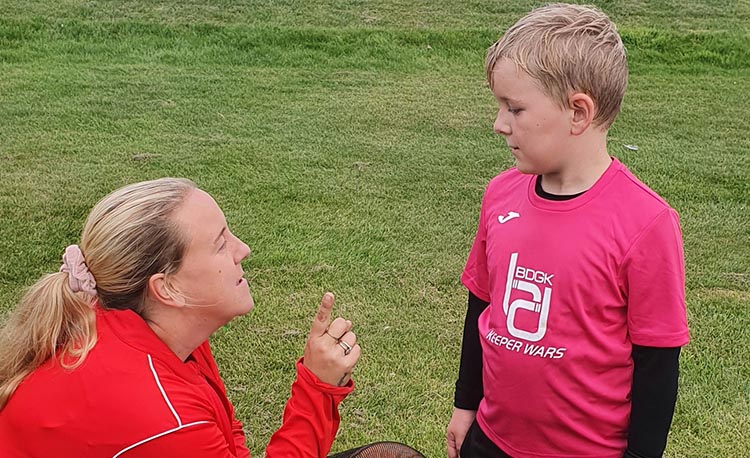
RO’K: "Children are there because they want to play. For me, especially with U8s, U9s and U10s, it would be very much game-based. They’re engaged, because it’s a game.
"In terms of learning, I think that’s more difficult at grassroots. This is where experience and understanding the psyche of a young person comes in.
"Everyone develops at their own rate, even us. If you’re pulling your hair out, running around after the one that doesn’t want to do it, what about the others that do who are losing you?
"I’ve got an hour a week - if I’m lucky, an hour and a half. I want it to be fun. I don’t want it to be ’stop, stand still, everyone in a line, let’s have one shot’, when there’s a goal down the other end not being used.
"A perfect session looks great but how much learning is going on? There has to be chaos - 2 1v1s going in different directions, two balls, players trying to figure out where they go next. Sit back, let it go off for 90 seconds. Stop it, have a point, go again."
Related Files

Scott Mowberry
Latest Issue
Subscribe Today
Subscriber Testimonials
Gerald Kearney, Downtown Las Vegas Soccer Club
Paul Butler, Florida, USA
Rick Shields, Springboro, USA
Tony Green, Pierrefonds Titans, Quebec, Canada
Subscribe Today
Newsletter Sign Up

Coaches Testimonials
Gerald Kearney, Downtown Las Vegas Soccer Club
Paul Butler, Florida, USA
Rick Shields, Springboro, USA
Tony Green, Pierrefonds Titans, Quebec, Canada
Subscribe Today
Latest Issue

Discover the simple way to become a more effective, more successful soccer coach
In a recent survey 89% of subscribers said Soccer Coach Weekly makes them more confident, 91% said Soccer Coach Weekly makes them a more effective coach and 93% said Soccer Coach Weekly makes them more inspired.
*includes 3 coaching manuals
Get Weekly Inspiration
All the latest techniques and approaches


Soccer Coach Weekly offers proven and easy to use soccer drills, coaching sessions, practice plans, small-sided games, warm-ups, training tips and advice.
We've been at the cutting edge of soccer coaching since we launched in 2007, creating resources for the grassroots youth coach, following best practice from around the world and insights from the professional game.
