
 close
close


 LOGIN
LOGINYou are viewing 1 of 1 free articles
Applying science of 'ecological dynamics'
Don’t worry, it’s less complicated than it sounds. BEN FRANKS explains to SCW’s STEPH FAIRBAIRN the benefits of creating realistic environments in practices


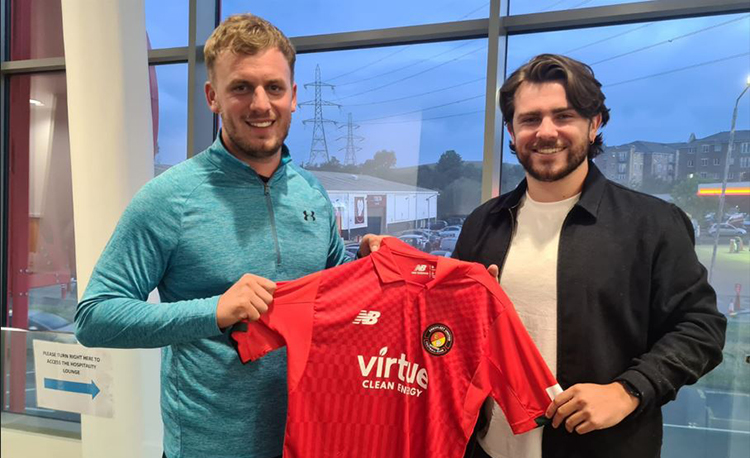
After two serious injuries in consecutive seasons, non-League player Ben Franks turned to another area of the game he had always been interested in – coaching.
He chose university as the route of entry, doing an undergraduate degree in sport, coaching and physical education, a Masters by research in sport and health sciences, and is now studying for a PhD in perceptual-motor learning.
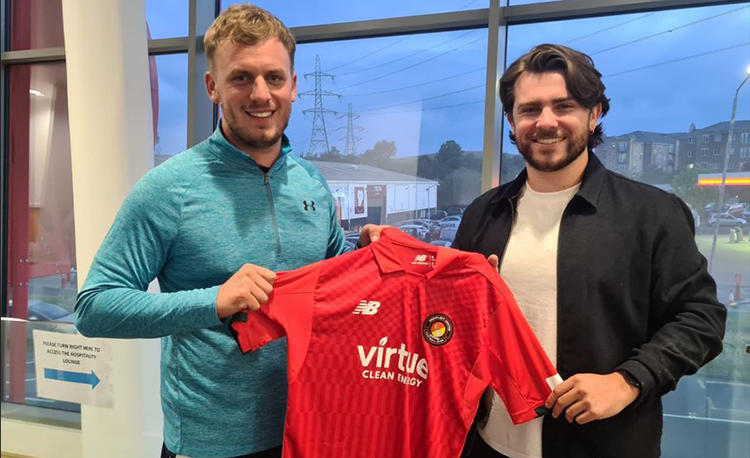
He is also a coach developer at Boing Kids, a lecturer at Oxford Brookes University, and was recently announced as a first-team coach at Ebbsfleet United Women.
A key element of Ben’s research is ecological dynamics. SCW caught up with him to find out what that is in the context of soccer and how it helps in session design…
SCW: Can you explain what ecological dynamics means?
BF: “Roughly, it is a theoretical framework which explains motor behaviour and skill adaptability.
"It’s a nice way to explain why skilled performers behave the way they do, and how we can then enhance the learning process that underpins that.
"Traditionally, we’ve viewed skill learning in the old school ways, of schema theory and representations and mental models.
"Ecological dynamics is bit more interaction-focused. It views the organism - the human - and their environment as being mutually coupled.
"Rather than being some kind of predicting machine, we are in tune with what happens around us and we act and exist by staying in touch with the information that surrounds us. It is founded on this direct perception thing.
"What we perceive visually, we are sensitive to - so we don’t need to take and store pictures, like some kind of memory bank, in our brain.
"Our perceptual systems - our brain, eyes and body - is coupled to certain parts of that information field that we can see. And that’s then how we act."
SCW: What are some useful things for coaches to know about the approach that could be helpful to them in their practice??
BF: "Ecological dynamics makes sense to me because we exist in real time in that environment. So we need to make sure that in training design, we represent - or design in - the right kinds of information that they’re going to see and use in a performance environment.
"Ecological dynamics views the human and their environment as mutually coupled..."
“If we’re teaching a novice how to dribble and we put cones on the floor, the information is the cones. They’re going to look for the cones to go around.
"But one of our biggest coaching points when teaching someone how to dribble is to keep your head up. We’ve just completely eradicated that by placing cones on the floor.
"You see coaches saying ’Look up, look up’. But the way we’ve shaped that environment is presenting the wrong kind of information.
“So trying to represent things that are relevant and actually exist is most important. That doesn’t have to look like an 11v11 game all the time - we can strip it back to the things that are most relevant.
"When I was a goalkeeper coach, we used to use a lot of coloured tape on different areas of the body or on the ball, to help them pick up certain kinds of information.
"So say our theme that week was working on shots from the angle and trying to pick up the trajectory of the ball - if it was spinning or dipping, we’d put luminous colour tape on the ball to help the youth goalkeepers pick up the trajectory of the ball, how it is spinning and moving.
“It’s just about trying to present things that are going to transfer across domains, presenting information which is most relevant that’s going to underpin and support their performance.
"I think too many times we overly or artificially constrain things too frequently. We lose some of the nuance of practice, and that’s how we’re going to get transfer.
"If we start to learn the dynamics of what’s actually going to happen in the performance, we have to in some way start to design that into our training designs.”
SCW: Is it a lot of show rather than tell? Present the environment, rather than talk about the environment?
BF: "There’s nuance to it. There’s an element of the context you’re working in and the individuals you have.
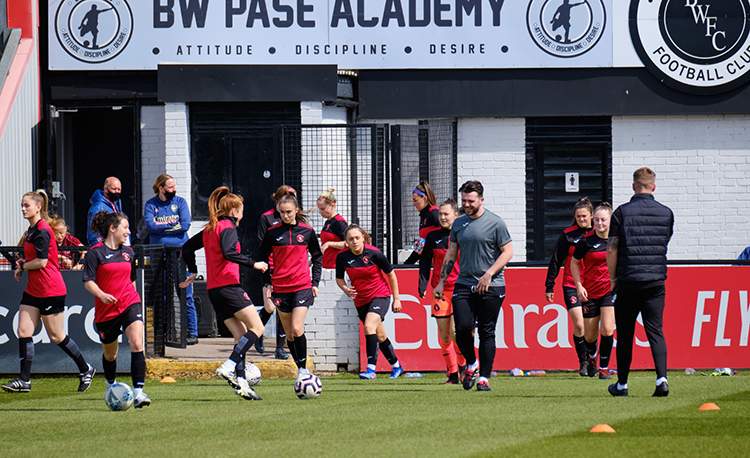
"If I’m working with young people, we want them to be playing and exploring, and we want them to be active, solving problems, making mistakes and experimenting with different things.
"So, yes, we would definitely say less and let the environment, and how we are active in structuring and shaping the environment, allow the learning to take place.
“But I know when I go back to pre-season, there’ll be more of an element of me saying some stuff and telling them some things, but for different reasons.
"It’s not binary. But I would probably put myself more on the side of designing really good environments - that will do a lot of talking for you. It means you can just dip in and out with key things, or you might direct their attention somewhere.
“With goalkeepers, for example, I might set up a really good environment, but they might be struggling to access it.
"I think we artificially constrain things too frequently and lose some of the nuance..."
"So I might guide their attention - where to look, but not what to see. They’re still having to explore, I’ve just put in a bit of scaffolding to try and structure that learning environment.”
SCW: What are some of the key principles of environment design?
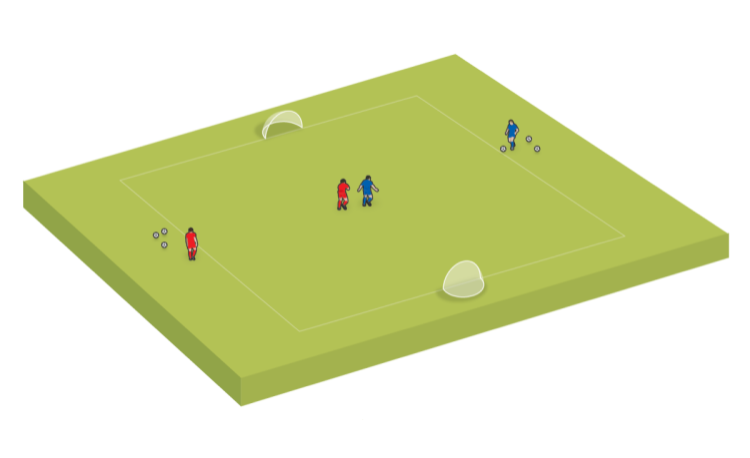
BF: "Start with the game moment you want to work on. That’s your theme. Then you have just got to clip part of the pitch.
"If we’re looking at attacking in wide areas, we want to work on something that is going to get lots of repetitions - we can’t just play on an 11v11 [sized pitch].
"So I’m going to clip parts of the pitch where I’m going to see those interactions happen most often and then try and turn that into a more nuanced session design.
“It’s not necessarily the right way or the wrong way, but I tend to start with the big picture - what’s the themes we’re working on at the moment? Is there some reactive stuff we need to do from the game that’s just gone? Is there some proactive stuff that’s part of our curriculum? If so, what does that look like on the bigger picture on the pitch?
"Then we start to clip those areas and design that into the practice. So we get the right repetition, but it’s repetition without repetition. There’s some variability involved.
“I might be getting loads and loads of goes at attacking from wide areas but the problem is always slightly different, because we’re going to make sure there’s enough variability in there. There’s different ways of getting that same outcome.
"It might be changing where the defenders start, it might be changing the number of defenders, it might be changing the pass I receive to then attack the wide area, or it might be I just start with the ball in the wide area.
"It’s then just playing around with those components of the game, which will then give us that variability of that clipped moment that we’ve taken from the game."
Related Files

Steph Fairbairn
Latest Issue
Subscribe Today
Subscriber Testimonials
Gerald Kearney, Downtown Las Vegas Soccer Club
Paul Butler, Florida, USA

Rick Shields, Springboro, USA

Tony Green, Pierrefonds Titans, Quebec, Canada
Subscribe Today
Newsletter Sign Up
Coaches Testimonials
Gerald Kearney, Downtown Las Vegas Soccer Club
Paul Butler, Florida, USA
Rick Shields, Springboro, USA
Tony Green, Pierrefonds Titans, Quebec, Canada
Subscribe Today
Latest Issue

Discover the simple way to become a more effective, more successful soccer coach
In a recent survey 89% of subscribers said Soccer Coach Weekly makes them more confident, 91% said Soccer Coach Weekly makes them a more effective coach and 93% said Soccer Coach Weekly makes them more inspired.
*includes 3 coaching manuals
Get Weekly Inspiration
All the latest techniques and approaches


Soccer Coach Weekly offers proven and easy to use soccer drills, coaching sessions, practice plans, small-sided games, warm-ups, training tips and advice.
We've been at the cutting edge of soccer coaching since we launched in 2007, creating resources for the grassroots youth coach, following best practice from around the world and insights from the professional game.
