
 close
close


 LOGIN
LOGINYou are viewing 1 of 1 free articles
How to demonstrate for your players
From the elite level down to the grassroots youth game, players learn better when shown what to do. Actions speak louder than words, says Rob Atkin


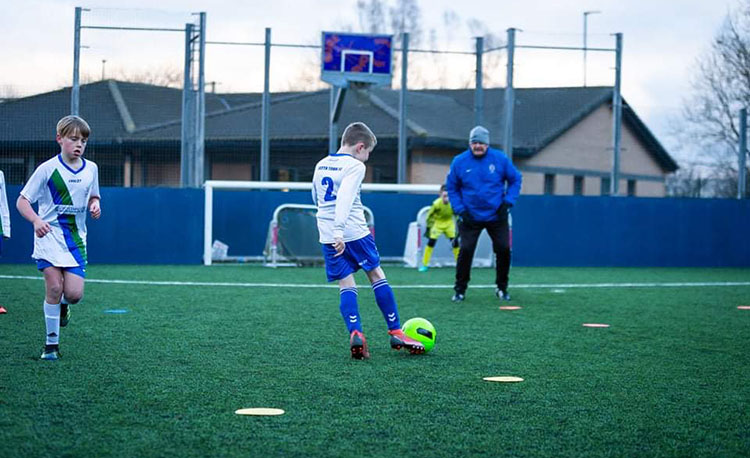
“Tell me and I forget - show me and I remember,” was a well-used mantra when I started my coaching journey in 1985.
Being able to demonstrate to your coaching group an individual skill, movement off the ball or a tactical point was a major part of your final assessment.
It remains an important part of practices at all levels of the game. In Eddie Howe’s first training session at Newcastle United, he spent time demonstrating the runs he wanted the players to make.
And for young players, seeing a demo can motivate them to go away and practice themselves, until they are able to take the technique or skill into a game. Kids are the best copiers - give them good examples that are simple to follow and it can accelerate their individual learning.
Obviously, since I started coaching, things have evolved. Some introductory courses are done online, allowing more coaches to get involved much quicker.
But as they move up the ladder, coaches will need to show they can demonstrate a technique, be it a dribbling move or delivering a Davd Beckham-esque cross into the second six-yard box.
If you are a coach who currently plays, or has played, then demos might come easier. But that is not to say that those who haven’t played shouldn’t give demos a go.
Practice makes permanent. We apply that concept to our players, so why not apply it to ourselves? It’s never too late to learn new techniques and make demonstrations a big part of your coaching delivery.
There may be limits to your demos, though. For example, if sprinting flat out is not an option for you, slow things down when you demonstrate by walking.
Another option is to get players involved in demonstrations, especially if some have worked hard away from the weekly sessions to reach a competent level as a demonstrator. Asking them to show off their skills to their teammates can only build their confidence and impress and motivate their peers to practice.
Video footage can also be useful. Sharing 30 seconds of film with your players on an iPad can be invaluable, raising discussions among your group around creative play and allowing you to use the question and answer coaching style.
Youngsters all learn in different ways - most are a mix of visual, auditory, reading and writing, and kinesthetic learners.
Whatever way you choose to incorporate demos into your practice - whether it be you doing them, players doing them, or sharing video footage - you are adding another layer to a child’s knowledge and providing another opportunity for them to learn and be inspired.
Adding demonstrations to your coaching will give you a better chance of connecting with and developing as many players as possible.
5 TIPS FOR MAKING YOUR DEMOS AS EFFECTIVE AS POSSIBLE
1. OBSERVE YOUR PLAYERS: This will help you identify which ones need to be shown what is required to improve their performance.
2. KEEP IT BRIEF: A demo should last seconds, rather than minutes. Get in, make your point, then get out and let the players give it a go. Also, consider giving players homework tasks to go and practice before the next session.
3. BE VISIBLE: Ensure everyone can see and hear you, even if they have to move.
4. KEEP A PICTURE IN YOUR HEAD: When pausing a game to demo, your observation skills have to be spot on to recreate a picture of when and where play broke down. Opposition players may try and change the picture by stealing a few yards – beware!
5. ONE SIZE DOESN’T FIT ALL: When working with individuals on ball familiarity technical work, for example, you will naturally have strivers and strugglers. The strivers may need to be challenged further, perhaps by tasking them with learning the same thing using their less-favoured foot. This allows you to spend a bit more time with the individuals who need a bit longer to take the visual messages on board.
Related Files
Latest Issue
Subscribe Today
Subscriber Testimonials

Gerald Kearney, Downtown Las Vegas Soccer Club

Paul Butler, Florida, USA

Rick Shields, Springboro, USA

Tony Green, Pierrefonds Titans, Quebec, Canada
Subscribe Today
Newsletter Sign Up
Coaches Testimonials
Gerald Kearney, Downtown Las Vegas Soccer Club
Paul Butler, Florida, USA
Rick Shields, Springboro, USA
Tony Green, Pierrefonds Titans, Quebec, Canada
Subscribe Today
Latest Issue

Discover the simple way to become a more effective, more successful soccer coach
In a recent survey 89% of subscribers said Soccer Coach Weekly makes them more confident, 91% said Soccer Coach Weekly makes them a more effective coach and 93% said Soccer Coach Weekly makes them more inspired.
*includes 3 coaching manuals
Get Weekly Inspiration
All the latest techniques and approaches


Soccer Coach Weekly offers proven and easy to use soccer drills, coaching sessions, practice plans, small-sided games, warm-ups, training tips and advice.
We've been at the cutting edge of soccer coaching since we launched in 2007, creating resources for the grassroots youth coach, following best practice from around the world and insights from the professional game.
