
 close
close


 LOGIN
LOGINDeveloping soccer skills: Intercepting
Moritz Kossmann explains to Steph Fairbairn the technical and tactical theories of successfully cutting out passes.
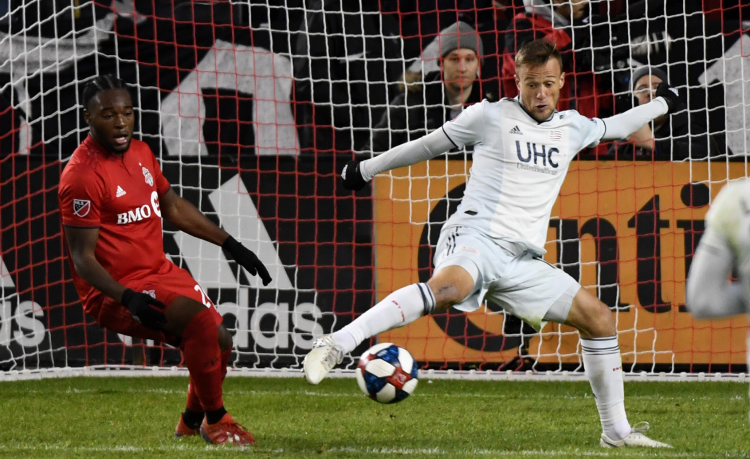
Moritz Kossmann is DStv Diski Challenge coach and head of youth at Cape Town City in South Africa.
Soccer Coach Weekly caught up with Moritz to discuss the crucial skill of intercepting.
He covers whether it’s a natural action for players, how important communication is alongside it, and how players can build up their knowledge around it as they progress...
SCW: Is intercepting something that comes pretty naturally to young players in the sense that they want to go where the ball is and want to win it?
MK: I think so. Intercepting is the cleanest way to win the ball from the opponent, so it does make sense to start our players with that.
But because a lot of coaches all over the world start with the ’close down, slow down, sit down’ method, what happens is they only close down an opponent player once that player has received the ball.
With intercepting, the main part of it happens while the ball is travelling. So you really need to use that moment, of the ball not being under the control of any opponent player, to make your move as a defender.
That is most crucial – you are working and really sprinting while the ball’s on the way.
But if you are doing this before the ball has been passed, then players will be able to pick you off.
Sergio Busquets often used to fake a pass into a direction, so the opponent player would bite on that ’pass’ and start to run to anticipate and intercept. But then Busquets would pass the ball into the area the defender came from.
Obviously, as the game has gone along, that kind of clever nuanced play by attackers has become more common. Therefore, timing your moment to intercept is crucial.
A lot of coaches will coach this ’half and half’ defensive position. What that means is they want their players to not be too close to any single opponent, but between several opponent attackers.
When you are equidistant from them, you are more able to pick off several passing options. You are able to step in and intercept various different possible ball progressions and it becomes more possible to win the ball soon.
SCW: How important is it that the players around the player who is doing the intercepting are supporting and communicating, ready for the next move?
MK: It’s crucial. Firstly, consider this following scenario.
If, as a defender, my natural preference, or even my team’s preference, is to be very aggressive in defending, we are going to look to intercept the ball more often.
[Let’s say] I do this in a game, but I don’t manage to intercept the ball - the opponent gathers it. If my team-mates haven’t shifted through and supported me, this opponent punishes my defensive action, turns into space and a counter-attack starts.
What will happen in my head? Most likely, I’m going to think twice about the next time I look to step in, intercept and be aggressive, because the last time it happened, our team got punished with a negative play.
Just as it is important to support a ball carrier in possession, it is also important to support the pressing player - because they are most likely going to vacate a space. That space then needs to be filled by other players that initially were further away.
If that is done well, the risk of a negative play - if I don’t manage to successfully make my interception - is minimised.
I think it is very natural for players to step out, be aggressive and take chances in defence when they feel there is cover behind their back. For me, that is a very crucial element.
Generally, a good rule when it comes to communication is that players behind and further away, who can see the whole play, coach the players in front of them who are more intrinsically involved in the action, helping with information.
Nowadays, especially at a high level, we need good collective defensive actions. We can’t be defending as individuals, because top players are so adept at attacking against those who are pressing them.
We need to always be prepared that our defensive actions may be unsuccessful. But we also need to ensure that our pressure on the ball is maintained after one player’s defensive action.
One defensive action might lead to a slightly more sloppy attacking action, which might lead to another sloppy attacking action and then maybe by player two or three, we’re winning the ball.
At a high level, the interception is often a consequence of the pressure that was put on the ball earlier.
"An interception is often a consequence of the pressure that was put on the ball earlier..."
Be a more effective, more successful youth soccer coach
- Win more games, without sacrificing the crucial element of fun
- Develop every player, regardless of vast differences in ability
- Run a respected, professional programme - even with a full-time job and limited time
Subscribe for full access
Or register and unlock 2 free articles,
receive our weekly newsletter, and
get a FREE coaching e-book.
Or if you are already a subscriber login for full access.
Latest Issue

Subscribe Today
Subscriber Testimonials

Gerald Kearney, Downtown Las Vegas Soccer Club

Paul Butler, Florida, USA

Rick Shields, Springboro, USA

Tony Green, Pierrefonds Titans, Quebec, Canada
Subscribe Today
Newsletter Sign Up
Coaches Testimonials
Gerald Kearney, Downtown Las Vegas Soccer Club
Paul Butler, Florida, USA
Rick Shields, Springboro, USA
Tony Green, Pierrefonds Titans, Quebec, Canada
Subscribe Today
Latest Issue

Discover the simple way to become a more effective, more successful soccer coach
In a recent survey 89% of subscribers said Soccer Coach Weekly makes them more confident, 91% said Soccer Coach Weekly makes them a more effective coach and 93% said Soccer Coach Weekly makes them more inspired.
*includes 3 coaching manuals
Get Weekly Inspiration
All the latest techniques and approaches


Soccer Coach Weekly offers proven and easy to use soccer drills, coaching sessions, practice plans, small-sided games, warm-ups, training tips and advice.
We've been at the cutting edge of soccer coaching since we launched in 2007, creating resources for the grassroots youth coach, following best practice from around the world and insights from the professional game.
