
 close
close


 LOGIN
LOGINDeveloping soccer skills: receiving
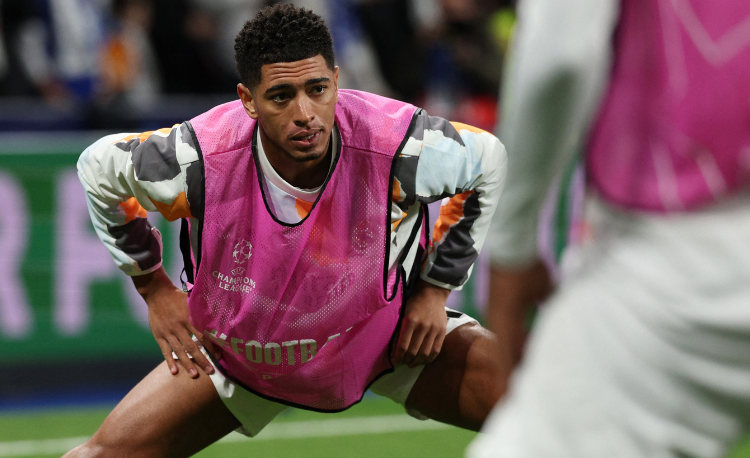
Getting the ball under control is fundamental to the success of attacks. Moritz Kossmann tells Steph Fairbairn how coaches can develop this crucial skill.

Receiving is such a vital skill in soccer.
A good first touch can beat a player in an instant, get a team out of trouble or create a chance on goal.
But how can we support players to improve their receiving?
Moritz Kossmann is a coach at Ubuntu Football Academy in Cape Town. There, he coaches the U21s, who play in the third tier of South African football, and oversees the senior section, made up of U18s and U16s.
Moritz lent SCW his expertise on receiving – what it is, what good receiving looks like and how we can coach it…
SCW: Can you give us a definition of receiving?
MK: Receiving is something you do when someone passes you the ball in the game.
That would be the most frequent action – getting the ball under control after a team-mate has passed you the ball.
A less frequent moment would be if you are intercepting a pass from an opponent. I would also define this as a reception of the ball.
SCW: When receiving from a team-mate, what are some of the key things we are looking for from a player?
MK: On the most fundamental level, you want to get it [the ball] under your control so you are next able to make a dribbling, passing or perhaps even a shooting action.
In the modern game, with a lot more high and collective pressing schemes being employed, the game has moved to a stage where you need to control and develop the play with one touch.
Perhaps on a lower level, or in the older times, you were able to stop the ball, control it and then move the ball with the second touch. Nowadays, the first touch needs to take you into your new playing direction.
Controlling and moving the ball should happen ideally with one touch so that you are able to play through the pressing that is happening at a high intensity.
SCW: Thinking about that, what kind of things are we looking for? Scanning? Body position? What are your coaching points around good receiving?
MK: Receiving starts before you have got the ball under your control. That’s scanning. But scanning for what?
"I think the most important thing is that we teach our players what to scan for..."
As coaches, we love talking about scanning as a coaching point. But if I look to my left, if I don’t know what to look for, I could be looking at anything.
I think the most important thing is that we teach our players what to scan for - where the open space is to take my first touch into, and the position of opponents and what direction they are closing me down from, so that perhaps I can take the touch in the opposite direction, or past them.
Where are my team-mates? Am I taking a first touch towards an area where I have passing options? Or am I taking it into an area where perhaps I become more isolated?
Where am I on the field? Am I on the flank already or am I in a more central space? For me, giving meaning to scanning is a really important consideration.
Then [comes] the body position. Turning is a crucial action in football and we can’t discourage our players from it, because if we are able to be comfortable, technically, at turning with our first touch, it’s a huge weapon and makes us very unpredictable.
Nevertheless, if I’m already in a body position, facing towards, perhaps, the larger part of the field, or in the direction that I want to go, it’s helpful.
Number one, I am signalling to my team-mate where I want to receive the ball. Then, it can also accelerate and secure my actions, because if I don’t always have to turn 180 degrees into a new direction, it is certainly easier to execute a reception and move the ball along, even against a higher press.
Be a more effective, more successful youth soccer coach
- Win more games, without sacrificing the crucial element of fun
- Develop every player, regardless of vast differences in ability
- Run a respected, professional programme - even with a full-time job and limited time
Subscribe for full access
Or register and unlock 2 free articles,
receive our weekly newsletter, and
get a FREE coaching e-book.
Or if you are already a subscriber login for full access.
Latest Issue

Subscribe Today
Subscriber Testimonials

Gerald Kearney, Downtown Las Vegas Soccer Club

Paul Butler, Florida, USA

Rick Shields, Springboro, USA

Tony Green, Pierrefonds Titans, Quebec, Canada
Subscribe Today
Newsletter Sign Up

Coaches Testimonials
Gerald Kearney, Downtown Las Vegas Soccer Club
Paul Butler, Florida, USA
Rick Shields, Springboro, USA
Tony Green, Pierrefonds Titans, Quebec, Canada
Subscribe Today
Latest Issue

Discover the simple way to become a more effective, more successful soccer coach
In a recent survey 89% of subscribers said Soccer Coach Weekly makes them more confident, 91% said Soccer Coach Weekly makes them a more effective coach and 93% said Soccer Coach Weekly makes them more inspired.
*includes 3 coaching manuals
Get Weekly Inspiration
All the latest techniques and approaches


Soccer Coach Weekly offers proven and easy to use soccer drills, coaching sessions, practice plans, small-sided games, warm-ups, training tips and advice.
We've been at the cutting edge of soccer coaching since we launched in 2007, creating resources for the grassroots youth coach, following best practice from around the world and insights from the professional game.
