
 close
close


 LOGIN
LOGINYou are viewing 1 of 1 free articles
'Every word a coach says has an impact'
Elite sports psychologist DAN ABRAHAMS tells DAVE CLARKE why everything you say and do matters to players - and reveals the importance of the ’three Ps’


Dan Abrahams’ stated aim is to ’demystify’ sports psychology.
The former golf professional and coach has made a successful second career out of tapping into the mental side of elite sports people, and as an author of several best- selling books.
The testimonials on his website come from the likes of England rugby union head coach Eddie Jones and former AFC Bournemouth manager Eddie Howe.
Here, Dan talks to former Soccer Coach Weekly editor Dave Clarke about physical warm-ups, motivating the individual, dealing with success and failure, and working with parents...
SCW: How did you graduate from being a golf coach into what you do now?
DA: "I was playing the game as a young pro and just came to a point where I realised I wasn’t going to be able to compete and make money. I just wasn’t good enough.
"I finished playing and fell in love with coaching. I really enjoyed it but there was just something niggling, the academic side. I had always read sport psychology books.
"I wanted to study, because I had left school at 18, so I did a degree in psychology and a masters in sports psychology. And I came to a crossroads - am I going to be a golf coach with these qualifications on the side or do I actually want to be a sports psychologist?
"I chose the latter because I had a bit of an itch to work in other sports. I became registered as a sports psychologist and that was just over 15 years ago now.
"Sports psychologists can work in all sports, you don’t need to have a good knowledge of the sport. Sometimes it is to your advantage that you don’t.
"I made the decision to specialise in a couple of sports. I knew golf like the back of my hand and I really wanted to learn soccer.
"So I started at non-league level and I really got to learn the language of the game, and the specific challenges that players face, because every sport is different."
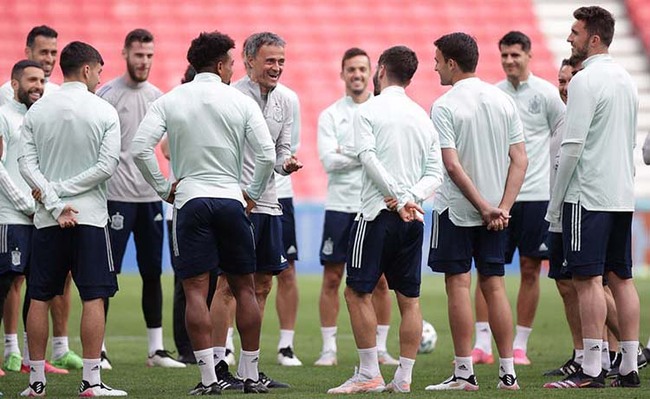
"I talk about three Ps. Participation is the most important, to help players engage..."
SCW: One of my favourite expressions of yours is ’every word a coach says has an impact’. Can you expand on that?
DA: “The psych-social side is omnipresent, it’s always there. It is there when you sit and write your activities, it is there when you are thinking about your sessions, it is there when your players first arrive, it is there in your body language, your greeting and their body language. It is in the silence and interactions, it is in how you start your activities and it is in what you say and your communication.
"I think we have been so socialized in coaching to examine the tech-tac and physical pieces first, and I think we actually have to examine the psych-social first.
"I’m not saying psych-social is more important - I think we can distinguish between hierarchy and importance. But it’s just there all the time.
"When I was a golf coach, I was socialized into golf swing technique. And really, if I could do it again, psych-social would be the most important thing."
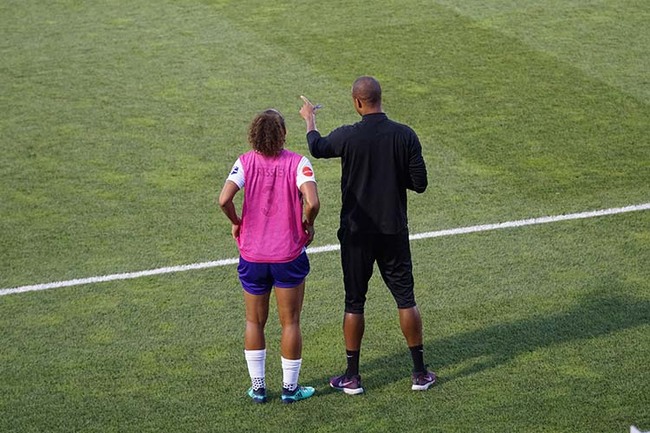
SCW: You mention the start of training sessions, probably one of the hardest things when you’re a new coach. You get told kids are going to listen to you for 10-15 seconds. So they’re thinking, ’I’ve already had 10 seconds and they’re not quiet’. Do you work on stuff like that with coaches?
DA: "It depends on what age group you’re coaching and what level you’re coaching at.
"I spend a lot of my time working at the adult elite level, in the Premier League, and I can assure you, there’s no difference there. Attention spans can still be the same.
"I talk about three Ps - participation, progression, performance. Every coach on this planet is invested in them. I actually think participation is the most important, because your Under-8s coach is invested in participation, and Jurgen Klopp and Pep Guardiola are invested in participation, because they have to help those players engage.
"At Premier League level, I’ve had a lot of conversations with coaches around starting with something fun, getting them to release endorphins. When I was lead psychologist with England rugby for a little bit, they always seemed to start with something that was fun, to put smiles on players’ faces.
"You can maybe start a session with players talking to each other in small groups or pairs for a minute, posing the question: ’What does a great session look like today?’, or ’What do we want to achieve today?’.
"You’re warming up teamship, leadership and communication. You’re warming up those soft skills. If you’re in a coaching culture where you are afforded the opportunity to do a proper physical warm- up, I think it’s useful to emphasise a mental warm-up within that.
"But let’s not get away from the fact that 10-year-olds are 10-year-olds. They aren’t going to have a fantastic concentration span, they are going to be easily distracted or they are going to be disruptive at times.
"That’s okay. There are solutions, but it’s not a perfect science. If you’re out on the grass, there’s going to be errors, mistakes, challenges and tough times. That’s okay."
Related Files
SCW: Say a team has lost 7-1. Everyone turns around to the goalie and says it could have been 14 - he’s made seven great saves, but he’s still let seven in. Motivation must be a key factor in youth players?
DA: "Yes, absolutely. I think motivation is an interesting psychological construct. If I were to address that goalkeeping scenario, I come towards my passion of players having a mental framework to their game.
"When I say ’mental framework’, we may be eliminating 8, 9, 10, 11 and 12 year olds here. But I think we do need some processes within our coaching practice, that helps players have some form of framework that helps them deal with success and failure.
"I would be talking to a goalkeeping coach about striving to set up a consistent post- match evaluation process, whereby after every game - whether we’ve won or lost, whether the goalkeeper has had an eight or nine out of 10 performance, or a five or six out of 10 performance - that goalkeeper asks themselves three questions: ’What went well today, irrespective of the score and irrespective of the performance?’, ’What can go better next time?’, and ’Is there anything we need to introduce into training that can improve or change the situation?’.
"Out on the grass, there’s going to be errors and tough times. That’s okay..."
"The challenge we’ve got is we can get very reductionist about this - ’I’ve had a bad performance, so let’s talk about motivation’. You can also throw in confidence, focus, activation and other psychological constructs and concepts.
"I think we need to look more holistically than reductionist. And that’s where I come back to this mental framework - what do we do every single time after a game that helps us manage what went on on the pitch?
"We are so socialized as coaches into winning and performance. We’ve got to add mindset into the mix - what was our mental framework? Did we execute that mental framework? Because our mental framework is far closer to the kind of things that we can control.
"Outcome and performance - we can certainly influence those things. But in my work with players, I’m trying to help them set up a mental framework. I’m trying to help them rationalise their performance process - what two or three things are you trying to achieve on the pitch related to the responsibilities within your role that are much more controllable?
"Frame that with regard to your mental framework, then go out, focus on that and review that afterwards. Not just ’we won’ or ’we lost’, not just ’I was great’ or ’I wasn’t so good’. What’s our performance process? What’s our mental framework? Now let’s evaluate that."
“We’re too quick to instruct, to command to demand. Taking a step back and asking open questions, I think, is vitally important...”
HEAR MORE FROM DAN ABRAHAMS ON OUR PODCAST — CLICK HERE TO DOWNLOAD
Latest Issue

Subscribe Today
Subscriber Testimonials
Gerald Kearney, Downtown Las Vegas Soccer Club
Paul Butler, Florida, USA

Rick Shields, Springboro, USA
Tony Green, Pierrefonds Titans, Quebec, Canada
Subscribe Today
Newsletter Sign Up



Coaches Testimonials
Gerald Kearney, Downtown Las Vegas Soccer Club
Paul Butler, Florida, USA
Rick Shields, Springboro, USA
Tony Green, Pierrefonds Titans, Quebec, Canada
Subscribe Today
Latest Issue

Discover the simple way to become a more effective, more successful soccer coach
In a recent survey 89% of subscribers said Soccer Coach Weekly makes them more confident, 91% said Soccer Coach Weekly makes them a more effective coach and 93% said Soccer Coach Weekly makes them more inspired.
*includes 3 coaching manuals
Get Weekly Inspiration
All the latest techniques and approaches


Soccer Coach Weekly offers proven and easy to use soccer drills, coaching sessions, practice plans, small-sided games, warm-ups, training tips and advice.
We've been at the cutting edge of soccer coaching since we launched in 2007, creating resources for the grassroots youth coach, following best practice from around the world and insights from the professional game.
