
 close
close


 LOGIN
LOGINYou are viewing 1 of 1 free articles
Goalkeeper positions with Keith Boanas part one
Coaching Adviceby Dave Clarke
This is a session written by Keith Boanas the former Estonia women’s team head coach for a team in Finland that was having trouble with the goalkeeper staying glued to her line.


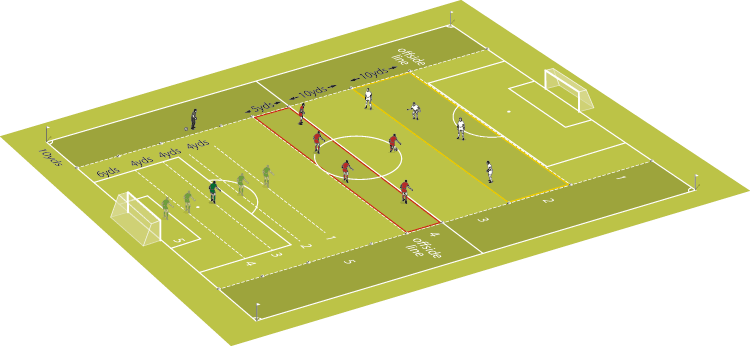
This is a session written by Keith Boanas the former Estonia women’s team head coach for a team in Finland that was having trouble with the goalkeeper staying glued to her line – this is how the field should be set up and in PART TWO you can practice two examples of goalkeeping movement
This session was specifically written for 10 players at a training session to focus on the keeper’s positioning in relation to where the ball is.
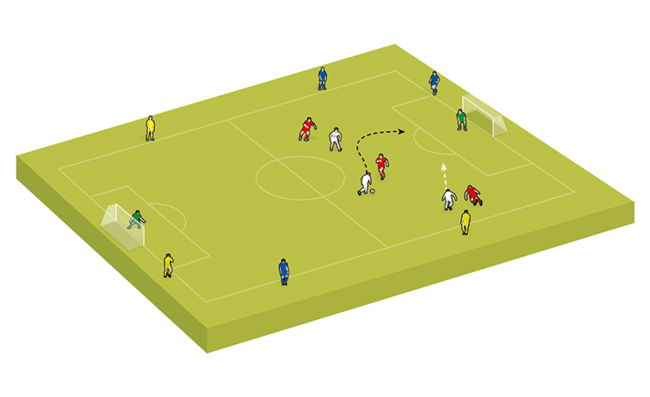
You need balls, bibs, cones and goals. Use the size of pitch you normally play on and mark out the zones as shown in the picture using cones and mark the corresponding goalkeeper zones the same. Also mark out the ‘playing area’ which is 25 yards x the width of your pitch.
Play a team of 5 plus the goalkeeper against a team of 4 within the marked zone. Players can only break out of the zones with a through ball. The coach must encourage the goalkeeper to move into the zone that corresponds to the zone the ball is in. Both teams try to score but can only break out of the zone with a through ball that gets into the zone before the player or players can dribble into that zone – in effect the lines of the centre zone act as offside lines. On the next page you can see the scenarios that should occur when the session is played.
Movement of the goalkeeper should relate to the positioning of the ball.
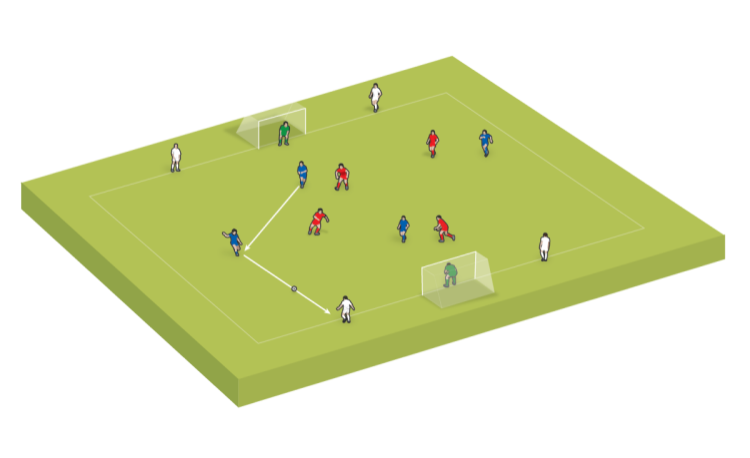
Diagram shows the way to mark the area and which team has the overload. Offside lines are the edge of 25 x 40 yard main playing area –objective for both teams to break out of zone and score – whites have more space to attack so can work with the goalkeeper’s support position
See GOALKEEPER POSITIONS PART TWO for two scenarios from this set up
Why use it
This session was specifically written for 10 players at a training session to focus on the keeper’s positioning in relation to where the ball is.
Set up
You need balls, bibs, cones and goals. Use the size of pitch you normally play on and mark out the zones as shown in the picture using cones and mark the corresponding goalkeeper zones the same. Also mark out the ‘playing area’ which is 25 yards x the width of your pitch.
How to do it
Play a team of 5 plus the goalkeeper against a team of 4 within the marked zone. Players can only break out of the zones with a through ball. The coach must encourage the goalkeeper to move into the zone that corresponds to the zone the ball is in. Both teams try to score but can only break out of the zone with a through ball that gets into the zone before the player or players can dribble into that zone – in effect the lines of the centre zone act as offside lines. On the next page you can see the scenarios that should occur when the session is played.
Technique
Movement of the goalkeeper should relate to the positioning of the ball.
Diagram shows the way to mark the area and which team has the overload. Offside lines are the edge of 25 x 40 yard main playing area –objective for both teams to break out of zone and score – whites have more space to attack so can work with the goalkeeper’s support position
See GOALKEEPER POSITIONS PART TWO for two scenarios from this set up
- 1. The coach plays a ball to the team of 5 who attack the opposite end trying to get into the attacking area beyond the marked zone
- 2. The goalkeeper must watch the game and as soon as the ball changes zones she must move into that zone
- 3. Here the ball is in zone three so the keeper must move to be in that zone
- 4. This should help the goalkeeper understand positioning is important when the ball is in play and the positions to take up when the ball is in different areas of the pitch
- 5. To attack the goals both teams must play through balls or dribble out of the area

Dave Clarke
Latest Issue
Subscribe Today
Subscriber Testimonials
Gerald Kearney, Downtown Las Vegas Soccer Club

Paul Butler, Florida, USA

Rick Shields, Springboro, USA

Tony Green, Pierrefonds Titans, Quebec, Canada
Subscribe Today
Newsletter Sign Up

Coaches Testimonials
Gerald Kearney, Downtown Las Vegas Soccer Club
Paul Butler, Florida, USA
Rick Shields, Springboro, USA
Tony Green, Pierrefonds Titans, Quebec, Canada
Subscribe Today
Latest Issue

Discover the simple way to become a more effective, more successful soccer coach
In a recent survey 89% of subscribers said Soccer Coach Weekly makes them more confident, 91% said Soccer Coach Weekly makes them a more effective coach and 93% said Soccer Coach Weekly makes them more inspired.
*includes 3 coaching manuals
Get Weekly Inspiration
All the latest techniques and approaches


Soccer Coach Weekly offers proven and easy to use soccer drills, coaching sessions, practice plans, small-sided games, warm-ups, training tips and advice.
We've been at the cutting edge of soccer coaching since we launched in 2007, creating resources for the grassroots youth coach, following best practice from around the world and insights from the professional game.
