
 close
close


 LOGIN
LOGINYou are viewing 1 of 1 free articles
Developing soccer skills: marking
Moritz Kossmann talks about tracking opponents and denying them time and space. Interview by Steph Fairbairn.


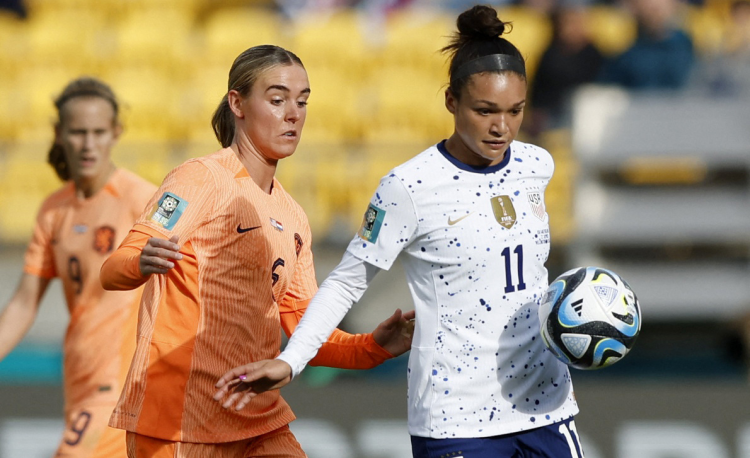
Moritz Kossmann defines the act of marking as "the act of tracking the movements of an opponent player and looking to close them down in a 1v1 situation or to intercept the ball as they are receiving or are about to receive the ball".
Moritz - DStv Diski Challenge coach and head of youth at Cape Town City - speaks to SCW about what marking looks like for different positions, the decision-making process, the physicality required and how players learn about marking over the course of their development...
SCW: Is marking important for all positions? When might different positions be required to mark?
MK: It is quite common that centre forwards aren’t marking opponent players. It’s definitely something commonly seen in midfield and it is definitely something that defenders often have to do. It might be, situationally, something that forwards have to do when defending a corner.
However, whether we are attacking or whether we are defending, the references on the field are almost always the same - our position on the field, the position of the ball, the position of our team-mates and the position of our opponents.
What becomes very crucial is the order in which we assess this as a team. If our first reference is the ball and our team-mates, then we might be shifting collectively towards the ball and might have less of a reference to the opponent player, who might be our third point of reference.
We still have to see their position because we might be wanting to close them down as they receive, intercept relative to them or get into an overlapping defensive position.
Some teams would have the position of the ball as the first reference, the position of the opponent as the second reference and the position of the team-mate as a third reference.
That is a very important distinction, which one is your first reference.
But for any team, both the position of team-mates and of opponents are important references. The difference comes with which one you prioritize - but both are crucial pieces of information that you need to use.
"Being diagonally behind a player allows you an angle to steal the ball as it is played..."
SCW: What goes into the decision-making process around marking tight or at a distance? Do they differ for different situations and areas of the pitch?
MK: It is different according to where you are on the pitch. For example, if I am a midfielder marking an opposition midfielder, and we are pressing them during their build-up in their own half, maybe my intention is to win the ball from that player.
But, in order for me to win the ball, the opposition first needs to actually pass the ball to that player.
If I am closing them down very tightly in this high press, I’m probably discouraging the opponent from passing to them, because it would be a very bad decision to pass to a team-mate who is already marked tightly.
I almost would want to ’bait’ the pass if I am marking higher up the pitch. Then I might want to get into an overlapping position compared to the opponent I’m dealing with.
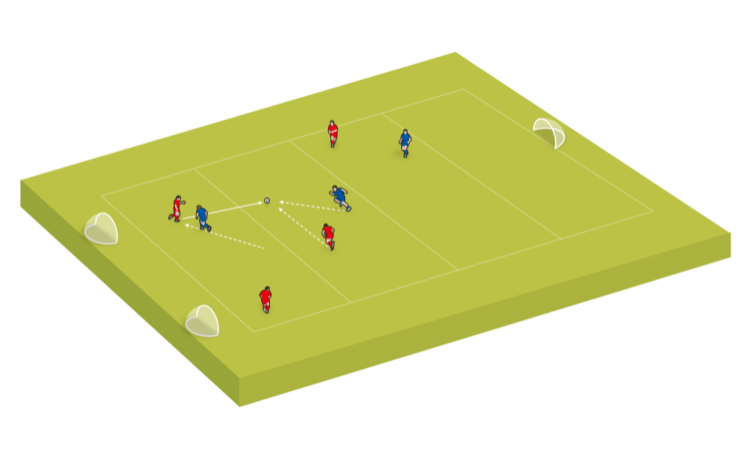
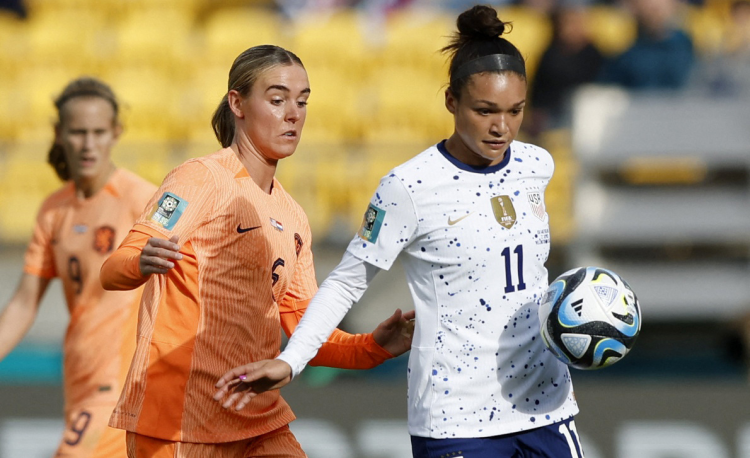
An overlapping position means you are not straight behind their back relative to the opponent with the ball. [Instead] you are diagonally behind the player, affording you a clearer sighting of the ball and allowing you an angle to come in front of the opponent and try to steal the ball as it is played.
[Former FC Bayern head coach] Julian Nagelsmann has a principle that a viable passing distance is equal to about half the passing distance. So I can close down an opponent I’m five metres from if the pass is [over] 10 metres.
Higher up the pitch, even in midfield, I might want to employ this. I might want to bait passes to try to intercept and do the work while the ball is traveling to that player.
As I get towards my own half, particularly marking in the box where there is a high danger of conceding goals, my intention as a defensive player will be completely different. Now, I don’t want to bait a pass to an opponent. I can’t afford to take that risk.
I have to make sure that an opponent in the box is closed down so they don’t have even the smallest possible window to shoot at my goal from a relatively short distance.
That means I will be quite close quite quickly so I’m not taking an undue risk of not being there as they receive the ball.
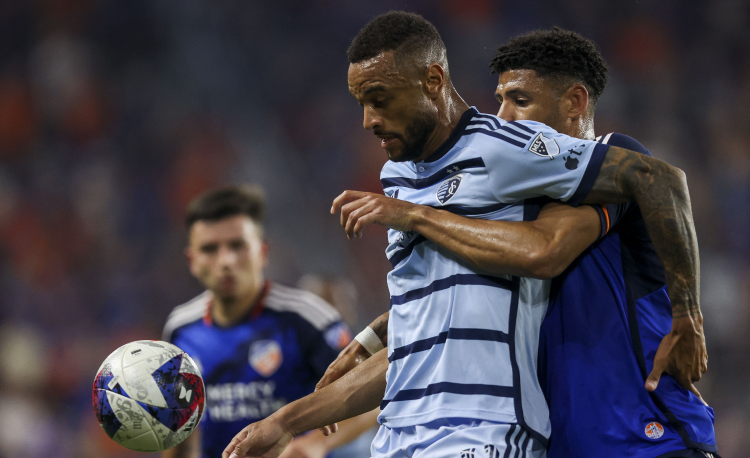
Nevertheless, even when marking in the box, there is such a thing as getting too close. If I’m getting too close, I’m allowing the opponent to create separation by initiating physical contact and perhaps shoving me away, in a legal sense, because referees aren’t immediately going to blow for any physical contact that happens.
An arm’s-length distance, even in a very tight marking situation, is a good way to go.
SCW: We might assume marking is easier for players that are stronger or more physical. If you get that distance right, is the physicality then less important?
MK: I have always been of the belief that the player who initiates the physical contact is usually the one that has the advantage.
If I am standing with my back to goal, the ball is traveling to me and the defender shoves me a little bit from behind, there is a likelihood that I will be knocked a little off balance and it becomes momentarily easier to win the ball from me.
If I am able to push off the defender and create that little bit of separation, then I have knocked the defender off balance, they are temporarily moving in another direction and not able to initiate the contact.
If done at the correct moment, it creates separation, which means we have a dynamic situation that favours the attacker, compared to a slightly more static situation which usually favours the defender.
It is very important to time your physical contact but to also try to be the one that initiates the physical contact.
A go-to way for most teams to combat very dominant teams is to try to ruffle them and initiate a lot of contact.
If we want player development to be as well rounded as possible, then we need to coach physical contact, but also the position, moment, direction and speed aspects of that - going into the detail and not just talking about raw, brutal physicality.
"It’s important to time your physical contact but also to be the one who initiates it..."
SCW: How early do we introduce marking as a concept to players?
MK: It is not something I would explicitly focus on too early. I think the basic aspect of hunting the ball and closing down is the starting point when we talk about defensive actions.
Marking is something, for me, that is a detail within my defending and therefore something I would go into a little bit later, perhaps as we’re going towards 11v11.
It obviously makes sense that we start our junior development in relatively small-sided games – 2v2s, 3v3s and 4v4s.
Within these games, moments where marking takes place are organically going to appear because the smaller the games are, the more likely it becomes a 1v1 scenario and a 1v1 naturally has aspects of marking to it.
At the youngest ages, I would just have it as an implicit part of my training. If it is really something that players are struggling with, where attackers are completely dominating them, then perhaps I could start to get my players to reflect by asking them some questions in the direction of marking.
It isn’t something I would start a development journey with, explicitly, with U8s or U9s. It makes more sense to coach defending from the aspect of pressing first.
Related Files
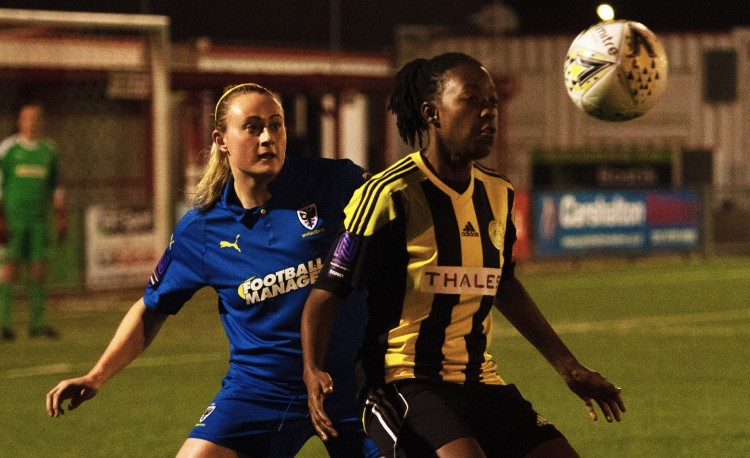
SCW: As players start to understand marking, they need to differentiate between when you’re being marked, rather than when you are marking. How can we support young players to understand it is a defensive action?
MK: It helps to explain football within the aspects of space and time. If I’m attacking, I want to create as much space and time as possible - because if I have space and time, I’m further away from my opponents.
If I’m further away from my opponents and I receive the ball, I have more time to make attacking actions - and the more time and space I have, the more it’s possible to make unpredictable and pronounced progressions towards the opponent goal.
Football is always a mirror image - what I’m trying to do on attack is the opposite on defence. As a defender, I want to take away space and time as much as possible.
The more space and time I afford, the more difficult it becomes to cover all the possible options and the more likely it is that the attacking team starts to dominate.
That needs to be understood by younger players. I think it is important to ask questions along this line in a simple manner that children understand.
Also, encourage bravery in individual duals and a little bit of risk-taking and creativity from both sides. Players wanting to dominate situations against a direct opponent is a crucial element of the game from the base level upwards.
It is something we should encourage because players can come up with great solutions. And if they are able to dominate either defensively or as an attacker in these moments, it builds a lot of confidence that they can also use towards the other football actions that are more team-orientated.
Latest Issue

Subscribe Today
Subscriber Testimonials
Gerald Kearney, Downtown Las Vegas Soccer Club

Paul Butler, Florida, USA

Rick Shields, Springboro, USA
Tony Green, Pierrefonds Titans, Quebec, Canada
Subscribe Today
Newsletter Sign Up
Coaches Testimonials
Gerald Kearney, Downtown Las Vegas Soccer Club
Paul Butler, Florida, USA
Rick Shields, Springboro, USA
Tony Green, Pierrefonds Titans, Quebec, Canada
Subscribe Today
Latest Issue

Discover the simple way to become a more effective, more successful soccer coach
In a recent survey 89% of subscribers said Soccer Coach Weekly makes them more confident, 91% said Soccer Coach Weekly makes them a more effective coach and 93% said Soccer Coach Weekly makes them more inspired.
*includes 3 coaching manuals
Get Weekly Inspiration
All the latest techniques and approaches


Soccer Coach Weekly offers proven and easy to use soccer drills, coaching sessions, practice plans, small-sided games, warm-ups, training tips and advice.
We've been at the cutting edge of soccer coaching since we launched in 2007, creating resources for the grassroots youth coach, following best practice from around the world and insights from the professional game.
