
 close
close


 LOGIN
LOGINMichael Wright: Coaching 1v1 dominance in defending
Southampton academy coach Michael Wright on 1v1 dominance in defending and the development of ’super strengths’. Steph Fairbairn asks the questions
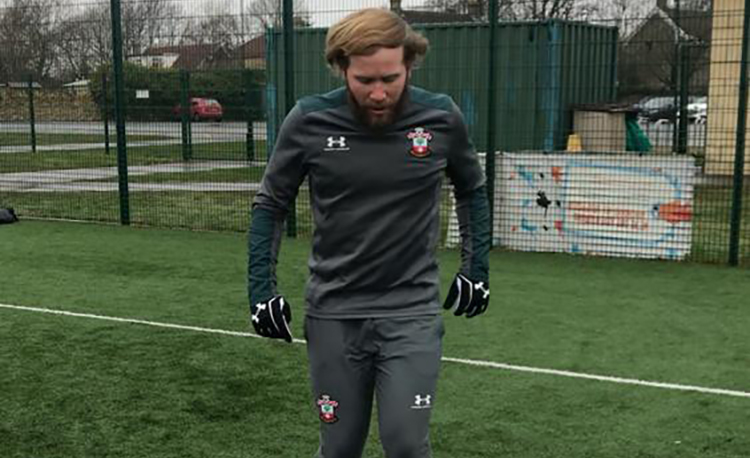
Michael Wright has coached within the youth ranks at Premier League club Southampton for the past decade.
Now working with the under-nines to under-11s in the academy, he has previously held roles with various other age-group teams and in the recruitment department.
His coaching journey began aged 17, and ramped up when he was released as a player, when he had been, by his own admission, "more of a team player than an individual".
Coaching has taught him the importance of individual play, and he has become fascinated with the idea of 1v1 dominance.
SCW caught up with Michael to find out what the term means, what it looks like in an attacking and defensive sense, and how we can coach it…
SCW: How do you define 1v1 dominance?
MW: "For me, it’s looking for individuals that can have a real positive game impact.
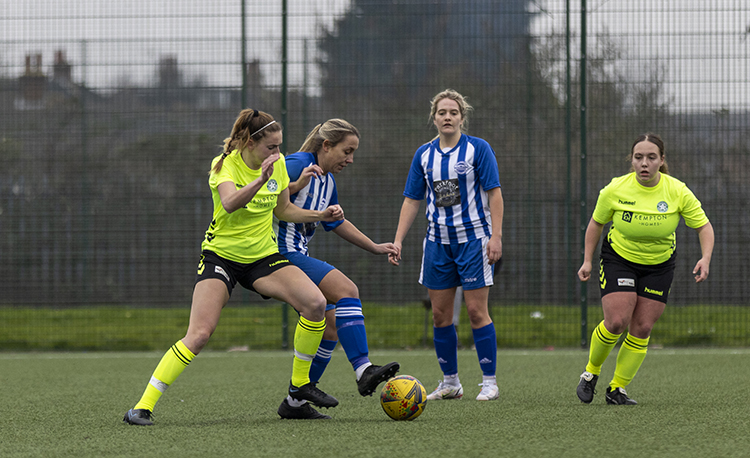
"A really nice example from a few years ago was [Liverpool’s] Virgil van Dijk defending against [Tottenham’s] Son [Heung-Min] and [Moussa] Sissoko.
“He was in a 1v2 situation and understood his opponent. Sissoko is very right footed, he shut off Son, showed Sissoko on his left and forced a shot that went miles over the bar.
"That’s really intelligent, good defending.Sissoko is probably not as competent in that area as Son, he’s right footed so you’re going to show him on to his left and drive him slightly wide to make the angle more challenging for him to get a shot on goal.
“It’s about having a positive game impact in that 1v1, 1v2, 1v3 scenario.”
SCW: At the young age groups, kids want to take the ball. When do we start building in other options - like delaying or forcing them onto their weaker foot - into the conversation about defending 1v1?
MW: "As early as possible, because it produces a level of self-awareness and awareness of the environment to make those decisions.
"If you’re working with a six-year-old, they can understand who the fastest in the group is, who the strongest in the group is, what foot someone uses. At a very basic level, that is what we’re talking about in a 1v1.
“If I was playing against Usain Bolt, I’m not going to try and sprint past him, because that’s never going to happen. A six-year-old can understand that.
"Coaching used to focus on weaknesses - now top players have ’super strengths’..."
"What you’re asking them to do is identify what their strength in this scenario. How can I win this duel by using my strength against their weakness?
“I would say, as early on in their journey as you can, in a really simple manner, ’What are you really good at?’. They may say, ’I’m really good at running past players’. That’s a really good starting point.
"If you’re really good at running past players, how can you use that in this 1v1? That allows them to think of strategies - ’I’m really good at this, I need to figure out a way to use it’.
“Coaching used to focus on weaknesses and developing those areas. Now we’re seeing a lot of the top players having ’super strengths’, which allow them to flourish in the professional or semi-pro game. There’s been a real push, which I think is positive, in exploiting those.
“David Beckham wasn’t a professional footballer because he could run past everyone - he was a professional footballer because he had an unbelievable delivery and him understanding that would allow him to identify how he’s going to win that duel."
Be a more effective, more successful youth soccer coach
- Win more games, without sacrificing the crucial element of fun
- Develop every player, regardless of vast differences in ability
- Run a respected, professional programme - even with a full-time job and limited time
Subscribe for full access
Or register and unlock 2 free articles,
receive our weekly newsletter, and
get a FREE coaching e-book.
Or if you are already a subscriber login for full access.

Steph Fairbairn
Latest Issue

Subscribe Today
Subscriber Testimonials
Gerald Kearney, Downtown Las Vegas Soccer Club

Paul Butler, Florida, USA

Rick Shields, Springboro, USA

Tony Green, Pierrefonds Titans, Quebec, Canada
Subscribe Today
Newsletter Sign Up

Coaches Testimonials
Gerald Kearney, Downtown Las Vegas Soccer Club
Paul Butler, Florida, USA
Rick Shields, Springboro, USA
Tony Green, Pierrefonds Titans, Quebec, Canada
Subscribe Today
Latest Issue

Discover the simple way to become a more effective, more successful soccer coach
In a recent survey 89% of subscribers said Soccer Coach Weekly makes them more confident, 91% said Soccer Coach Weekly makes them a more effective coach and 93% said Soccer Coach Weekly makes them more inspired.
*includes 3 coaching manuals
Get Weekly Inspiration
All the latest techniques and approaches


Soccer Coach Weekly offers proven and easy to use soccer drills, coaching sessions, practice plans, small-sided games, warm-ups, training tips and advice.
We've been at the cutting edge of soccer coaching since we launched in 2007, creating resources for the grassroots youth coach, following best practice from around the world and insights from the professional game.
