
 close
close


 LOGIN
LOGINHow to warm up your goalkeeper on matchday
Keep it consistent and base it on your match plan: James Mayley’s guide to preparing your shot-stoppers on a physical, technical, tactical and mental level.
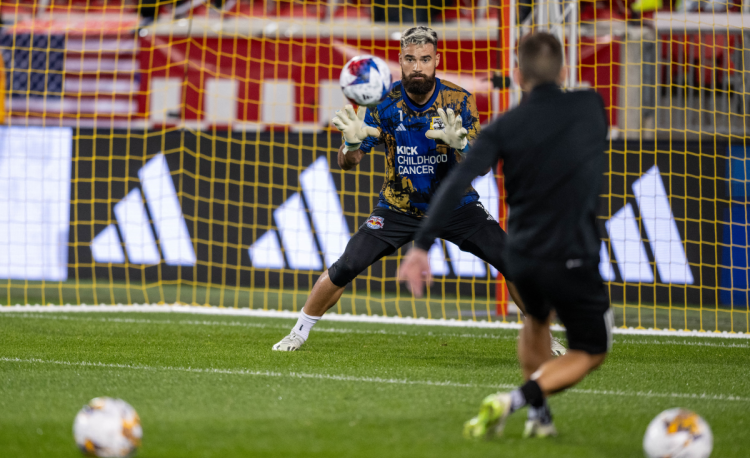
A warm-up is an essential element of matchday preparation for any player – and should leave a goalkeeper physically, tactically and psychologically prepared for the game they are about to play.
While there is no right or wrong way to warm up a goalkeeper, there are some general principles to follow. These include:
- Getting feedback from the goalkeeper about what they feel they need in order to prepare for the game
- Ensuring all elements of the goalkeeper’s role are covered – these are defending the goal and defending space when out of possession; starting and supporting build-up play when out of possession; and communicating, whether in or out of possession
- Gradually ramping up the intensity and complexity of the exercises while managing the goalkeeper’s workload.
Tips for building your goalkeeper warm-up
Plan ahead
If a goalkeeper warm-up isn’t planned ahead of time, it will be easy for it to fall by the wayside on matchday.
Make sure you have a clear idea of what the warm-up is going to be and how it is going to be executed.
Plan it with the same detail as you would a warm-up for your outfield players.
Understand your limitations
Think about the space you have available – can you warm up on the field or must you be off it? Can you warm up in a goal or are there no goals available?
It is also very important to think about the time you have available. The answers to these questions can help dictate what the warm-up should look like.
Consider your equipment
What do you need to make the warm-up successful?
Balls and gloves are obvious. Things like flat markers, cones and poles may also be useful. If, for example, you can’t warm up on the pitch, poles can be used to give keepers a goal reference, while flat markers can be used to set out a penalty area.
It’s best to be fully prepared with everything you may need – you never know what the set-up may be when you get to an away venue, or what conditions you may have to adapt to.
Know who’s taking the warm-up
You may have a dedicated goalkeeper coach, a regular assistant, infrequent parent help, or you might coach solo. The less support you have, the more difficult it may be to warm-up the goalkeeper.
If you have an assistant, or there is a parent supporting, ask them to do it.
If it’s just you, think about if players can do it together – whether it’s two goalkeepers, or a goalkeeper and a striker. The latter arrangement allows the striker to practise some shooting.
There are, potentially, a few bits the keeper can do solo, too, like kicking the ball up and catching it.
Whoever does the warm-up, it’s important that they know what to do – which is where effectively planning, and sharing it, comes in.
Be a more effective, more successful youth soccer coach
- Win more games, without sacrificing the crucial element of fun
- Develop every player, regardless of vast differences in ability
- Run a respected, professional programme - even with a full-time job and limited time
Subscribe for full access
Or register and unlock 2 free articles,
receive our weekly newsletter, and
get a FREE coaching e-book.
Or if you are already a subscriber login for full access.

James Mayley
Latest Issue

Subscribe Today
Subscriber Testimonials

Gerald Kearney, Downtown Las Vegas Soccer Club

Paul Butler, Florida, USA

Rick Shields, Springboro, USA

Tony Green, Pierrefonds Titans, Quebec, Canada
Subscribe Today
Newsletter Sign Up
Coaches Testimonials
Gerald Kearney, Downtown Las Vegas Soccer Club
Paul Butler, Florida, USA
Rick Shields, Springboro, USA
Tony Green, Pierrefonds Titans, Quebec, Canada
Subscribe Today
Latest Issue

Discover the simple way to become a more effective, more successful soccer coach
In a recent survey 89% of subscribers said Soccer Coach Weekly makes them more confident, 91% said Soccer Coach Weekly makes them a more effective coach and 93% said Soccer Coach Weekly makes them more inspired.
*includes 3 coaching manuals
Get Weekly Inspiration
All the latest techniques and approaches


Soccer Coach Weekly offers proven and easy to use soccer drills, coaching sessions, practice plans, small-sided games, warm-ups, training tips and advice.
We've been at the cutting edge of soccer coaching since we launched in 2007, creating resources for the grassroots youth coach, following best practice from around the world and insights from the professional game.
