
 close
close


 LOGIN
LOGINParents: prevent the damage from the touchline
Gordon MacLelland of Working With Parents in Sport helps you understand why good intentions can be bad news and what you can do make your child’s sporting experience a very positive one.


Every weekend all over the world millions of parents, children and coaches set off for their weekly sporting ritual match day. Many will follow the same process each week and will never question their routine or behaviour.
Many of these parents and coaches are well intentioned, trying to support their child and their team through match situations totally unaware of the damage they may be doing by overly involving themselves before and after but crucially during the game itself.
I say that they are unaware because if they are not, the current climate on the sidelines is far worse than I currently fear.
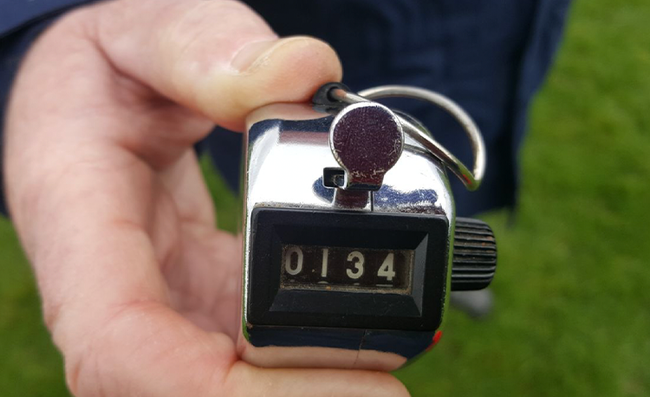
Recently I carried out a little experiment at an under 8 grassroots football match in the UK. I counted the number of tactical instructions yelled from the sideline by parents and coaches to the children. There were 134 yelled out in 40 minutes of play. I must stress that this did not include positive praise.
Now imagine as adults if we were embarking on a task and during this time we were being yelled new instructions, in this case approximately four a minute. On top of that, add that some of these instructions were also contradictory. I believe that not only would we struggle to concentrate but we would struggle to make the correct decisions that we were originally carrying out. Just think how this must feel for a child actively involved in a sporting situation?
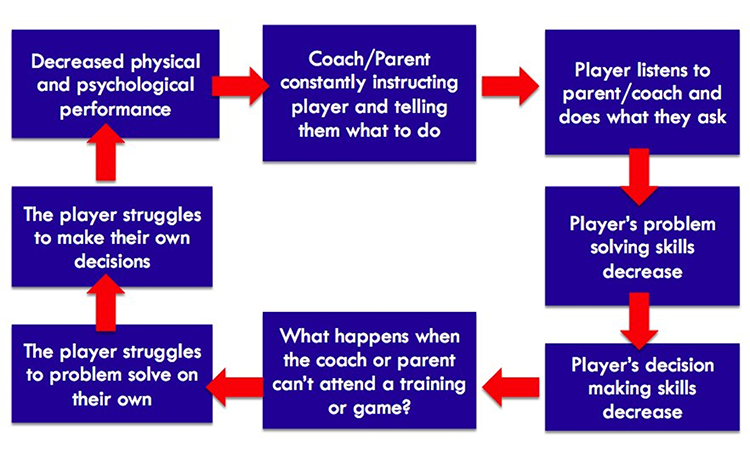
Caught up in the excitement and emotion of a game, many parents and coaches feel that they are really helping and supporting their children whilst watching by shouting technical or tactical instruction. Whilst this may on occasions in the short term prove successful there are major long term implications of this for the player.
- It reduces problem solving skills
- It decreases decision-making skills
- It reduces creativity in young players
- It reduces the child’s enjoyment
- It increases the pressure on the child
- It increases anxiety in the child
- It prevents children from mastering life skills
- It decreases the ability of the child to cope independently (particularly if the parent and the coach are not around)
Bearing all this in mind it is important that we then generate an understanding of how all of this is linked together with the behaviour that we are displaying. The infographic, above, from our friends at believeperform.com gives us a very powerful visual image.
My message to parents:Are you shouting tactical instructions on the sidelines?
If your answer is, “Yes,” then stop. Stop now.
I can already hear you justifying why.
I can already hear you rationalising your particular approach. I can hear you because I could be you. I have been you. I’ve wanted to right the wrongs for my child. I’ve wanted him to score. I’ve wanted him to feel joy in victory. I’ve wanted him to avoid the pain of losing. I’ve wanted him to know I am there, that I love him, that I’m his biggest fan.
But, let me ask you:
Do you think it helps?
It does not.
Screaming and shouting tactical instructions is bad. It is that simple.
My message to coaches:The above still applies however there can be a little bit of flexibility if you are trying to assist your team and individuals but it should be a very measured approach.
We have a number of parents who contact us who have been told by organisations what they would like them to do and how to behave but then they have to watch the coach do exactly the opposite. Coaches must be great role models for parents and help create the right environment for the children by leading from the front. Parents will then follow.
|
Gordon is founder of parentsinsport.co.uk, He is a qualified teacher and has been Director of Sport at an independent prep school in the UK for the last 10 years. He has worked in schools in both the UK and New Zealand for the last 16 years.
Related Files

Soccer Coach Weekly
Latest Issue
Subscribe Today
Subscriber Testimonials
Gerald Kearney, Downtown Las Vegas Soccer Club

Paul Butler, Florida, USA

Rick Shields, Springboro, USA

Tony Green, Pierrefonds Titans, Quebec, Canada
Subscribe Today
Newsletter Sign Up
Coaches Testimonials
Gerald Kearney, Downtown Las Vegas Soccer Club
Paul Butler, Florida, USA
Rick Shields, Springboro, USA
Tony Green, Pierrefonds Titans, Quebec, Canada
Subscribe Today
Latest Issue

Discover the simple way to become a more effective, more successful soccer coach
In a recent survey 89% of subscribers said Soccer Coach Weekly makes them more confident, 91% said Soccer Coach Weekly makes them a more effective coach and 93% said Soccer Coach Weekly makes them more inspired.
*includes 3 coaching manuals
Get Weekly Inspiration
All the latest techniques and approaches


Soccer Coach Weekly offers proven and easy to use soccer drills, coaching sessions, practice plans, small-sided games, warm-ups, training tips and advice.
We've been at the cutting edge of soccer coaching since we launched in 2007, creating resources for the grassroots youth coach, following best practice from around the world and insights from the professional game.
