
 close
close


 LOGIN
LOGINYou are viewing 1 of 1 free articles
Seven questions for reflecting on sessions
Things to think about when evaluating how your session went, including the plan, your communication, player engagement, and more...


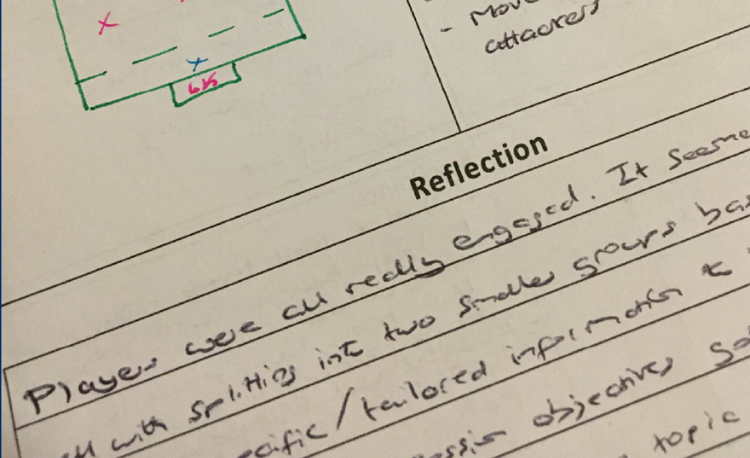
One of the most important tools coaches can use to improve session plans, delivery and effectiveness is to take time to reflect upon them.
Whether this is through player feedback, another coach’s views, watching back video footage, or simply taking the car ride home to collect your thoughts, reflection should be built into your routine.
You should assess anything and everything, from communication with players and the size of the playing area, to how engaged players were and whether progressions and adaptations were appropriate.
To get some ideas flowing for how you can best reflect on your sessions, here are seven questions you might want to ask yourself after training.
01 Have I set time aside to speak to all of my players over the past couple of weeks?
Being an approachable and caring coach is something likely to help create a positive environment for your players, whatever age group you work with.
Simply taking time to ask how school was or how the kids are can make a player feel like a valued member of the team. While it might be difficult to do this with every player in every session, it’s important to make sure we’re engaging with the whole squad over a couple of weeks.
02 How much ball rolling time was there in the session?
Players turn up to training to play. While it can be tempting to take up a lot of time intervening and suggesting, it’s important that we give players enough time to actually do the practice we’ve set up, or play the game we’re asking them to play. The more the ball is at their feet, the more often they are practising, learning and making decisions.
03 How did I transition between practices?
How did players move from one part of the session to the next? Did it take up a lot of time to do so, or was the flow quite seamless? Preparation in both planning and setting up sessions early can go a long way to making transitions easier and maximising playing time.
04 Was my session appropriate and effective for the number of players who turned up?
We’ve all experienced it. We plan a perfect session for 14 players we expect to turn up and suddently three pull out at the last minute, or two unexpectedly arrive. This can have a real impact on the session and means we have to do a bit of quick-thinking on our feet.
For example, it might be that planning a low-intensity finishing session for seven players would work fine with players in two lines, as they’ll be getting a lot of repetition, but is that the same session as effective if 12 turn up and there’s more waiting around? How might you change it?
05 Were my interventions effective? How could I tailor these to different players and situations?
As coaches, we have several different ways of giving feedback and advice to players during a session.
Stopping the session and speaking to the group collectively, pulling an individual out to the side or jumping in among the play to talk to a player or unit area all ways of delivering information.
The option we choose will often depend on the player(s) involved, the information we want to give and the situation of the session.
06 Did I consider the key trade-offs when putting constraints on my practices? What effect did these have?
Taking a constraints-led approach to session planning is often effective for working on a specific topic, but will usually mean another area is neglected or actively discouraged.
If every player on a team needs to touch the ball before a goal is scored, for example, it might be good for working on passing and movement, but might mean counter-attacks are discouraged as a result. These are the trade-ofs we need to consider and be comfortable with.
07 How could I have given my players more ownership of the session?
Allowing players to make choices and do things their own way – where appopriate – not only helps engagement levels, but supports the development of decision-making and leadership among players, so it’s good to consider how much ownership we’ve given players and whether that could be improved.
Related Files

Soccer Coach Weekly
Latest Issue

Subscribe Today
Subscriber Testimonials

Gerald Kearney, Downtown Las Vegas Soccer Club

Paul Butler, Florida, USA

Rick Shields, Springboro, USA

Tony Green, Pierrefonds Titans, Quebec, Canada
Subscribe Today
Newsletter Sign Up
Coaches Testimonials
Gerald Kearney, Downtown Las Vegas Soccer Club
Paul Butler, Florida, USA
Rick Shields, Springboro, USA
Tony Green, Pierrefonds Titans, Quebec, Canada
Subscribe Today
Latest Issue

Discover the simple way to become a more effective, more successful soccer coach
In a recent survey 89% of subscribers said Soccer Coach Weekly makes them more confident, 91% said Soccer Coach Weekly makes them a more effective coach and 93% said Soccer Coach Weekly makes them more inspired.
*includes 3 coaching manuals
Get Weekly Inspiration
All the latest techniques and approaches


Soccer Coach Weekly offers proven and easy to use soccer drills, coaching sessions, practice plans, small-sided games, warm-ups, training tips and advice.
We've been at the cutting edge of soccer coaching since we launched in 2007, creating resources for the grassroots youth coach, following best practice from around the world and insights from the professional game.
