
 close
close


 LOGIN
LOGINSolutions to matchday challenges
Playing time, warm-ups, substitutes, making mistakes... We turn to experienced coach and FA tutor David Streetley for advice on some common matchday issues faced by youth-team coaches


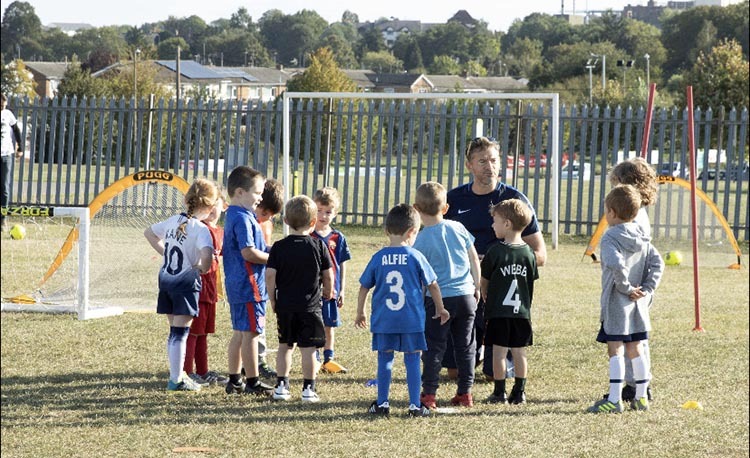
Picture the scene. You’re a coach new to grassroots football, adjusting to your surroundings - but have been delayed en-route to your first game in charge.
You turn up with just minutes to go before kick-off, which can’t be delayed due to other matches being played later in the day.
How do you adapt your preparation to make sure players are both warmed-up and fully focused on the game ahead?
This is one of the questions about matchday we posed to David Streetley - known as ’Streets’ - an FA tutor and a coach mentor.
HOW DO I ENSURE EVERYONE GETS A FAIR AMOUNT OF PLAYING TIME - AND HOW DO I SECURE PARENTAL BUY-IN?
DS: "I’ve seen loads of different ways to rotate players. Some people like Excel spreadsheets and there’s various links out there that can work out playing time for you, based on the squad size and format of the game you play in.
"Some coaches do it on a weekly or monthly basis, playing people in different positions and for a set number of minutes, and if you have a large squad, it may be you can give some players rest weeks, where they can go and do other other things.
"At younger age groups, coaches often ask to split the game into quarters. That way, you can potentially have four different teams, in four different formations, and people can rest and recover and all get a chance to start.
"Quite often people think equal playing time is just for that particular game, but it’s usually across the season.
"With player development, we have to remember our role as coaches. Is it purely to win football matches at grassroots level?
Or is it to create a safe, positive, engaging experience for everyone, developing them as people and players?
"The important thing is the inclusion, because it can have a negative impact on children and young people about how they feel about their experience of football.
"We have to keep this in mind when developing young people, and link it to the technical, tactical, social, psychological and physical parts of the game.
"Quite often, we’re dealing with the cure. We need to think about prevention..."
"With the parental buy-in, I think that just comes with engaging with them. The trick is to get them on board, engage with them and share our coaching, playing and club philosophies.
"It is our role to speak to them, include them, get to know them and find out what they want for their children. Quite often, parents don’t want the winning - that’s a by-product.
"They want them to be included, they want them to be safe, they want them to play, they want to see them develop and they want the social part of it as well. I think our role is to include them and let them know what environment we’re creating for their child."
WHAT’S THE BEST WAY OF REGULATING PARENTS’ TOUCHLINE BEHAVIOUR? SHOULD I TALK TO THEM BEFORE THE SEASON STARTS AND SAY ’I WANT TO HEAR MORE OF THIS AND LESS OF THIS’?
DS: "I think it’s exactly that. Quite often with these things we’re dealing with the cure. I think we need to think about the prevention part - things like your meetings at the start of the season, and your codes of conduct.
"For me, it links to our philosophy, but it is also our responsibility as coaches to engage with parents and educate them to say, ’I don’t shout instructions, like ’pass’, ’shoot’ and ’dribble’, so I don’t want you to do it’, along with the reasons why.
"I want them to make their own decisions, to feel fun, to feel freedom, to be creative. I want them to try things.
"All those things are linked to the environment. If we walked into a school classroom and a lot of adults were shouting ’write this’ or ’draw that’, we would probably have a problem with that. But for some reason, when it’s football, people get carried away a little bit.
"Matchday is like the exam - you’ve been training, now go and show us what you can do, what you have learned about passing or dribbling or shooting or working as a team.
"The first thing to look at is our own behaviour. If we are shouting and screaming on the sidelines, we can’t then say to the parent, ’excuse me, you can’t do that’.
"I think our behaviour is a reflection of what we want to see. I’m confident that if I’m at a youth match, I won’t be shouting and screaming, so I don’t expect anyone else to.
"We have opportunities in meetings to share our manner, our environment and the things linked to our long-term player development plan.
"I think it’s really, really important if we want people to stay in football."
WE’VE GOT TO AN AWAY GROUND LATE AND THERE’S VERY LITTLE TIME TO WARM-UP OR PREPARE, AND KICK-OFF CAN’T BE DELAYED. WHAT SHOULD BE PRIORITISED?
DS: "If you coach correctly, your team- talk and tactics have already been done in training - so on matchdays, it is just a case of reminding them of team and individual tasks. These can be written on the tactics board so you don’t have to talk too much.
"If we allow ownership in training, and players are used to taking responsibility for warm-ups or dynamic stretches, depending on what age they are, then it is easy for them to do it on a matchday.
"The foundation phase can play a tag game and then go into a game, The older ages need a little bit more of a warm up. "I’m confident the 16-19s I coach could warm up on their own, because we have educated them about what they need. I think if we trust them, and they do it in training consistently, you just leave it to them.
"That ownership is important because we can then step back and make matchday a more chilled out and relaxed experience.
"Typically, as coaches, you have got to set up nets, chat to the ref, speak to parents, exchange match cards, and so on. You actually want, on a weekly basis, to be taking a backseat and maybe just overseeing it."
RELATED
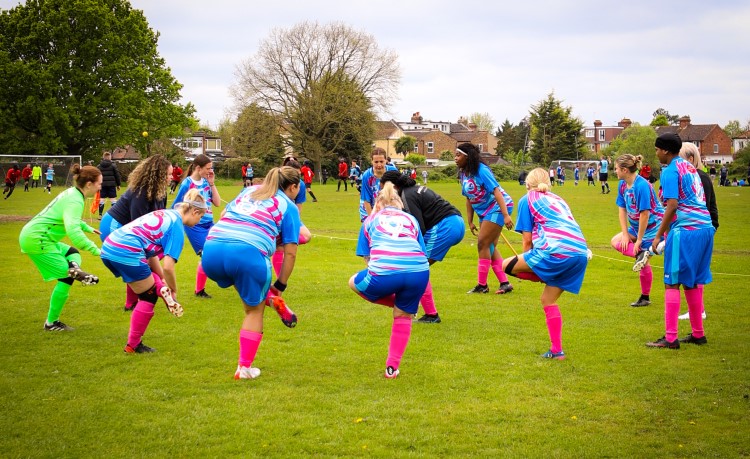


I HAVE TURNED UP AT A GROUND TO FIND SPACE FOR WARMING UP IS AT A PREMIUM. WHAT DO I DO?
DS: "On the FA Level 1 and 2 courses, we do some fun little arrival games off the pitch that you can do to warm up.
"We have to create a safe environment where young people can make mistakes..."
"But it’s also an ideal chance for coaches and the children to be creative - warming-up in tight areas, the match movements, dynamic stretches, fun games, tag games, things with a football, can all be done in a tight space, as long as it is safe.
"The age group will dictate how much they need. But there are ways of engaging children in tighter areas, and they can still get themselves ready to play."
ONE OF MY OUTFIELD PLAYERS HAS MADE AN ERROR LED TO A GOAL AND THEIR HEAD HAS DROPPED. HOW SHOULD I DEAL WITH THAT? WHAT INTERVENTION SHOULD I MAKE?
DS: "There is no right or wrong, but there are some key things we have to think about.
"First of all, we have to create that positive, safe environment where young people can make mistakes, because they are a really important part of the learning process. And the younger they are, the more mistakes they are going to make.
"Our response dictates how people feel. So if I criticise someone, that is going to make them feel a certain way. If I respond differently, and encourage and support them or even just don’t acknowledge it to let them self-rectify, that will have an impact on how they feel.
"Every person is different - as coaches we need to get to know the person. It is really important we understand what each person needs, and this links to challenging our communication.
"So our responses to the mistake could be you say nothing, they just self rectify; it could be a smile or a thumbs up; it could be encouragement; it could be a little question to refocus them on to what they are doing.
"It could be a specific challenge. If, for instance, they have given the ball away, it might be to say ’next time, try to have your eyes up’, or ’do you need to pass? Maybe stay on it and dribble’.
"It may be that you just encourage team- mates to support them, because sometimes even the younger kids - four or five-year-olds find better ways than us to deal with "Also, what is a mistake? A mistake to you might not be a mistake to me. If the intention was correct, and they just got something slightly wrong, you might praise the intent, rather than focusing on the error part of it."
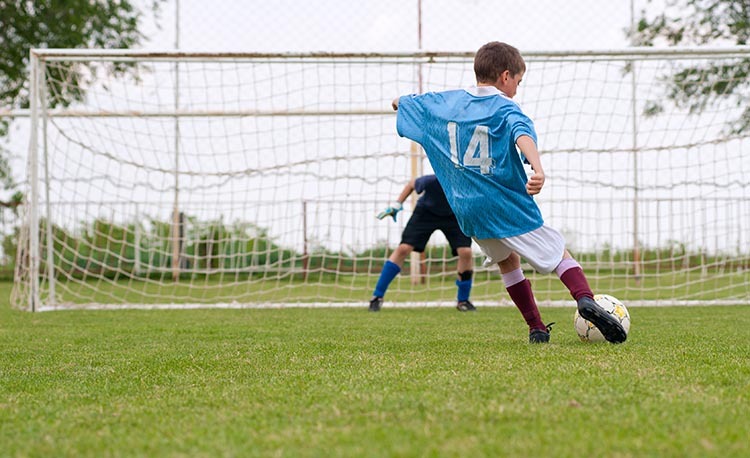
MY TEAM HAS BEEN GIVEN A PENALTY. DO I HAVE A REGULAR TAKER, A GROUP OF POTENTIAL TAKERS, OR ROTATE IT AROUND THE SQUAD?
DS: "I think it depends on the age. For me, in the younger age group, you want everyone to take a penalty.
"Typically, coaches are pretty good at that they will have a little penalty competition in training and some do it after matches, just as a little practice for further down the line, particularly if they have got cup games coming
"I want everyone to be good at everything, especially in the younger age groups. When you go up the age groups, you might have a designated penalty taker, or there’s competition between a few people, or it might just be you give them the ownership. For me, it will just be whoever wants it is going to take it. It’s not a big issue for me.
"What is a mistake? If the intention was correct, you might praise the intent..."
"I think when you get to competition football, further up their journey, and it means a little bit more, then you probably have practiced more, you have probably got a designated penalty taker - or two or three options - or you might dictate as the coach who does it.
"But, for me, ownership and everyone having a go and getting a chance to practice is really important."
Related Files
WHAT ARE THE GOOD WORDS I SHOULD USE IN THAT SITUATION AND WHAT ARE THE COMMON MYTHS AROUND COACH COMMUNICATION?
DS: "The common mistakes are that we commentate on the whole game - ’shoot!’, ’pass!’, ’dribble!’ - and we use terminology that children and young people do not understand.
"A friend of mine works in a primary school and when she said to them ’shake hands’, they literally shook their own hands as if they were trying to dry them off rubbing them dry.
"I think it’s a real challenge of communication - what we say or mean is not necessarily what the other person has received.
"So the younger they are, the more simple the terminology. For the younger age groups I coach, we use things like ’little toe, big toe’ rather than inside and outside of foot, and ’stop and squash’ - so stopping and squashing the ball, rather than some other terminology.
"It is just educating people not to keep shouting out ’pass, pass, pass. pass’, because that’s not what we really want, especially in the younger age group.
"For coaches, it’s just about reflection. A really good tool is to audio-record yourself during a matchday or training, and then play it back and go, ’which bits actually makes sense?’.
"If you talk too much, people need to filter out the information. Brief is good, but also use terminology that you’ve used in training, specific terminology that everyone understands - ’travel’, ’time’, ’turn’, ’hold’, ’man on’."

HOW DO I KEEP MY SUBS ENGAGED?
DS: "It depends on the age group. It might just be that they’ve got a fun little game to play in a safe area.
"They can make notes on tactics boards, they can keep an eye on a team or individual challenge, or they can have their own little player-cam where they are watching a certain certain player.
"They can have observation tasks, like recording shots on goal, how many dribbles, how many times someone intercepts the ball and travels with it, or whatever it is that links to your training.
"They might just be watching the game and you say to them, ’you’re going to go on and play in this position, so just watch the opponent or who is playing in that position’.
"They can be mini-coaches, involved in the team talk, and can give feedback to positions.
"If it’s cold, they can just be given a safe area to keep warm and active, because the younger age groups might not be interested in watching the game, like we as adults do."
MY TEAM ARE IN A CUP FINAL BUT MY SUBSTITUTES AREN’T NEAR THE LEVEL OF THE STARTING PLAYERS. IN A CLOSE GAME, DO I BRING THEM ON TO INVOLVE THEM AND RISK LOSING? OR DO I STICK WITH IT TO WIN THE GAME AND RISK UPSETTING THE UNUSED PLAYERS AND THEIR PARENTS?
DS: " It’s difficult, coaching - it’s difficult making those decisions If you are in any decision-making capacity, you can’t please everyone all the time. But for me, it links to your philosophy.
"If, all season, you have rotated, included people, shared the workload and shared responsibility, and then suddenly you change because of one game, you are open to criticism.
"So it comes back to your values, your coaching environment and all the things you have discussed with parents along the way. If you have the confidence to stick to all that, players and parents will understand.
"The bigger impact comes if you change your philosophy for one game. There is no guarantee you win the game anyway, and there are examples of teams folding or players leaving because suddenly the philosophy and values change from what has been done all season. Some children potentially will carry that forever.
"It comes from that positive learning environment across the season, where things are the same - parents are then already on board. So even if it’s a cup final, nothing changes and you have the conversations - ’we’re going to play this team, we’re going to rotate, we’re going to guarantee your son or daughter x amount of minutes’.
"If you give players a positive experience, you inspire them to make a difference..."
"Everyone is clear, then, and I think that has more weight and value in the long term than being blinded by the result or the occasion and just wanting to win that one game."
WHAT SHOULD MY POST-MATCH PEP TALK SOUND LIKE IF WE’VE LOST?
DS: "Sport, and football, teaches us all the lessons of life. Sometimes we lose. But we learn about ourselves, our ability to resolve issues and our resilience.
"I think questions post-match are really important - what did you try today? What did you learn today? What was the best bit? What is one thing you did today linked to your individual or team challenges? It might just be as simple as giving the group a question on a tactics board.
"Or, alternatively, get the parents to ask them on the way home about how they felt and what they enjoyed. It doesn’t always have to be us as the coaches, because sometimes we forget what it’s like when we’re young. We don’t want to answer questions in front of a group.
"On the Saturday morning sessions I work on, with four, five and six year olds, we get them to chat to a friend and they discuss something they did really well that day - the little skill or trick or turn - and they share it, because it is easier to do that then chat in front of a group when everyone’s watching."
Latest Issue
Subscribe Today
Subscriber Testimonials
Gerald Kearney, Downtown Las Vegas Soccer Club

Paul Butler, Florida, USA

Rick Shields, Springboro, USA

Tony Green, Pierrefonds Titans, Quebec, Canada
Subscribe Today
Newsletter Sign Up
Subscribe Today
Latest Issue
Discover the simple way to become a more effective, more successful soccer coach
In a recent survey 89% of subscribers said Soccer Coach Weekly makes them more confident, 91% said Soccer Coach Weekly makes them a more effective coach and 93% said Soccer Coach Weekly makes them more inspired.
*includes 3 coaching manuals
Get Weekly Inspiration
All the latest techniques and approaches


Soccer Coach Weekly offers proven and easy to use soccer drills, coaching sessions, practice plans, small-sided games, warm-ups, training tips and advice.
We've been at the cutting edge of soccer coaching since we launched in 2007, creating resources for the grassroots youth coach, following best practice from around the world and insights from the professional game.
