
 close
close


 LOGIN
LOGINYou are viewing 1 of 1 free articles
Taking lessons from soccer into school
Football Beyond Borders’ JEREMIE TCHIBO tells SCOTT MOWBERRY how he helps youngsters engage with education by relating it to the sport they all love



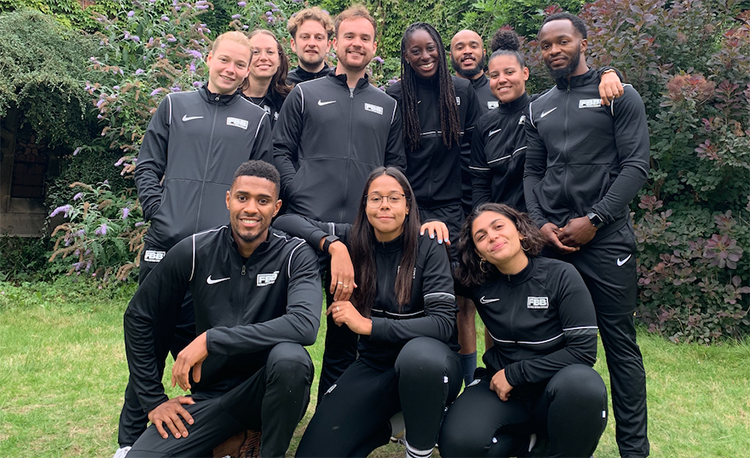
Football Beyond Borders (FBB) is a UK-based charity working with young people from areas of socio-economic disadvantage, who are both passionate about soccer but disengaged at school.
FBB provides support to these young people, both in the classroom and on the pitch, to help them finish school and make a successful transition into adulthood.
Jeremie Tchibo is a project lead for FBB, in charge of the organisation’s input into five schools across London. He is also a grassroots coach, most recently working with an under-16s boys team.
Jeremie spoke to Scott Mowberry, of our friends at the Soccer Coaching Podcast, about the ins and outs of FBB, how the theory and the practical can interact and what he has learned from his work at FBB that he takes into his grassroots coaching…
SM: Do you have to map into the UK’s national curriculum or can you put what you want together? Do you have to think about how you may embed literacy or numeracy?
JT: “Not necessarily. We have people that design our programs. And the programs are really amazing.
"The first scheme of learning, called ’Squad Goals’, was to do with teamwork and how your individual behaviour has an impact on the people around you.
"How does your positive behaviour impact your teammate? How does a simple ’well done’ or ’unlucky, we try again next time’ impact your teammate?
"One thing I found from my groups is they say they do their best when they are encouraged. If that’s what you want to hear, then what are you yourself doing to encourage other people as well?
“We then looked at ‘Perfect Penalty’, which highlighted high-pressure situations. A real-life example was the Euros final [when England lost to Italy].
"I asked the young people how they would advise someone like [unsuccessful penalty taker Bukayo] Saka. Next time, how do you want them to take the penalty? How do you think they should handle that pressure?
"A lot of them said about taking a deep breath, maybe doing a countdown. Then it’s using what they’re saying to link it to school. How do you handle high-pressure situations? When you have an exam, what do you do to calm down and cool off?
"We looked at high-pressure situations...it’s using what they say to link it to school..."
“Another scheme of learning was around them coming up with a rule which makes them think about some injustices.
"A lot of them quite passionately spoke about racism and knife crime, and changes they would like to see enacted to resolve or reduce these issues.
“The last scheme of learning was called ’Be Your Best Self’ - thinking about when they’ve been their best selves and championing each other.
"In every session, we have a moment where someone, or everyone, gives applause to someone because of something they’ve achieved.
“I also look at behaviour points. If students are achieving better or higher behaviour points from the previous week, it’s on the board and we champion them for it as well.
"I’ve got something called their ’manifesto’ on the board. This is from their first scheme of learning, when they created six rules they were all going to abide by.
“A lot of them talked about being respectful to everyone, being a role model within the group, treating everyone how they want to be treated.
"The group I’m with today, they even said, ’protect or look after each other’s mental health’. These guys are in year 8 [ages 12-13] and these are the sort of things they’re bringing up, which is amazing."
SM: How do you use the practical side of football to embed some of these values?
JT: "Going back to the high-pressure stuff, at the beginning of that topic they set themselves challenges in the classroom - ’Where would you shoot your penalty?’. We got them to do it on a piece of paper.
"Now we’re actually in front of a goal - try and do it. As a team, how can we encourage them? In real life, you’re in a stadium, you’ve got the crowd cheering or jeering you. How do you manage that high pressure?
“For the young people, a lot of the answers are, ’I’ll close my eyes, calm down’, or ’I would simply think about where I’m taking that penalty’. They’re just thinking about the success, rather than worrying about the problem in front of them in that moment. We then link it to the classroom.
“So, for example, who feels nervous in an exam? Who feels the high pressure of an exam? They will say, ’Yes because I have to achieve my goals. I have to achieve a high grade. I have to make my parents proud’, or ’I want to be the best in my class’.
"This shows their self awareness. They know what they need to do to improve.
"If you missed your penalty, did you miskick it? Were you positioned badly? Did you lean back too much?
“All those things link back to the classroom. How do you manage yourself in an exam? Before you’ve opened the book, are you already panicking? Do you close your eyes to do a little countdown and set yourself into the mood of actually completing your exam? Did you revise?
“With the link to the classroom and to football, they’re seeing the realistic side. They’ve seen the example of a real-life player, who they all support, and we’ve put them in that situation, making it relatable.
"Now they’re thinking ’okay, when I’m in class, how do I apply this to myself?’.
“We want them to have the autonomy to regulate themselves. In return, we hope engagement will increase, they will enjoy school better, they will navigate school better and make new friends.
SCW: How much of the stuff from FBB do you use in your coaching space?
JT: "Simply being here five days a week, it’s changed my approach to how I coach my boys.
"Even though they are a slightly older group, the way I speak to them and manage them has changed. Identifying the needs of the young people you’re working with is really important.
"Everyone learns in their own way. You might have a young person in a group who, as soon as they get to training, are already playing with a ball.
"Being here five days a week, it’s changed my approach to how I coach my boys..."
"You might have a young person who is sitting there waiting for the coach - they want to be given an instruction before they do something.
“I know that my group, when they come, they want to play football. They’re U16s. They want to learn, but they want to play.
"The first few minutes, as they come in, I allow them to play with the ball. They ping it around, do a kickabout, whatever.
"I do a countdown and everyone knows they have to come in. Everyone knows they have to be quiet, they have to be tuned in.
"I think it’s important at the beginning of the season to understand the players you’re going to have in your team.
“We are all human and you need to know what sort of space you’re providing for this young person - whether there is something we need to do to support them.
"Do they wear glasses, for example? Can they not see very far? How are you catering for these needs, in the space and in the game? How are we as coaches catering for that young person?
“It isn’t always easy. I think it’s important to have an assistant, to have someone that can support you in your work - because if something does happen, having that extra hand makes life a little bit calmer.
"It helps me if parents are supporting, whether it’s just to simply bring equipment or maybe support on the side, where they’re looking out at the activity and learning as well.
“Being able to provide a space where not just the young person is learning, but everyone around you is learning, makes life a bit easier."
Related Files

Scott Mowberry
Latest Issue

Subscribe Today
Subscriber Testimonials

Gerald Kearney, Downtown Las Vegas Soccer Club

Paul Butler, Florida, USA

Rick Shields, Springboro, USA

Tony Green, Pierrefonds Titans, Quebec, Canada
Subscribe Today
Newsletter Sign Up

Coaches Testimonials
Gerald Kearney, Downtown Las Vegas Soccer Club
Paul Butler, Florida, USA
Rick Shields, Springboro, USA
Tony Green, Pierrefonds Titans, Quebec, Canada
Subscribe Today
Latest Issue

Discover the simple way to become a more effective, more successful soccer coach
In a recent survey 89% of subscribers said Soccer Coach Weekly makes them more confident, 91% said Soccer Coach Weekly makes them a more effective coach and 93% said Soccer Coach Weekly makes them more inspired.
*includes 3 coaching manuals
Get Weekly Inspiration
All the latest techniques and approaches


Soccer Coach Weekly offers proven and easy to use soccer drills, coaching sessions, practice plans, small-sided games, warm-ups, training tips and advice.
We've been at the cutting edge of soccer coaching since we launched in 2007, creating resources for the grassroots youth coach, following best practice from around the world and insights from the professional game.
