
 close
close


 LOGIN
LOGINYou are viewing 1 of 1 free articles
Teach the technical before the tactical
Grassroots coaches must prioritise basic skills and should not be seduced by what they see in the professional game, says IAN BARKER


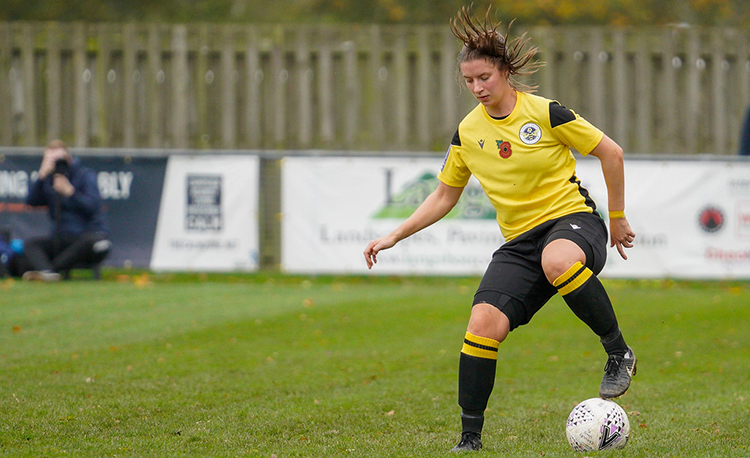
“Formations in small-sided games are not as important as the players understanding their roles and responsibilities for the positions they are asked to play, when their team is either in possession or out of possession.”
Ian Mulliner, director of coaching, Massachusetts Youth Soccer Association
Access to high-level professional soccer with the accompanying commentary and punditry is a great resource for any coach.
It can, however, be a challenge for the grassroots coach to differentiate between the context of the professional game and the environment they work in.
Grassroots soccer should be about individual player development, fun, learning, friendships and acquiring a lifelong love of the sport.
Professional soccer is a results-driven business of competition and entertainment, where returns are expected in short order.
From 4v4, through 7v7, 9v9 and on to 11v11 - the pathway directed by U.S. Soccer - the grassroots coach is always challenged with how to deploy players across the field.
In truth, though, that shape is only really understood at kick-off, as players then disperse and react to the movement of the ball, opponents and areas of the field where action occurs.
At the youngest ages, we could consider that a 4v4 is really a 7v1, as the children all seek to interact with the ball and are often oblivious of spacing and teammates.
As Ian Mulliner eloquently states above, far more important than team shape is the ability of each player to perform fundamental soccer techniques and develop an understanding of their basic use of those techniques in the game situation.
With this understanding, the grassroots coach should be concentrating on developing the dribbling, passing, shooting and tackling technique of each player.
Then, as the players demonstrate they have some technical base providing ideas that relate to in and out of possession, there is more relevance to immediate teammates and opponents and basic shapes, such as triangles and diamonds, and ideas of length, width and depth.
Stringing together a series of numbers that add up to the game format - be it 1-2-1, 1-3-3-2 or 1-4-3-2-1 - is too often the primary focus, perhaps obsession, of the grassroots coach, because of what they take away from watching professional soccer.
Often, such focus is the start and end of the coach’s teaching and the hard work of developing technique and simple tactical understanding is ignored.
"Complex formations do not address the basic needs of the young player..."
If the grassroots coach continues to enjoy watching pro soccer but tunes out the commentary and punditry, and instead watches the action closely, a lot can be taken away that is positive.
Seldom does the television show all 22 players - rather, the action at the highest level is most often a series of 1v1s, 2v1s and 2v2s, performed with exceptional technique and strung together with intention, but still very much the basic confrontations of grassroots soccer.
Players need grounding in the building blocks of gameplay at every development stage, marked out by progressively greater numbers on the field.
It is good to explain the grassroots game with the language of space and shapes, but complex tactical formations do not address the basic needs of the young player.
It is also good to know, if it applies, what the club’s long-term game model is and how the players will transition through a program over several years.
Still, the player who is technically competent, understands their role and can identify moments in the game at their relative level is one who will ultimately be able to fit into any formation at a senior level and perform.
As grassroots coaches, we must first see ourselves as teachers as opposed to tacticians and theorists. Our players will enjoy us, and the game, more with this type of focus.
Related Files

Ian Barker
Latest Issue

Subscribe Today
Subscriber Testimonials

Gerald Kearney, Downtown Las Vegas Soccer Club

Paul Butler, Florida, USA

Rick Shields, Springboro, USA

Tony Green, Pierrefonds Titans, Quebec, Canada
Subscribe Today
Newsletter Sign Up
Coaches Testimonials
Gerald Kearney, Downtown Las Vegas Soccer Club
Paul Butler, Florida, USA
Rick Shields, Springboro, USA
Tony Green, Pierrefonds Titans, Quebec, Canada
Subscribe Today
Latest Issue

Discover the simple way to become a more effective, more successful soccer coach
In a recent survey 89% of subscribers said Soccer Coach Weekly makes them more confident, 91% said Soccer Coach Weekly makes them a more effective coach and 93% said Soccer Coach Weekly makes them more inspired.
*includes 3 coaching manuals
Get Weekly Inspiration
All the latest techniques and approaches


Soccer Coach Weekly offers proven and easy to use soccer drills, coaching sessions, practice plans, small-sided games, warm-ups, training tips and advice.
We've been at the cutting edge of soccer coaching since we launched in 2007, creating resources for the grassroots youth coach, following best practice from around the world and insights from the professional game.
