
 close
close


 LOGIN
LOGINU9-11s coach Ross Brooks: The love of the game
West Ham United U9s-U11s coach Ross Brooks wants his youngsters to get the same buzz from learning as he does from coaching, he tells Steph Fairbairn...
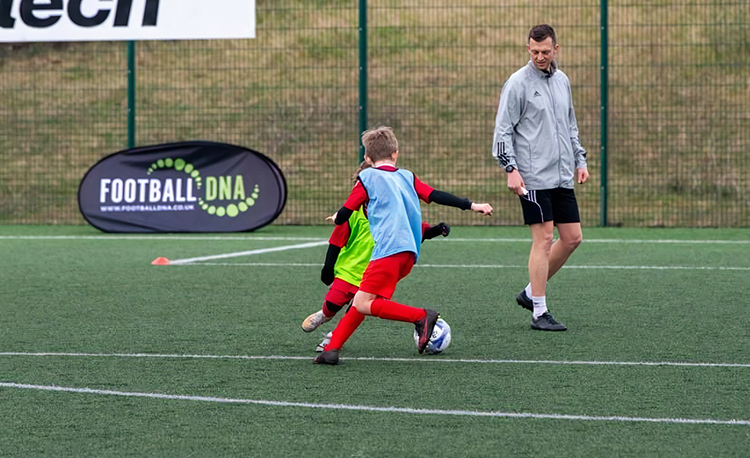
Since starting coaching at 14, Ross Brooks has developed a style and approach that sets him apart as a brilliant foundation-phase coach.
Although he has experience across many levels and forms of the game, Ross says he does enjoy teaching that 5-11 age group the most, and his mission is to make sure the kids he coaches are enjoying it too.
Currently the u9s-u11s lead coach at West Ham United, Ross focuses on creating an environment where players can fall in love with the game.
SCW caught up with him to find out how he judges the needs of players and how we can all make sure joy is present in training sessions, regardless of the age group…
SCW: You’ve stayed in the foundation phase, which is ages 5 to 11. What is it that you love so much about that age group?
RB: “I love that relentless enthusiasm the kids have. They will turn up full of energy and really wide-eyed. They are so excited and want to hang off your every word.
"They just look like they love playing football with their friends. I think when you work with different age groups and different environments, sometimes you can lose that.
“There probably is an element of selfishness to it too. Even if you have had a bit of a tough time or a bad day, you know, whenever you go and work with the kids, they will completely change your outlook on things and how you’re feeling just because of their enjoyment and excitement.
“I’m really grateful to be able to do something that I enjoy. There’s not many people that get to work in football and also get to do something that they love doing."
SCW: What should a foundation-phase coach be focusing on?
RB: "For me, it’s mainly around nurturing their love for the game. Our job as coaches in those younger age groups is to make sure that when they come into your phase, they’re leaving you with the same enjoyment, enthusiasm and love for playing football.
“As they get older, the more they enjoy it, the more they’ll want to practice and play, and be really engaged, which is only going to help them learn, develop and improve.
“One coach said to me about being redundant as a coach when you’re working with this age group; that should be your aim.
"It’s not about you, it’s about the kids. You’re almost working in the background, not really being noticed. I think that’s a really cool way of looking at working with these younger groups.”
"Even if you’ve had a bad day, the kids will completely change your outlook on it..."
SCW: What does that look like when you’re on the grass working with those kids. How can we set it up to work in that way?
RB: "It’s really important you make the environment all about the needs of the kids.
"What do they need to work on? What are they really good at? Where do they need help? You’re always considering their needs.
“It’s also really important that you are experience-driven in the way you work - you’re trying to enrich that environment with as much variety as possible when you’re working with those younger age groups.
"A downside of having so many practices and sessions is that you can get lost in your coaching points and all the organisation, and lose sight of what it’s all about, which is the kids playing football and having a great time.
“You can do that by making sure you’re varied with your session structure - sometimes you might start with a game, or some multisport stuff, or some 1v1s.
“Then it’s finding ways of making it really awesome for the kids. If you’ve got the option of having some music playing, that’s always a good thing. Try recreating Champions League tournaments, getting some trophies out every now and then, getting some of the older kids around it and doing some mixed age-group stuff.
“The most important thing is they just play. With enforced structure, you’ll get some returns, but you’ll lose that playfulness. I think it’s important for younger children to explore through play, particularly when they’re taking their first steps into football."
Be a more effective, more successful youth soccer coach
- Win more games, without sacrificing the crucial element of fun
- Develop every player, regardless of vast differences in ability
- Run a respected, professional programme - even with a full-time job and limited time
Subscribe for full access
Or register and unlock 2 free articles,
receive our weekly newsletter, and
get a FREE coaching e-book.
Or if you are already a subscriber login for full access.

Steph Fairbairn
Latest Issue

Subscribe Today
Subscriber Testimonials

Gerald Kearney, Downtown Las Vegas Soccer Club

Paul Butler, Florida, USA

Rick Shields, Springboro, USA

Tony Green, Pierrefonds Titans, Quebec, Canada
Subscribe Today
Newsletter Sign Up




Coaches Testimonials
Gerald Kearney, Downtown Las Vegas Soccer Club
Paul Butler, Florida, USA
Rick Shields, Springboro, USA
Tony Green, Pierrefonds Titans, Quebec, Canada
Subscribe Today
Latest Issue

Discover the simple way to become a more effective, more successful soccer coach
In a recent survey 89% of subscribers said Soccer Coach Weekly makes them more confident, 91% said Soccer Coach Weekly makes them a more effective coach and 93% said Soccer Coach Weekly makes them more inspired.
*includes 3 coaching manuals
Get Weekly Inspiration
All the latest techniques and approaches


Soccer Coach Weekly offers proven and easy to use soccer drills, coaching sessions, practice plans, small-sided games, warm-ups, training tips and advice.
We've been at the cutting edge of soccer coaching since we launched in 2007, creating resources for the grassroots youth coach, following best practice from around the world and insights from the professional game.
