
 close
close


 LOGIN
LOGINYou are viewing 1 of 1 free articles
The role of PE within coaching and sport
Teacher and former S&C coach ROSS WILLIAMS discusses PE’s ’identity crisis’, societal assumptions and how to engage parents with SCW’s STEPH FAIRBAIRN


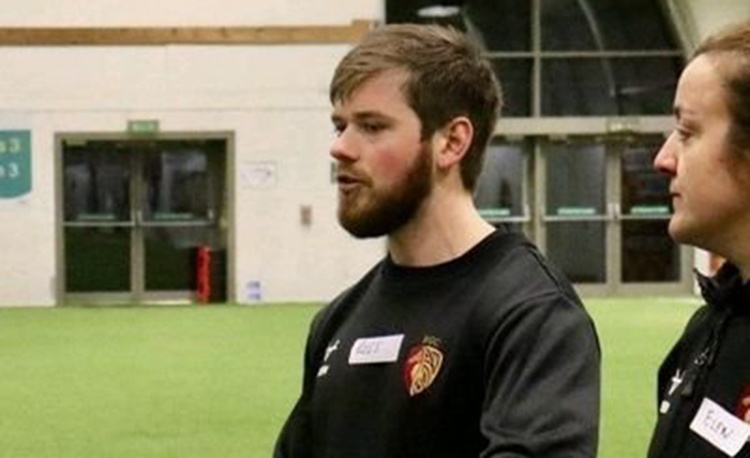
Ross Williams is a physical education teacher, working in a small school in north Wales.
Having started out as a strength and conditioning coach working in elite pathways, Ross now applies his skills to his PE practice and curriculum.
SCW caught up with him to find out more about his approach, talk about what planning and reflecting looks like for him, and get some tips for coaches working in a school context…
SCW: Thinking about coaches that may be working in schools, or sometimes going into schools alongside some of their coaching roles, what do you think the purpose of PE in schools is? And for anyone delivering those sessions in schools, what is their role?
RW: “That is a big question. It’s quite relevant at the moment, with the Commonwealth Games getting a lot of press and the inspirational stuff from the [England Women’s] Lionesses and their story.
"It’s great and there’s lots of stuff that can be capitalised on there. But it can also muddy the waters a bit - PE already has a slight identity crisis around its purpose.
"There’s an obesity epidemic - can PE fix that? We need to leave a legacy in elite sport - can PE do that?
“But I think we can distil it down to its most simple form - and that is movement is a huge part. It’s integral to the human experience.
"It’s so movement and experience based that we don’t need to get into a debate - is it sport? Is it physical activity? Is it fitness?
"It should be about creating a variety of movement experiences with enough room for children to find what is meaningful to them within that.
“It might be that they really enjoy manipulating a football and beating opponents, and they’re really skilful in that.
"It might be that they really engage with martial arts and they enjoy isolated movement practices, or one-on-one.
“Then it would be the job of PE teachers to find those opportunities to explore that in great depth.
"But it shouldn’t be about creating athletes. It should be about helping people to work out what is their thing and supporting them through that journey.”
"PE is about creating experiences for children to find what is meaningful to them..."
SCW: Do you see some assumptions around the kinds of sports kids should be playing, particularly based on gender?
RW: "A lot of those assumptions come from the teacher or the coach in charge - so be aware of your own story, and how that plays out in the decisions you make.
"It’s particularly common in PE - I’m sure it is in coaching as well - to try and replicate experiences we’ve had.
"I would encourage others to develop a knowledge of the culture that exists in your school or club.
"For example, our school is tiny - 280 kids, from nine to 19, girls and boys. It’s always been about skill for us. We’ve never been the biggest - we’ve had to combine year groups.
"This approach makes sense to our kids, because they love being the underdogs and using lots of skill and deception.
“It might be, in another environment, that it’s about being more physically competent, more powerful, and matching your offering to what’s in front of you.
"In terms of whether gender plays a part, I think you were right in using the word assumption. Moving past some of those assumptions is really important.
"We shouldn’t just offer girls football, because of the Lionesses, we should look at our context, the kids in our care, see how that fits their narrative and aspirations and if we can create those environments.
“We use mixed classes all the way to year 10 [age 15], so girls and boys interact together. And that really helps to blur the lines of the societal assumptions.
"Once you get past that, that’s when there are new opportunities for them to create their own stories and actually it doesn’t matter anymore.”
SCW: How do you use your time and what does the planning process look like for you?
RW: "It’s harder when you are time-poor, but the thing I would be firm on never compromising on is reflection.
“So, before a session, lay out some expectations of your rationale behind what you’re doing and what you hope to achieve.
"Once you’ve got that pre-mortem in place - this is what I hope to see or expect - that is your anchor after the session, to reflect back on.
“That reflection then informs your next step. You always have a direction of travel but, for us, we’re less concerned with the exact steps because we can’t know what step two is until we’ve taken the first step.
"That becomes that constant practice of reflection rather than creating this really elaborate plan you don’t have time for.
“Reflecting doesn’t require as much time because it can be on the drive home - you can hit record on your phone - or it could be while you’re walking the dog.
"it’s a lot more enjoyable way to do it than to really stress too much about finding time to plan in great detail.”
SCW: In schools, there are many dynamics a teacher doesn’t see - so much that goes on in the classroom. How would you go about managing them?
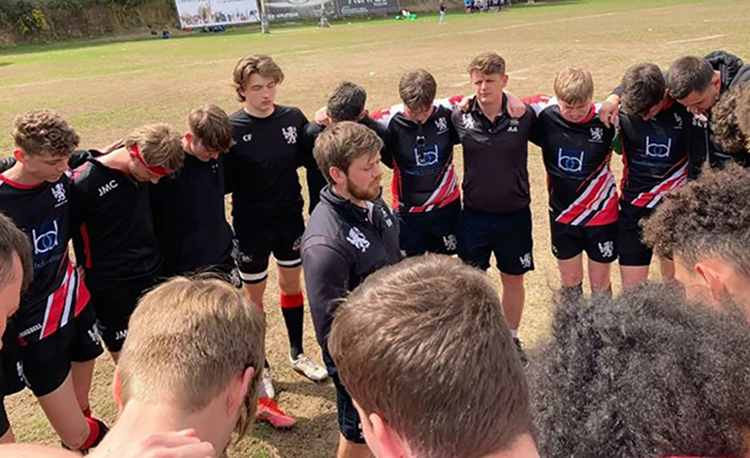
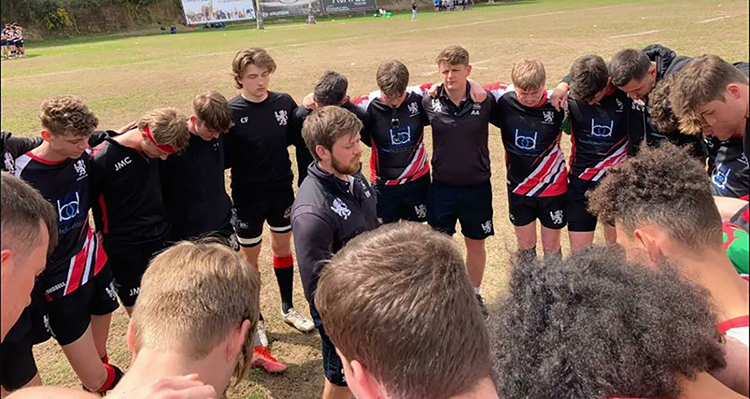
RW: "If you came into a session, a lot of the time it would look quite chaotic - but that’s because we are pretty clear on our understanding that learning is not a linear process
"Parents will have their own assumptions of what sport coaching should look like..."
"We embrace the chaos a bit and build in genuine parts of the environment that allow kids to ’self-regulate’.
“So with younger year groups, years five and six [ages 10 and 11], we would build in an area of the session called a thinking inbox where they’re encouraged to go, if they need a self-selected timeout of the session.
"It’s up to us as the teacher to support them in regulating their emotions so they can engage again.
"We use a lot of challenge cards - ’I want to see how many x you can do’. Maybe you’ve given the choice of three challenges so you’re raising that level of autonomy.
“You can only do those things when you realise you’re not the most important person in the process.
"You can step back, let things emerge and then choose meaningful interventions."
SCW: How do you engage with parents and help them into the process?
RW: "Parents will have their own assumptions based on their lived experiences of what sport coaching should look like.
"That might come from what they see in elite sport, it might come from a really horrific experience in their childhood.
“So it’s about helping them to engage in their own kids’ experience, rather than passing their perceptions on to their kids.
"If you have the luxury or the pressure of parents at your session, try to get them involved. That could be an active role - you could give out some challenge cards to parents on the sideline, so they are to notice how many times x happens.
"You’re actually educating the parents to the reality of what they’re seeing, beyond all those assumptions."
Related Files
Ross Williams
Latest Issue
Subscribe Today
Subscriber Testimonials
Gerald Kearney, Downtown Las Vegas Soccer Club
Paul Butler, Florida, USA
Rick Shields, Springboro, USA
Tony Green, Pierrefonds Titans, Quebec, Canada
Subscribe Today
Newsletter Sign Up
Coaches Testimonials
Gerald Kearney, Downtown Las Vegas Soccer Club
Paul Butler, Florida, USA
Rick Shields, Springboro, USA
Tony Green, Pierrefonds Titans, Quebec, Canada
Subscribe Today
Latest Issue
Discover the simple way to become a more effective, more successful soccer coach
In a recent survey 89% of subscribers said Soccer Coach Weekly makes them more confident, 91% said Soccer Coach Weekly makes them a more effective coach and 93% said Soccer Coach Weekly makes them more inspired.
*includes 3 coaching manuals
Get Weekly Inspiration
All the latest techniques and approaches


Soccer Coach Weekly offers proven and easy to use soccer drills, coaching sessions, practice plans, small-sided games, warm-ups, training tips and advice.
We've been at the cutting edge of soccer coaching since we launched in 2007, creating resources for the grassroots youth coach, following best practice from around the world and insights from the professional game.
