
 close
close


 LOGIN
LOGINYou are viewing 1 of 1 free articles
A design for life in a manic dual-role world
Ex-Everton Women’s captain LEANNE DUFFY explains to STEPH FAIRBAIRN how delegating, downtime and dog walking helps her juggle coaching and work


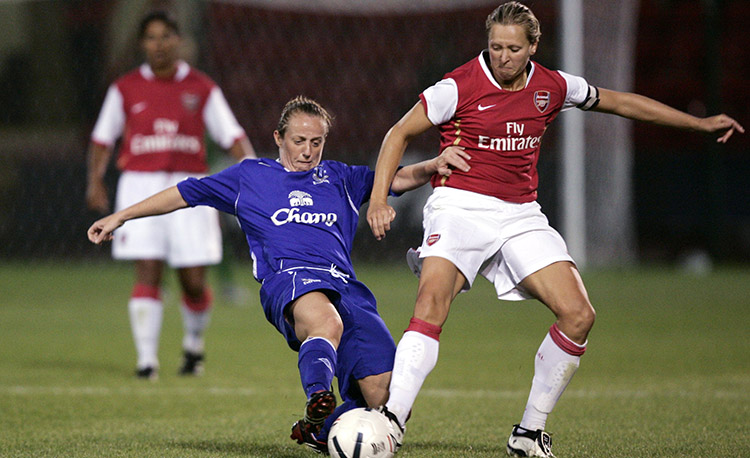
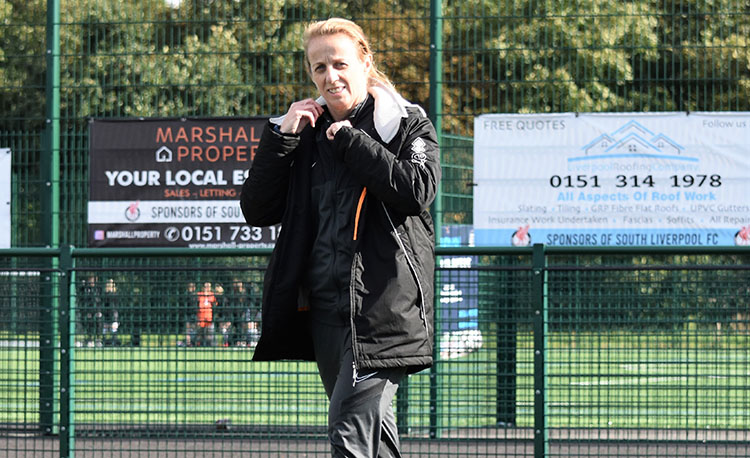
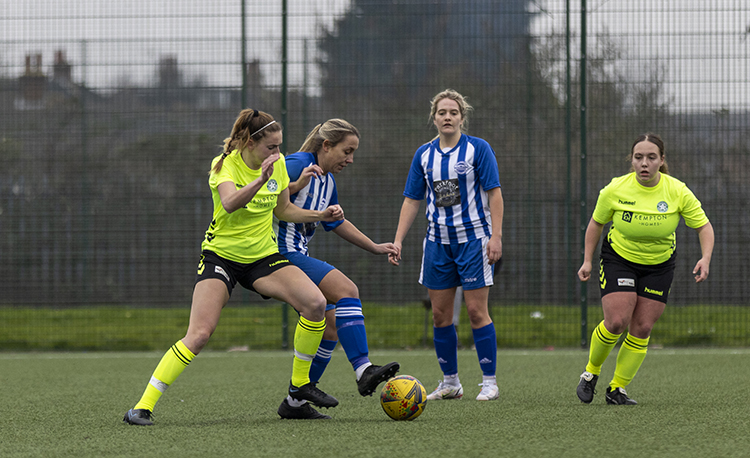
At just 15 years old, Leanne Duffy scored a nerve-shredding penalty for Liverpool in a Women’s FA Cup final shoot-out. By the age of 25, she had captained their cross-city rivals Everton in more major domestic finals, and later led them in Uefa Women’s Champions League matches. At 31, she had to retire due to injury. Now aged 40, Leanne is the first-team manager of Liverpool Feds, an independent women’s club who play in the fourth tier of England’s deep-rooted pyramid, three divisions below the star-studded professionals of the Women’s Super League. But there is no such full-time status for Leanne. For more than 20 years, she has combined playing and coaching with a busy role working as a civil servant in the UK’s Ministry of Justice. SCW caught up with Leanne to discuss how she juggles her work and coaching positions, her advice on effective time management and the transition from pitch to technical area...
SCW: Tell us a bit about your playing career...
LD: "I started playing at an early age for a local grassroots team, a boys’ team - at that time there wasn’t really youth girls’ teams. "Then they brought in the rule where you couldn’t play mixed competitive football beyond the age of 11 or 12. At that point, I’d joined Wigan Junior Latics. "I trained with them, played in friendlies, I went on tour to the Netherlands with them but I couldn’t play any competitive football for them. "At the age of 12, I joined Wigan Ladies and played adult football until I was 16. I then went to Liverpool Ladies and played for them until I was 20. I played in an FA Cup Final [in 1996] - it went to penalties, we lost but I scored a penalty. "I signed for Everton aged 20. I went on to become captain - we won the FA Cup and League Cup later on in my career and I captained them in the Champions League. I think I was probably 31 when I retired."
SCW: For a long time, you have balanced a playing career and your managerial career with another job. So what does a day in your life look like at the moment?
LD: "My job is quite flexible in terms of the hours that I work - that helps me fit in my commitments with Feds. "I work from home, which has made life a lot easier for me. If I need to speak to people during the day, I can do that.
"I have tried to set up a bit of a routine in terms of what days I do what things..."
"But, generally, I would do analysis or a session plan in the morning, then get into my daily work. I walk the dog when I finish work, then the early evening would be phone calls or Zoom calls, which help loads in terms of managing time better. "I speak to my [coaching] staff quite a lot on Zoom. It is quite intense trying to juggle the two but my work allows me to do that at the minute."
SCW: There’s probably a lot of coaches in a similar position. Do you have any tips about how you go about managing your time?
LD: "I do find it quite hard to just focus on one thing when you’ve constantly got your phone going, or there’s lots going on. So I have tried to set up a bit of a routine in terms of what days I do what things. "Monday mornings are always quite busy, finding out players’ availability and planning the week ahead, while there’s other days, like a Friday, where it will be a little bit more relaxed. I think that’s the key - finding a routine and sticking to it. "What has probably been the most helpful is having a good team of staff. I rely on them a lot to help get the most out of our resources, in terms of analysis, session planning or delivering sessions. "They are quite readily available - it makes it difficult if some of your staff are restricted in terms of when they can speak to you. I’ve not chosen that purposely, it’s just happened that my staff are quite available whenever I’m available."
SCW: Our sport can be all absorbing. Is it important for you to be able to switch off from the game sometimes? And if so, how do you go about doing that?
LD: "It’s difficult at times to get the right balance. If I’m honest, I don’t think I ever truly switch off during the season - maybe over Christmas. "If there’s a break, it’s easier to switch off than if there’s games coming thick and fast. "But I have done some work with our sports psychologist this season, because I did recognize during the Covid-19 break that I really enjoyed being able to just switch off. "It kind of made me question whether I wanted to come back in - whether my focus would have been fully at it, because I enjoyed the break so much. "So I spoke with the psychologist - he’s encouraged me to share more coaching responsibility with the staff and about incorporating a ’non-Feds day’ into my week - or days, if it can be It is hard to do it, but I do try and get at least one in. "If I’ve got phone calls I need to make around football, I try and do that while I’m walking the dog. It passes the time and then I can switch off a little bit when I get home. "I do enjoy socializing with friends and that does help me switch off a lot. Being organised as well, helps - I try and make sure I’ve done everything during the week, and then on Saturday I can just chill out before the Sunday fixture. It doesn’t always happen but I try."
SCW: Last weekend was the annual Women’s Football Weekend in England, where the female game is promoted during an international break in the men’s game. You were quite critical of WSL matches scheduled to clash with lower-tier matches. How do you think it can be avoided in future?
LD: "I just think more thought needs to go into reaching all audiences. I might be wrong, but I feel like the target audience for the Women’s Football Weekend was children - I understand that it’s about growing the game, but surely the biggest audience they have is female footballers? "The games were nearly all on Sundays, when most women are playing. I know some teams play on men’s pitches, so maybe they can’t play them on a Saturday. "But if it can’t be a Saturday fixture list, could it not be spread out over the weekend? Could it not be midweek fixtures? In the WSL, they are full-time athletes, they can play midweek games. "Also, the FA Cup Final is the biggest showpiece of the women’s game. This season is the 50th anniversary celebration - could the FA not have engaged with the FA Women’s National League [tiers 3 and 4] or the regional leagues [tiers 5 and below] for games to be postponed on that weekend and make a bigger deal of it? "I just feel they’re missing a trick somewhere and fans are missing out."
"If I’ve got calls to make around football, I do it while walking the dog.."
SCW: You have transitioned from a brilliant playing career into coaching. How easy was it and what was maybe more difficult about it?
LD: "Initially I joined Liverpool Feds as a coach. The manager was great and I kind of had free rein over the sessions. "But if they were a player short, I wanted to join in the sessions and I enjoyed that a little bit more than actually delivering the sessions. "I missed being a player and I think that probably took me about six months to get it out of my system. "It also helped that I retired from playing because of a recurrent knee injury. So I knew that although I could join in the odd session, I couldn’t play at any level. I was only kidding myself joining in training. "The easy bit about it is knowing I can make a session enjoyable. I know what players would enjoy in a session and what they wouldn’t - I know there’s a time and a place for both, but generally if you want to get buy-in from players, you need to make your sessions enjoyable and relatable. "Using previous experience in games helped me quite a lot. It gave me instant buy-in and respect from the players. "The hard bit is separating yourself from being a player. When I was joining in the sessions, I realised you are not seeing what you want to see as a coach. "I’m coming away from a session and thinking ’I enjoyed that’ but I actually don’t know if we got out of it what we wanted to get out of it. "I knew that I couldn’t continue to join in the sessions if I wanted to coach them."
Latest Issue

Subscribe Today
Subscriber Testimonials
Gerald Kearney, Downtown Las Vegas Soccer Club
Paul Butler, Florida, USA
Rick Shields, Springboro, USA
Tony Green, Pierrefonds Titans, Quebec, Canada
Subscribe Today
Newsletter Sign Up
Coaches Testimonials
Gerald Kearney, Downtown Las Vegas Soccer Club
Paul Butler, Florida, USA
Rick Shields, Springboro, USA
Tony Green, Pierrefonds Titans, Quebec, Canada
Subscribe Today
Latest Issue

Discover the simple way to become a more effective, more successful soccer coach
In a recent survey 89% of subscribers said Soccer Coach Weekly makes them more confident, 91% said Soccer Coach Weekly makes them a more effective coach and 93% said Soccer Coach Weekly makes them more inspired.
*includes 3 coaching manuals
Get Weekly Inspiration
All the latest techniques and approaches


Soccer Coach Weekly offers proven and easy to use soccer drills, coaching sessions, practice plans, small-sided games, warm-ups, training tips and advice.
We've been at the cutting edge of soccer coaching since we launched in 2007, creating resources for the grassroots youth coach, following best practice from around the world and insights from the professional game.
