
 close
close


 LOGIN
LOGINWhat to include in your pre-season sessions
John Allpress, a former Tottenham Hotspur and Football Association player development coach, explores the elements that make up a successful tune-up.

Most youngsters who play soccer tend not to become unfit during the off season – they will often take part in other sports and generally stay fit and active.
The pre-season period is the time they reconnect with the game and recondition their bodies, getting their muscles and neural pathways used to playing and moving in a soccer way again.
The reconditioning work that pre-season brings to your players’ fitness levels will reduce their risk of getting injured when the rigours of the regular season begin.
The main ingredients of a good pre-season include:
- Increasing your players’ base strength and endurance capacity.
- Helping them to re-program the movement characteristics of football.
- Enhancing their gross and fine motor skills for the game, through lots of ball work.
- Personalising their readiness for match play, via focused, deliberate practice matches and coaching.
After taking the above into account, planning your pre-season work should not differ from any other time of the season, with a focus for players primarily on enjoyment, learning and practice.
The key elements of a pre-season session
A session can contain the following parts:
Dynamic group warm-up
This is aimed at raising the heart rate. It should include jogging, jumping, twisting and turning, but it shouldn’t include static stretching.
Given the fact that pre-season most often takes place during hot weather, it’s important to pay particular attention to the warm-up section of a session.
Here’s an example.
Technical warm-up
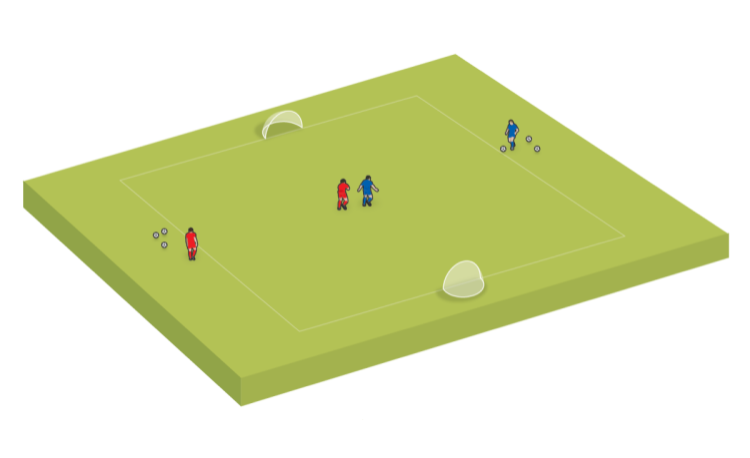
This is aimed at giving players lots of touches of the ball and should comprise unopposed multi-ball, multi-directional activities. A variety of shapes can be used to achieve this.
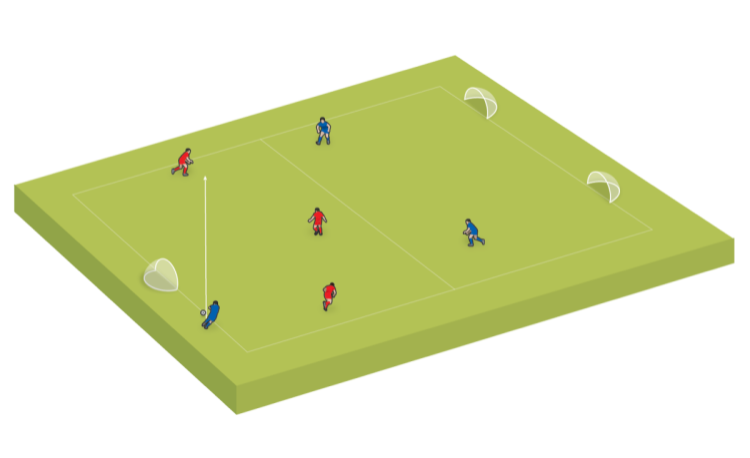
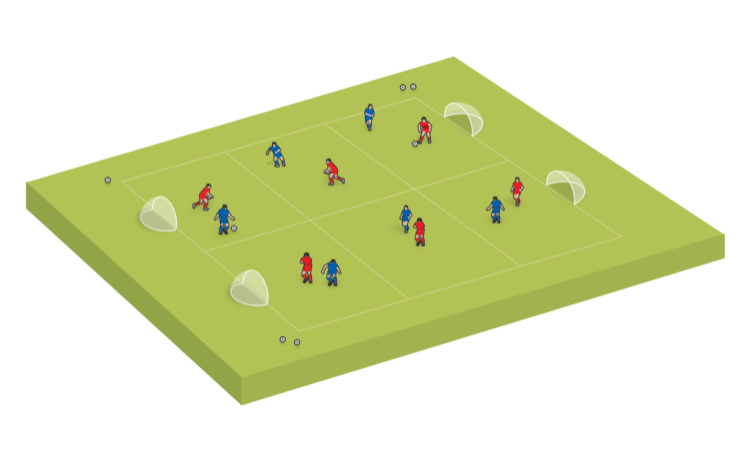
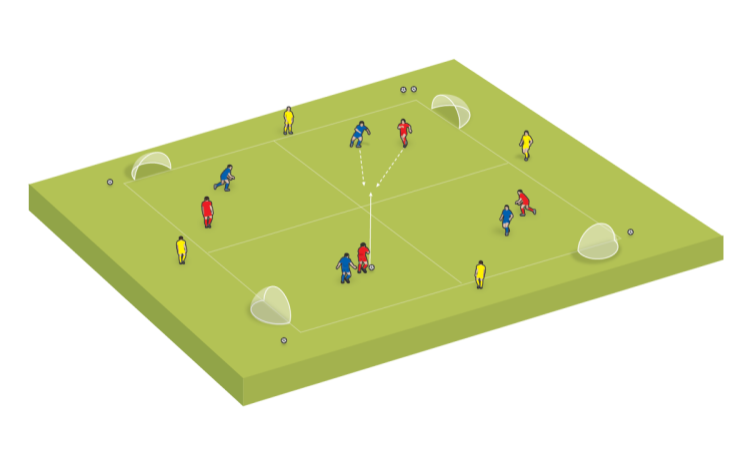
Some of my go-tos are: The passing box, Tricolour and Connecting.
Personalised session
This is focused, deliberate practice, aimed at addressing individual and unit needs. It is a game-based format.
Some of my go-tos are: Repetition circuit, End-to-end and back and Combat 2v2.
Group practice
This is aimed at building skilful play. It is a game-based format, with a clear objective and opportunities for decision-making. Playing in a big group will also lower the pre-season intensity.
The practice should reflect the rules of the game: It should be played on a rectangular pitch, with two goals placed centrally at either end. A halfway line should be marked out, with offside applying.
Work should be based on the principles of play, and coaches should intervene as little as possible to allow playing time to be maximised.
Small-sided game
This allows players to show the coach how clever and inventive they can be.
As with the group practice, it should reflect the rules of the game, and coach interventions should be kept to an absolute minimum.
Learn more about how to make the most of group practices and small-sided games.
Cool down
This is to allow players to get their bodies back to baseline state. It should include static stretching.
Here’s an example.
Be a more effective, more successful youth soccer coach
- Win more games, without sacrificing the crucial element of fun
- Develop every player, regardless of vast differences in ability
- Run a respected, professional programme - even with a full-time job and limited time
Subscribe for full access
Or register and unlock 2 free articles,
receive our weekly newsletter, and
get a FREE coaching e-book.
Or if you are already a subscriber login for full access.

John Allpress
Latest Issue
Subscribe Today
Subscriber Testimonials

Gerald Kearney, Downtown Las Vegas Soccer Club

Paul Butler, Florida, USA

Rick Shields, Springboro, USA

Tony Green, Pierrefonds Titans, Quebec, Canada
Subscribe Today
Newsletter Sign Up
Coaches Testimonials
Gerald Kearney, Downtown Las Vegas Soccer Club
Paul Butler, Florida, USA
Rick Shields, Springboro, USA
Tony Green, Pierrefonds Titans, Quebec, Canada
Subscribe Today
Latest Issue

Discover the simple way to become a more effective, more successful soccer coach
In a recent survey 89% of subscribers said Soccer Coach Weekly makes them more confident, 91% said Soccer Coach Weekly makes them a more effective coach and 93% said Soccer Coach Weekly makes them more inspired.
*includes 3 coaching manuals
Get Weekly Inspiration
All the latest techniques and approaches


Soccer Coach Weekly offers proven and easy to use soccer drills, coaching sessions, practice plans, small-sided games, warm-ups, training tips and advice.
We've been at the cutting edge of soccer coaching since we launched in 2007, creating resources for the grassroots youth coach, following best practice from around the world and insights from the professional game.
