
 close
close


 LOGIN
LOGINYou are viewing 1 of 1 free articles
Absorb the useful, dismiss the useless
Fulham’s BEN BARTLETT rounds off his 11-article series with a reminder to be flexible, take context into account and resist the temptations of a rigid syllabus



This series of 11 articles across the last year has encouraged coaches to traverse the craft of player development, representative of what is both important in any given context and what has utility.
Associating the way we coach with what the people in that environment value - alongside the methods that support players to get better at playing soccer - is the landscape we should explore together.
Our methodology can bridge these two critical aspects. However, mapping this methodology should consistently be a cautious and tentative, yet inclusive, exercise.
Our human desire to abstract reality into a theory, model or map is often a natural consequence of our want to attempt to understand the complexity of soccer, and the people who come together to play it.
While perhaps a natural human instinct, there may be benefit in resisting this tendency to abstract player development programmes into rigid models that are convenient, yet unable to reflect the complexity of human beings playing soccer.
Principally, this tendency associates to the well-intentioned yet obstructive industry intentions to, for example, segregate physical training from our psychological development, or the development of technique from the tactics that inevitably shape those techniques.
"Mapping learning is seductive - but when the map is drawn, the territory changes..."
Freeing ourselves from rigidly constructed, routinely repeated cycles of a syllabus removes many of the shackles that can limit coaches’ ability to respond with their players - instead, enabling us to adapt, flex and morph as the modality moves.
Mapping development or learning is seductive - however, the moment the map is drawn, the territory changes.
The opposition may play differently from what was anticipated, the players in our care may grow, plateau or regress unexpectedly or we may embark upon a significant winning, or losing, streak.
The alternative suggestion is not to be non-committal or to just blow in the wind. We can have clarity of what we are committed to without it being condensed.
The early elements of this series challenged us all to consider the kind of club we are - or aspire to be. This is the light that illuminates; guiding our decisions, shaping our interactions and informing, in an integrated fashion, our practice.
Ensure this integration shapes the judgements we make and is central to how we reflect upon and analyse what we did to further influence the judgements we make in the future.
This is learning - and learning perhaps needs reconsidering and reconceptualising. For so many of us, learning has become about remembering, recalling and retaining.
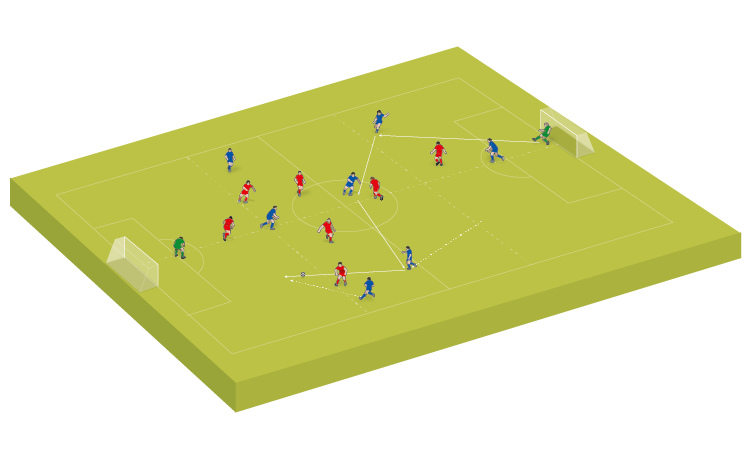


Sport and soccer have been guilty of mirroring this. Terms like ’skill acquisition’ have been commonplace - but in soccer, and other complex sporting endeavours, it is difficult to acquire and possess anything.
We, the people playing and coaching soccer, are continually and consistently in tension with the game and the other humans playing it.
Seductive, snappy soundbites such as ‘the only thing that changes is the size of the shirt’ - which reflect the normative nature of development environments - are seductive but often twee, and take little account of the turbulent, non-linear learning that is player and coach development.
The moment we believe we have solved the situation, acquired the answer or defeated an adversary is the moment we are weakest.
Development isn’t a destination; mastery not a waypoint - rather just a continued commitment to contending with context.
Our player development craft is centred on understanding and, perhaps, accepting this. The way our team plays will need to shift as it meets varying challenges - and not be littered with limited global solutions.
As our opposition attempts to unsettle us and sustain control of the game, we must counter that with some form of evolution of our own.
This flexibility ferments itself when we focus further and deeper into how we factor this into our thinking and practice.
If flexibility is an aspiration, and a central tenet in developing or sustaining an advantage over better resourced peers, then embodying it within every session we coach, each game we analyse and the individual interactions we engage in is the edge. Continually evolving and developing that edge sustains our advantage.
"The moment we believe we’ve solved the situation is when we are weakest..."
We have captured how we might compose or consider committing to this concept and, consequently, how we might connect it to our coaching.
The unique nature of your nation, critical characters in the history of your club and the industries that initiated the area you inhabit - plus the volume of the voice your players have in shaping the team they are a fundamental part of - are all key social and cultural constraints that continue to contribute to our coaching.
The map doesn’t show those elements. Top-down governance finds it difficult to comprehend these characteristics, which is why the detail in the craft of the way players develop in your context shouldn’t be co-ordinated centrally; it should always be localised.
Ubiquitous methodologies, central competency frameworks, pervasive patterns of play and sweeping syllabuses that satisfy the sanctimony of the sovereign perpetuate the notion that we are all waiting to be told or to have our hand held. That we are lacking in the wherewithal to co-ordinate our own community.
Respectfully rebuff this and explore the territory in ways that connect to your context.
Experience soccer with excitement, expressionism and an enduring enthusiasm; keep this and only this on repeat. Everything else evolves.
Of course, embrace, engage with and explore support from a range of different perspectives, including those that can seem incongruous or incompatible.
Absorb what is useful. Disregard what isn’t. At times, we may not know the difference. That is where our growth and development exists, in learning to understand the difference and connecting with it.
Related Files
Latest Issue

Subscribe Today
Subscriber Testimonials

Gerald Kearney, Downtown Las Vegas Soccer Club

Paul Butler, Florida, USA

Rick Shields, Springboro, USA

Tony Green, Pierrefonds Titans, Quebec, Canada
Subscribe Today
Newsletter Sign Up
Coaches Testimonials
Gerald Kearney, Downtown Las Vegas Soccer Club
Paul Butler, Florida, USA
Rick Shields, Springboro, USA
Tony Green, Pierrefonds Titans, Quebec, Canada
Subscribe Today
Latest Issue

Discover the simple way to become a more effective, more successful soccer coach
In a recent survey 89% of subscribers said Soccer Coach Weekly makes them more confident, 91% said Soccer Coach Weekly makes them a more effective coach and 93% said Soccer Coach Weekly makes them more inspired.
*includes 3 coaching manuals
Get Weekly Inspiration
All the latest techniques and approaches


Soccer Coach Weekly offers proven and easy to use soccer drills, coaching sessions, practice plans, small-sided games, warm-ups, training tips and advice.
We've been at the cutting edge of soccer coaching since we launched in 2007, creating resources for the grassroots youth coach, following best practice from around the world and insights from the professional game.
