
 close
close


 LOGIN
LOGINYou are viewing 1 of 1 free articles
Rock solid defending in 5 weeks: WEEK 4 Defending when organised
Over five weeks this series will show you how to tighten up your defence so you can win more matches. This week we show you how to defend as a team


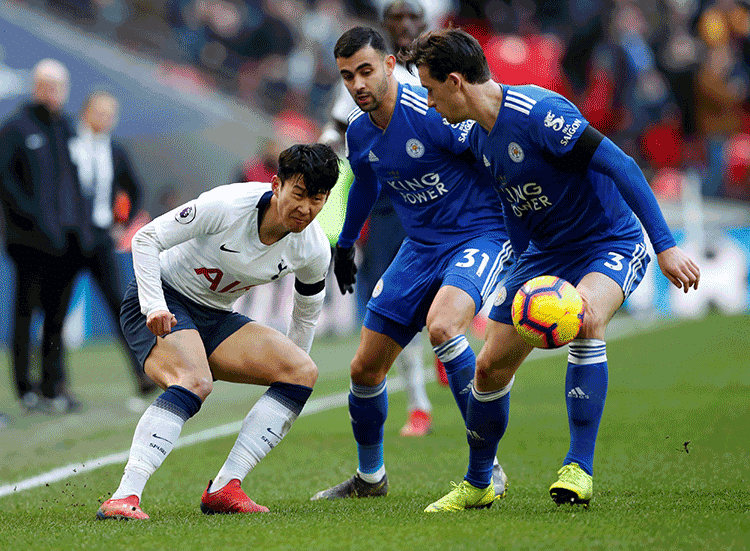
If you want to win more games, you have to concede fewer goals – and that takes hard graft on the training ground.
So, having worked on individual defending in this series already, plus delaying, pressing and covering, now is the time to show your players how to bring the parts into the whole by demonstrating how individual tactics fit into the principles of defence.
Last week we covered how players can use pressure to force play away from danger areas and how they cover each other in these situations.
Forcing mistakes as a team
If we put this into practice in a team situation, the supporting defenders should use this as an opportunity to press forward too, compressing the attack away from their goal. This gives the whole team the opportunity to force mistakes with the positions they take up on the field of play.
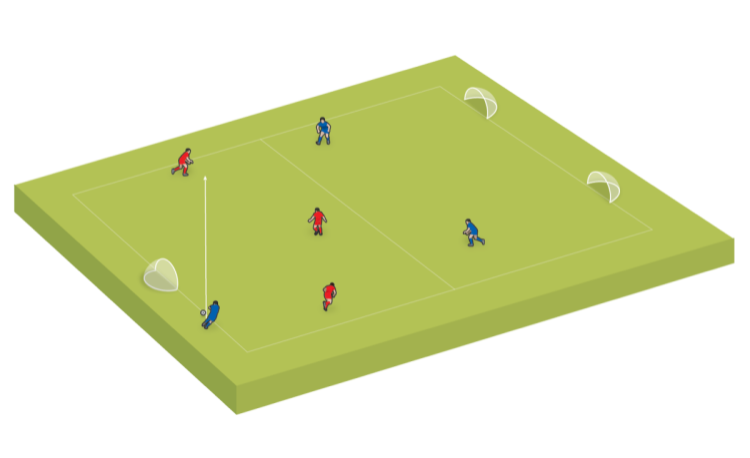
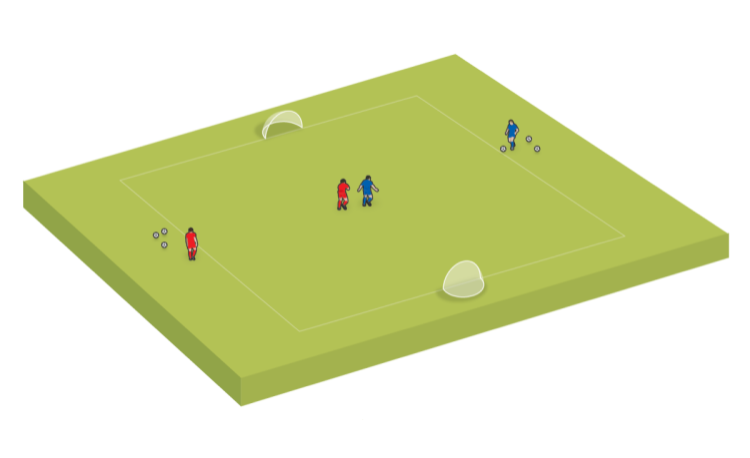
To begin with the defender nearest to the player with the ball, the first defender, applies pressure to delay the attack and to give supporting players the opportunity to get into position.
The first defender takes a side-on stance, on their toes ready to move – you don’t want to see a flat-footed defender who can be caught off balance. They should jockey and try stab tackles but should not fully commit unless the player on the ball makes a mistake.
This pressure means the player with the ball will find his forward movement blocked and will look to pass to a teammate. Now the supporting players come into their role, looking to deny the shot and deny any penetration by covering the areas that the ball can be passed into.
All the defenders must be looking to win possession as the ball is played. Possession can be won by stepping between the ball carrier and the ball, by recognising opportunities to intercept the ball and by tackling.
Close off passing options
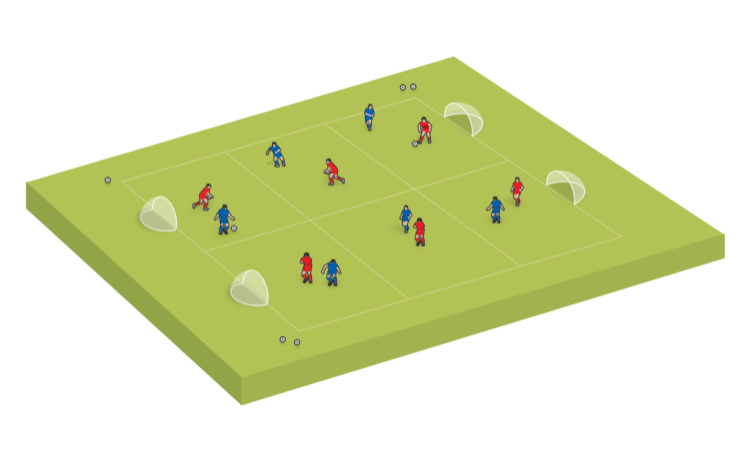
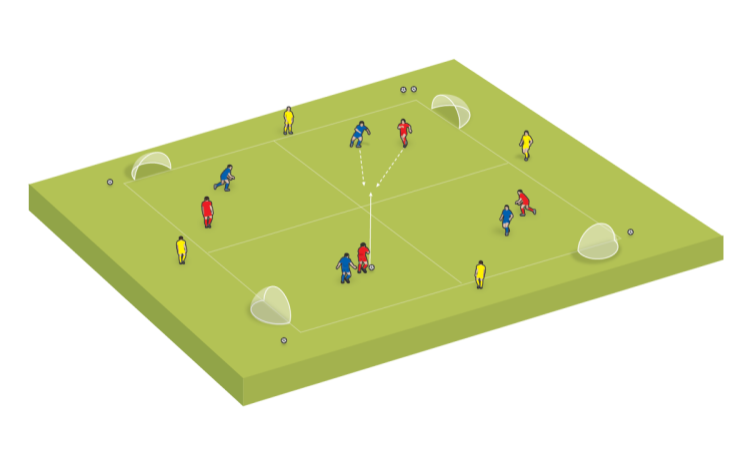
In the second phase of the attack the defenders must close off any passing options by covering the space behind their team-mate who is pressing the ball; and if they outnumber attackers, the defenders might decide to risk doubling up on the ball carrier to overpower them.
The third defender gives balance to the defence by covering deep and attacking spaces that may be used by the opponent to switch their point of attack, for example by playing the ball to the opposite wing. If this defensive plan is followed, it will create a very balanced defence and, as a tactic, it is called ‘defending when organised’.
RELATED
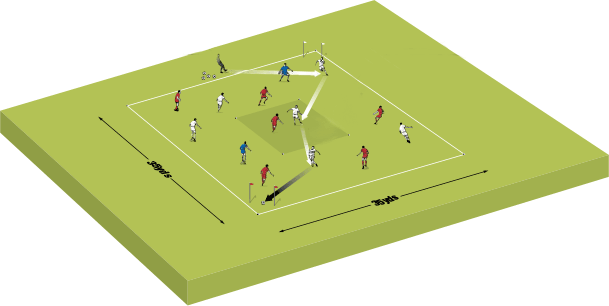
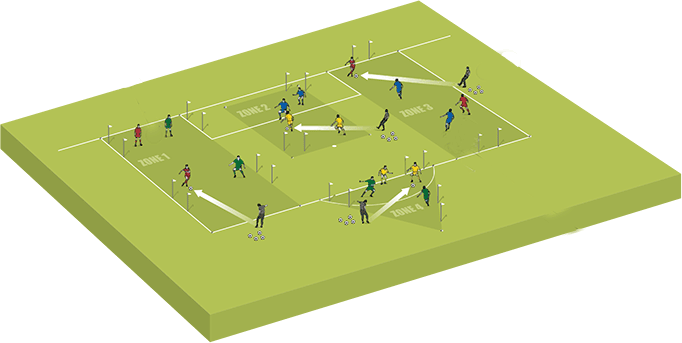
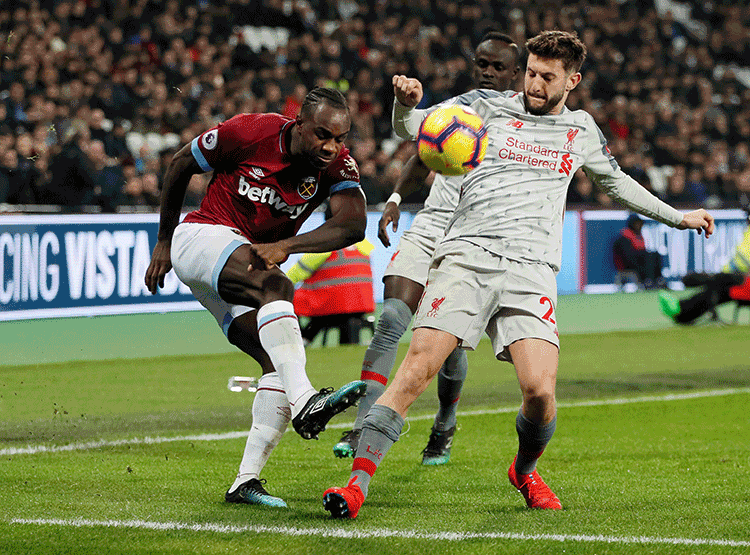

Top tips for team defending
Once your players have mastered the art of defending as individuals, let them learn to defend as a team…
> When opponents have possession, most of the defending team collapses into the space in front of the opposition’s point of attack.
> The first defender guides the ball carrier either into thickest part of the defence or away from the middle of the pitch.
> The covering defenders should cut off ‘through spaces’ – the spaces where the attacking team can pass through to get behind the defence.
> Together, the first and second defenders squeeze the attack into a tight, difficult space.

Dave Clarke
Latest Issue

Subscribe Today
Subscriber Testimonials

Gerald Kearney, Downtown Las Vegas Soccer Club

Paul Butler, Florida, USA

Rick Shields, Springboro, USA

Tony Green, Pierrefonds Titans, Quebec, Canada
Subscribe Today
Newsletter Sign Up
Coaches Testimonials
Gerald Kearney, Downtown Las Vegas Soccer Club
Paul Butler, Florida, USA
Rick Shields, Springboro, USA
Tony Green, Pierrefonds Titans, Quebec, Canada
Subscribe Today
Latest Issue

Discover the simple way to become a more effective, more successful soccer coach
In a recent survey 89% of subscribers said Soccer Coach Weekly makes them more confident, 91% said Soccer Coach Weekly makes them a more effective coach and 93% said Soccer Coach Weekly makes them more inspired.
*includes 3 coaching manuals
Get Weekly Inspiration
All the latest techniques and approaches


Soccer Coach Weekly offers proven and easy to use soccer drills, coaching sessions, practice plans, small-sided games, warm-ups, training tips and advice.
We've been at the cutting edge of soccer coaching since we launched in 2007, creating resources for the grassroots youth coach, following best practice from around the world and insights from the professional game.
