
 close
close


 LOGIN
LOGINYou are viewing 1 of 1 free articles
Why learning never stops for driven Dan
Every day’s a school day for Cambridge City Ladies coach DAN BRATCHER, as he tells STEPH FAIRBAIRN about his passion for progress and honest reflection


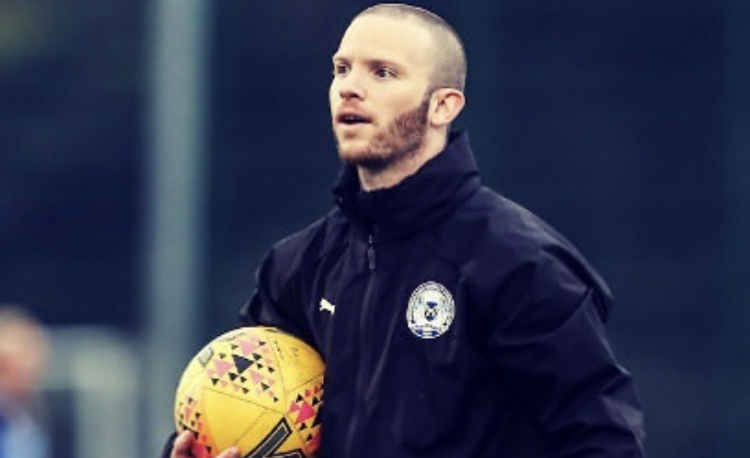
Dan Bratcher is a Uefa B-qualified coach, currently working with Cambridge City Ladies, who play in the fourth tier of the women’s football pyramid in England.
Having stepped into coaching after realising he wouldn’t make it as a player professionally, Dan has now found a home for himself within the women’s game.
He is committed to his personal learning and development, with the ultimate aim of getting a full-time role in professional soccer.
SCW caught up with Dan to talk about how he furthers his learning, the role of reflection, and if assessing yourself honestly gets any easier the longer you coach…
SCW: I’ve seen a lot on your Twitter feed about your commitment to learning and your career progression. Why is doing that so important to you?
DB: “You can do all your courses, but I think [what is important is] being able to back that up with other learning, whether that’s learning languages or doing different courses through free online universities.
“I have started doing British Sign Language. Through my current job, we go into primary schools, and some special schools.
"One thing that hit home was there were children that were signing and I wasn’t able to properly communicate with them. It did strike a chord.
“In adult or youth football, whatever level you’re at, you’re going to come across maybe one person a season that will be deaf, and you might need to sign with them.
"In my head, that was something that would break down a barrier.
“Doing different courses, reading books, trying to immerse myself in different ideas and perspectives - whether it’s football-related or not - and building up a repertoire of information and knowledge can only add to what you learn on your football courses or from coaching on the grass itself.
"I think it all it all contributes. The more strings to your bow, the better you’ll be."
SCW: How do you make sure you are taking things away from your learning and then implementing and building them into your practice?
DB: "I’m a note-maker. At school, I found it impossible just to revise without writing. I’d normally write the whole book back out, just because it went in easier in my head.
"I’ve started learning sign language; that was something that’d break down a barrier..."
“I’m still like that now. I’ll make notes of what I’m reading, or if I’m on a course, I’ll make notes. Even if the slides are there, or I’ve got them in front of me. I’ll add my own interpretation of what it means - trying to provide examples of how it fits in with my scenario or my situation.
“I think it’s always great, on these courses, to try and link it to what you’re doing at the moment, to make it easier when you do that transition from learning to putting it into action on the training field."
SCW: Coaches could be on a course every hour of the day if they wanted to be. Do you have tips for coaches on deciphering what good course look like, or what they should invest their time in if they have to prioritise?
DB: "As it is very subjective, and every person’s opinion matters, it’d be a case of finding what interests you the most and deciding what path you want to go on.
"At that very moment in time, what’s most important to you? You could have 100 things you want to improve on, but you need to focus on one at a time.
"So choose one skill or one quality you want to look at, then do your research.
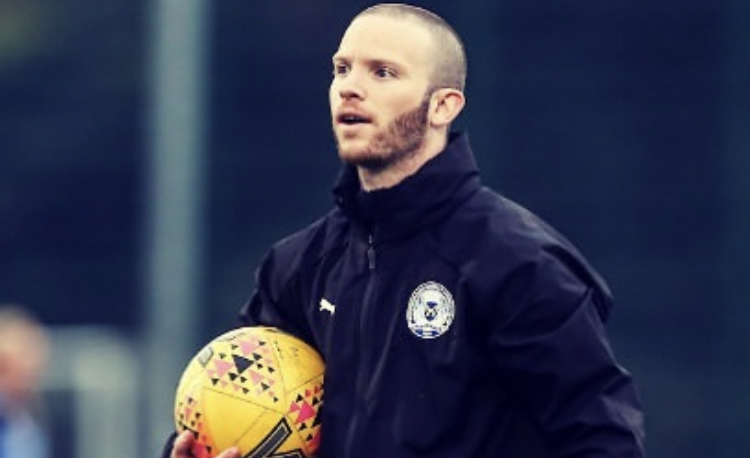
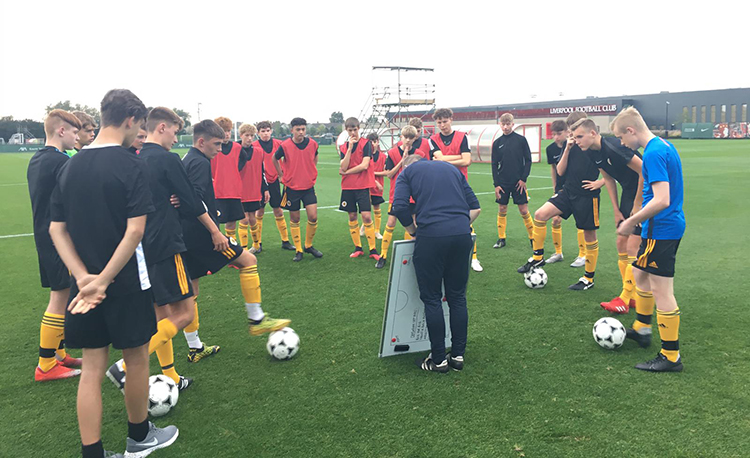
“Twitter is an absolute minefield, but it can be filled with gold as well. The same goes for Google, Netflix, Amazon Prime - there’s so many different platforms for you to delve into and do your own research.
"At the moment, I’m looking at the psyche of our athletes. There are so many programmes and books that just look at that one idea.
"Obviously, they’re not always going to be giving you the answers, but they help paint a picture of what can happen, what can be good, what can be bad.
“For me, in a nutshell - do your own research as best you can, and focus on one thing at a time rather than trying to try to do too much in a small space of time.”
SCW: In England, the FA promotes a ’plan, do, review’ model. How important is reviewing to you? How do you do it?
DB: "Three or four years ago, reviewing was probably a poor part of my arsenal.
"It wasn’t until my fiancée at the time, now wife, said to me, ’As a paramedic, we’ve got to do a review after every critical incident’. She shared some of her models of review with me.
"It hit home how important it was to them. If it’s that important to those who are saving lives, maybe I could at least give it a go. Over the last couple of years, it has become quite important to me.
"I’ll leave it a day or so to review it. You don’t want to go with your immediate feelings and emotions of a session - if it’s gone well, or gone badly, you’re always going to review it to the bias of that very moment.
“A day or so later, I’ll sit down, get my book out, line it up next to my session, and review each part - how did I do this? Did that go alright? What were the players like?
"I try to be as honest as possible. If you can be honest and say there was a period where players didn’t look that engaged, or there were questions, or they didn’t quite understand it, that’s something to work on.
“Something I’ve had to work on is clearly being able to explain myself and my sessions, or explain a coaching point so everyone understands.
"It’s making sure you cover all aspects, whether visual or verbal. I’m a visual learner, so I need to see it taking place. I make sure I always try and cover at least two of the different ways [things] can be learned."
SCW: Does being really honest with yourself about your coaching get easier the more you coach?
DB: “I’d say you get even more critical of yourself as you go on. So I wouldn’t say it gets easier, in the sense that you become better - I’d say it gets easier in the sense that you’re happy to criticise yourself more, whether that makes sense or not.
"Over the last couple of years, reviewing has become quite important to me..."
"I find myself highly critical and I always have been. But there were periods at the start when I’d think, ’it was definitely them, they didn’t understand me, it couldn’t have been my fault’. Or, ’my session was great, I’ve done it with another team before, so why didn’t this team do it as well?’.
“With each year, with each experience, with new people, and new scenarios, you’re going to learn something each time.
"So it’s [about] taking a step back and going, ’you know what, maybe it wasn’t as good. Maybe I can do this a little bit better’.
"It becomes easier to criticise yourself and take that on board and not be stubborn to little changes or little bits of feedback."
SCW: Where do you hope all this investment and learning takes you?
DB: “My end goal is to work in professional football full-time, whether it’s women’s, men’s, boys or girls.
“I’m waiting to hear back to see if I’ve got on my Uefa A licence. I know it’s a very competitive field to get onto these courses.
"It’s just [a case of] being patient, continuing the learning, and hopefully, further down the line, it will be a professional football role of some sort."
Related Files

Steph Fairbairn
Latest Issue
Subscribe Today
Subscriber Testimonials
Gerald Kearney, Downtown Las Vegas Soccer Club

Paul Butler, Florida, USA

Rick Shields, Springboro, USA

Tony Green, Pierrefonds Titans, Quebec, Canada
Subscribe Today
Newsletter Sign Up



Coaches Testimonials
Gerald Kearney, Downtown Las Vegas Soccer Club
Paul Butler, Florida, USA
Rick Shields, Springboro, USA
Tony Green, Pierrefonds Titans, Quebec, Canada
Subscribe Today
Latest Issue

Discover the simple way to become a more effective, more successful soccer coach
In a recent survey 89% of subscribers said Soccer Coach Weekly makes them more confident, 91% said Soccer Coach Weekly makes them a more effective coach and 93% said Soccer Coach Weekly makes them more inspired.
*includes 3 coaching manuals
Get Weekly Inspiration
All the latest techniques and approaches


Soccer Coach Weekly offers proven and easy to use soccer drills, coaching sessions, practice plans, small-sided games, warm-ups, training tips and advice.
We've been at the cutting edge of soccer coaching since we launched in 2007, creating resources for the grassroots youth coach, following best practice from around the world and insights from the professional game.
