
 close
close


 LOGIN
LOGIN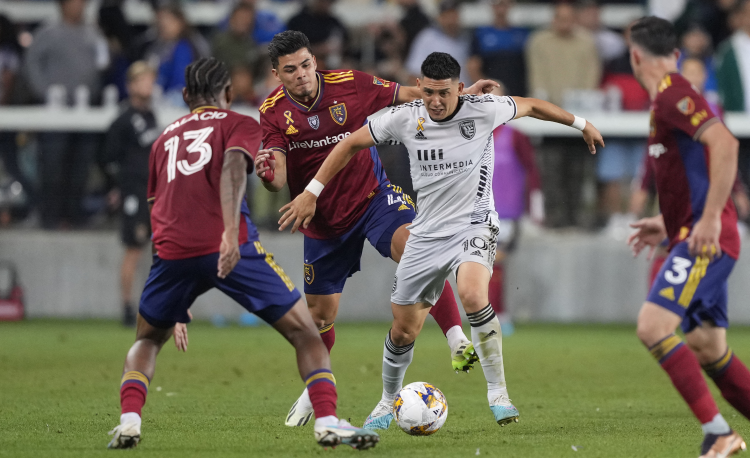
Skills in focus: Covering
If a defender goes to close down an attacker, a team-mate must fill in. MORITZ KOSSMANN explains to STEPH FAIRBAIRN what's required to make it happen.




Introduction: Why Challenging Is So Important in Football
Moritz, welcome back to the podcast.
Hi, thank you for having me.
Great to have you back. I’m really excited about this one. This time we’re talking about challenging and why it’s so important to the game.
I think challenging is obviously the physical part of a one-v-one situation between two players — a defender and an attacker. Usually, the challenge is initiated by the defender in an attempt to physically win the ball from an opponent who is protecting or carrying it.
By definition, it involves initiating physical contact, and there’s a lot of nuanced detail to that. Players need to learn this as they progress through their junior development because football — or soccer — is a physical game. We need to develop players at all levels who are comfortable with physical contact.
I think there’s perhaps an old association of physical contact with going to ground and making crunching sliding tackles, which is obviously one possible way of challenging an opponent. But it’s certainly not the only way, and it’s most likely not the most effective way either.
Physical contact is crucial, but doing it within the rules of the game — and not giving away needless free kicks — is key. Even at a very young age, it makes sense to teach players how to operate in physical situations, but also to teach them the degree to which they can be physical without being unfair and ultimately punished by the officials.
So yes, it’s a very key theme and something exciting to discuss.
How Physicality in Football Challenges Has Changed Over the Years
That element of physicality — and what’s appropriate in a challenge — how has that changed over the years?
I think, as I said earlier, the number of sliding tackles used at all levels has probably decreased incrementally. At the top level, one main reason is the improvement in surface quality. In the 70s, 80s, and 90s, especially in winter months, many games were played on relatively poor surfaces.
That often led to attacking players having less control of the ball, creating more loose-ball situations where sliding tackles were more likely to be successful.
In the past, refereeing was also more lenient toward these types of tackles. It was seen as a prime defensive ability — if you were a good defender, you had to have a signature crunching sliding tackle.
Now, we consider the sliding tackle more of a last-resort defensive effort. There’s a risk of giving away fouls, and if I make a sliding tackle, I’m on the ground afterwards. If it’s unsuccessful, I’ve committed fully — it’s all or nothing. I’m unlikely to recover quickly, and the attacker’s chances increase significantly.
So players still need to be able to slide tackle, but they must understand it’s a last resort.
Challenging with the upper body is key. Players need to understand that challenging should primarily involve the upper body. You’re much more likely to be penalised if you go into tackles with just your legs.
In training, we once used the metaphor of “stabbing” — going in only with your feet and hacking at the ball. When you challenge only with your legs, you’re more likely to concede fouls, and you also increase your risk of injury because your leg is unsupported.
If you go into a challenge with your upper body and leg together — initiating contact with the opponent’s upper body while attempting to win the ball — you’re less likely to get injured and more likely to win the ball cleanly.
Football is played primarily with the feet and legs, but upper-body strength is still crucial. In fact, challenging is probably where the upper body becomes most relevant.
Football Challenging Technique: Before, During and After Contact
Let’s expand on the technique — before, during, and after the challenge.
A key way to win the ball is to shove the opponent off it. If you’re in possession, you’re the closest player to the ball. So as the defender, my aim is to become the closest player — to move the opponent out of the way and get “first in the queue,” so to speak.
The risk comes when I use my hands too much. If I push with my hands or extend my arms excessively, I risk conceding a foul. The line between effective upper-body contact and a foul is very slim.
Timing is crucial. I remember coaching our under-21 team in South Africa against the eventual league champions. They had intelligent senior players who would initiate contact while the ball was in the air — when the referee’s focus was on the flight of the ball. By the time the referee looked back, our players were already off balance, and their players had a decisive advantage.
Choosing the right moment for contact — even slightly unfair contact — can create separation and an advantage.
You also have to read the referee. In Europe, I’ve seen upper-body contact rarely penalised. In South Africa, even slight contact can be given as a foul. Players must adapt to what officials allow.
Timing a Tackle: When to Challenge and When to Stay on Your Feet
What about timing — when to challenge and when not to?
Generally, the player who initiates contact has the advantage. So earlier contact — for example, as the opponent receives the ball — can be effective. Receiving is not easy, so applying pressure in that moment can overload the attacker.
If the opponent is dribbling, the best time to challenge is often between touches — when there’s slight separation between the ball and the player. That’s the moment to step in and get ahead in the “queue.”
As for “don’t dive in,” going to ground might be necessary if the attacker has a clear speed advantage and is trying to get goal side. But it must happen when the ball is exposed.
This ability to read the moment — to be strong, balanced, agile, and intuitive in 1v1 defending — takes years to develop.
Does Body Type and Strength Matter in 1v1 Football Challenges?
Does body type matter in challenging?
Both yes and no. Certain body types — like strong, tall centre-backs — clearly have an advantage. Strength can be improved in the gym, but 1v1 defending isn’t only about how much you can bench press.
Coordination, balance, and agility under contact are just as important. If you’re strong but uncoordinated, contact will still knock you off balance.
The best way to improve challenging is by practising it in football contexts. With experience, players develop confidence and intrinsic adaptations.
Different players use different strengths. A lower centre of gravity, speed, timing — football is too complex to favour only one body type.
Scanning and Decision-Making in Defensive Challenges
Watch the player or watch the ball?
You need both. Good decisions require as much information as possible. If I only watch the player, I might miss cues from the ball. If I only watch the ball, I miss body position and space.
Orientation and scanning are intrinsic to football. The better I gather and process information, the better my decisions. Oversimplifying the game can be detrimental because football is inherently complex.
For example, if I only look at the attacker, I might not know they have support nearby. I go in for the challenge, get committed, and they ride the contact and pass into the space I’ve left open.
What to Do After a Tackle: Defensive Recovery and Next Actions
After the challenge — what next?
Frequency of defensive actions is crucial. Good defenders don’t stop after one attempt. Scouts, especially in the Red Bull football universe, look for this ability of defenders to recover and make more than one action.
It’s about how you react to being beaten: are you finished for a few moments, or do you go again — like a pitbull — and try again?
If I don’t win the ball immediately, I can guide the attacker — toward the wing, their weaker foot, or away from teammates.
Being aggressive but not fouling is essential. A foul benefits the attacker: they get a free kick, keep possession, and your team has to move back.
Sometimes it’s important to take the small victory rather than overcommitting for the big victory of winning the ball outright.
Which Part of the Foot Should You Use in a Football Tackle?
What part of the foot should be used?
The outside of the foot is often used for quick actions when stepping in front. The inside may be used in slower challenges.
A thing to stay away from is using the sole or going over the top of the ball, because referees are constantly looking for this. It’s potentially dangerous and is penalised often due to injury risk.
And again, don’t challenge with just the leg — use the upper body, arm, and leg together.
How to Win Aerial Duels Safely and Effectively
What about aerial challenges?
Shoulder-to-shoulder contact is good practice. To win an aerial duel, you often need to initiate contact, but overusing arms increases the risk of giving away free kicks.
I remember once when I was playing that I almost got sent off because my arms were up naturally to support my jump, but the referee thought I was trying to elbow my opponent in the face.
Using the shoulder to knock the opponent off balance is key, but overall we need to be comfortable with physical contact while remembering it’s football, not a fight.
Coaching Young Players to Be Comfortable With Physical Contact
How do we help younger players who are hesitant about contact?
For me, especially in grassroots football, the biggest sign of coaching success is that players fall in love with the game and keep playing as they grow older.
It’s a tricky balance. We want to encourage players to go out of their comfort zone, but if we force it, we might overload them and push them away from the game.
Encouraging without forcing — and taking a long-term approach — is important, especially for sensitive players.
Managing Overly Aggressive Players in Football
What about the opposite end — players who are extremely into the physical contact side?
It’s key for players to understand that football is first and foremost played in a clean way. The most common action in the game is a pass. A challenge is part of the game, but it’s not the whole game.
I would praise bravery, but I would pull back recklessness and the risk of injury, as well as an over-enjoyment of contact.
Clever attackers can use a defender’s eagerness against them by timing their fall and winning free kicks in difficult moments.
Football Training Drills to Improve Challenging and Physical Play
In terms of session design, how can we set up practice to encourage challenging?
One of my favourite practices is called El Chaos, adapted from a drill Barcelona used in their junior academy.
Players pair up with an opponent, and five pairs play simultaneously in a rectangular area with triangle goals. They play for 45 seconds to one minute and score a point every time they dribble through a gate.
They keep score themselves, collect balls if it goes out, and referee their own game. After each round, you bring them together, get the scores, and then they pair up with a new partner.
If a pair can’t agree on the score or the refereeing, there’s a small consequence — for example, sitting out the next round or doing a few push-ups.
We’re teaching them to compete physically, but also to be fair and reach consensus.
Another idea, made famous by Thomas Tuchel, is having players hold tennis balls while playing. They can still use their arms, but they can’t grab and pull opponents.
Final Thoughts on Teaching Challenging in Football
Before we wrap up, do you have any final thoughts?
It’s great to encourage coaches and players to be comfortable with physical contact. Training predominantly through games with teammates and opponents gives repetition of challenging, and it gives coaches a chance to zoom in on those moments.
Creating comfort in physically challenging moments helps players’ confidence. If they become comfortable in this relatively uncomfortable part of the game, it can help them express themselves more.
Challenging needs to be trained — but within the context of the game — and always with the balance of embracing physical contact while staying within the rules and still looking for clean, creative football solutions.
Players typically get better at it as they get older, but it can be a challenge when stepping into senior football, because senior football is more physical than junior football.
Brilliant.
Thank you so much, Moritz.
Thank you very much.
Previous Episodes




Coaches' Testimonials

Gerald Kearney, Downtown Las Vegas Soccer Club

Paul Butler, Florida, USA

Rick Shields, Springboro, USA

Tony Green, Pierrefonds Titans, Quebec, Canada

Discover the simple way to become a more effective, more successful soccer coach
In a recent survey 89% of subscribers said Soccer Coach Weekly makes them more confident, 91% said Soccer Coach Weekly makes them a more effective coach and 93% said Soccer Coach Weekly makes them more inspired.
*includes 3 coaching manuals
Get Weekly Inspiration
All the latest techniques and approaches


Soccer Coach Weekly offers proven and easy to use soccer drills, coaching sessions, practice plans, small-sided games, warm-ups, training tips and advice.
We've been at the cutting edge of soccer coaching since we launched in 2007, creating resources for the grassroots youth coach, following best practice from around the world and insights from the professional game.
