
 close
close


 LOGIN
LOGINYou are viewing 1 of 1 free articles
Prepare a team for their first game of soccer
Tips to get your young players ready to play their inaugural match.



When preparing a team for their first-ever game, the first thing we must remember is that the players are going to be very excited – and the last thing we should do is dampen this enthusiasm.
We might think our role is to calm the players down, so that they will listen to our instructions and concentrate on what they need to do in the game.
But we shouldn’t forget that these players are children, and it’s natural for them to be excited about playing a game of soccer for the very first time.
We also need to keep in mind that, alongside keeping them safe and ensuring they enjoy all aspects of training and matchdays, our main role is to help players fall in love, and stay in love, with the game.
So, instead of trying to eradicate their enthusiasm, we should look at how we can channel this energy and use it to support their development.
Support through training
There are a number of ways in which we can support players as they begin training towards their first game.
Though some of the recommendations may seem really obvious, it is really important to understand why we should use them and how they help the players to develop their game understanding.
All of these tips are linked to a number of the key components that are evident in all invasion games, including soccer.
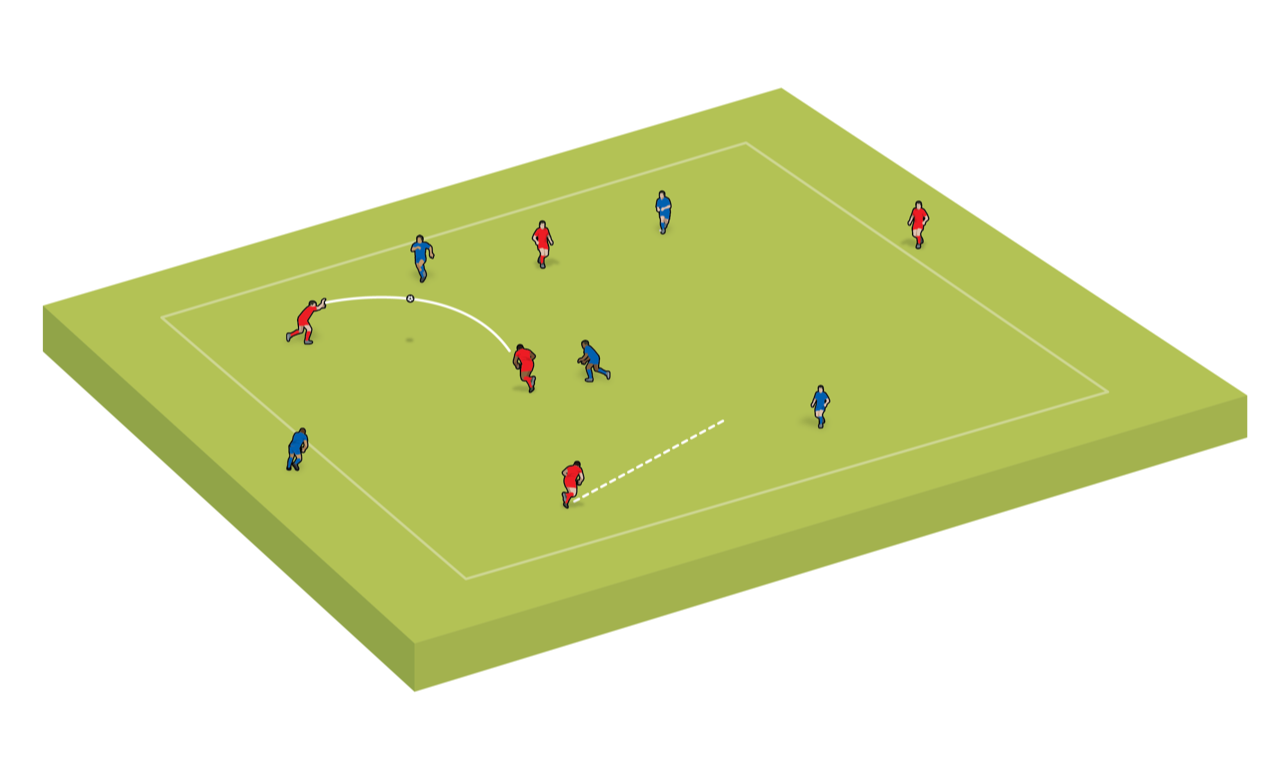
Ensuring all the practices take place within some form of an area will help the young players understand the importance of keeping the ball within a specific space.
It will also allow them to start appreciating how the boundary lines can impact how they keep the ball, or how they can win it from an opponent.
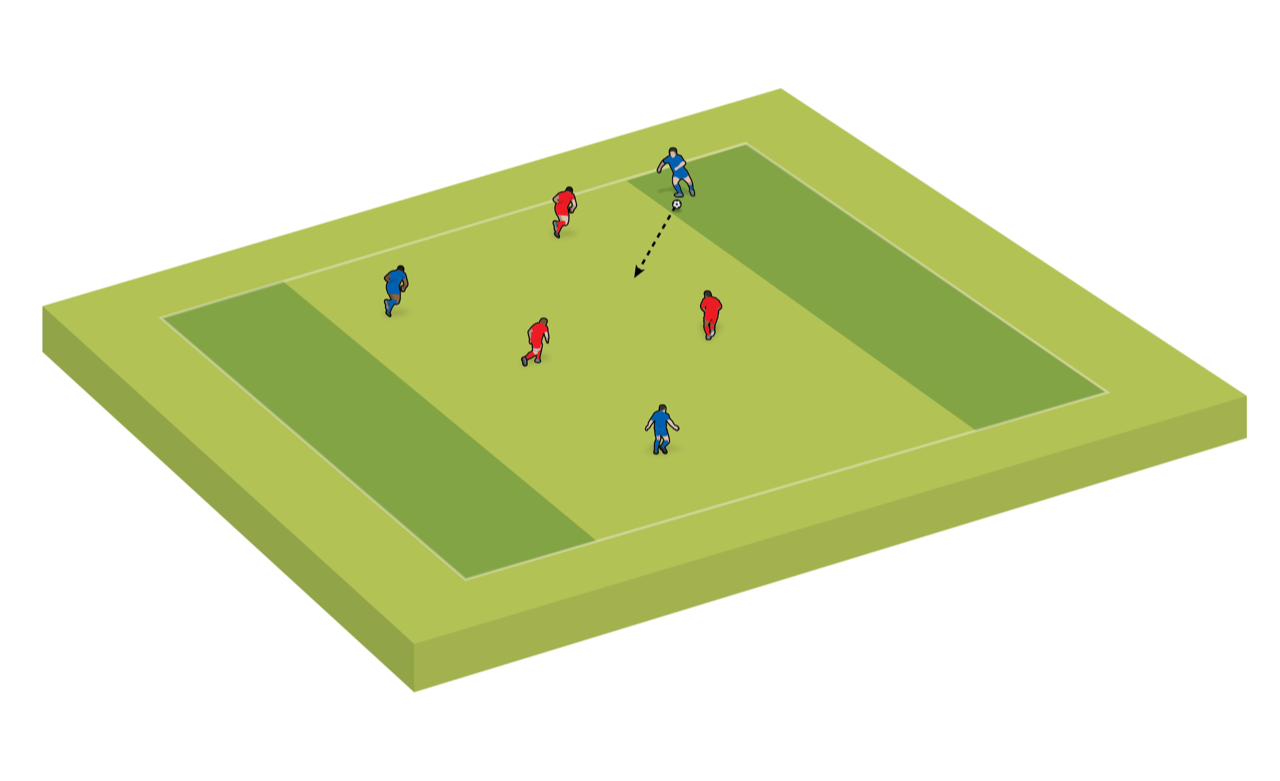
Alongside an area, we should also include ’direction’ within the practice design, when we can.
By doing so, we introduce the concept of having to play forwards, whether this is by travelling with the ball as an individual or passing it as a team.
More importantly, direction helps players to understand that they need to try and stop the other team from playing the other way.
When they play in a game, the players will not need much encouragement to run towards the opposition’s goal.
But, when they do not have the ball, and the opposition is attacking, they will often need a reminder to travel backwards, so that they can help to win the ball back.
Another important addition to the practice design is encouraging players to stay on the ball, but also giving them something to do at the end of this action.
Often, young players will keep the ball until they eventually lose it. Though we don’t want to discourage them from dribbling and keeping the ball, we do want to help them to recognise moments when it might be better to do something else – like passing to a team-mate or shooting, for example – before they lose it.
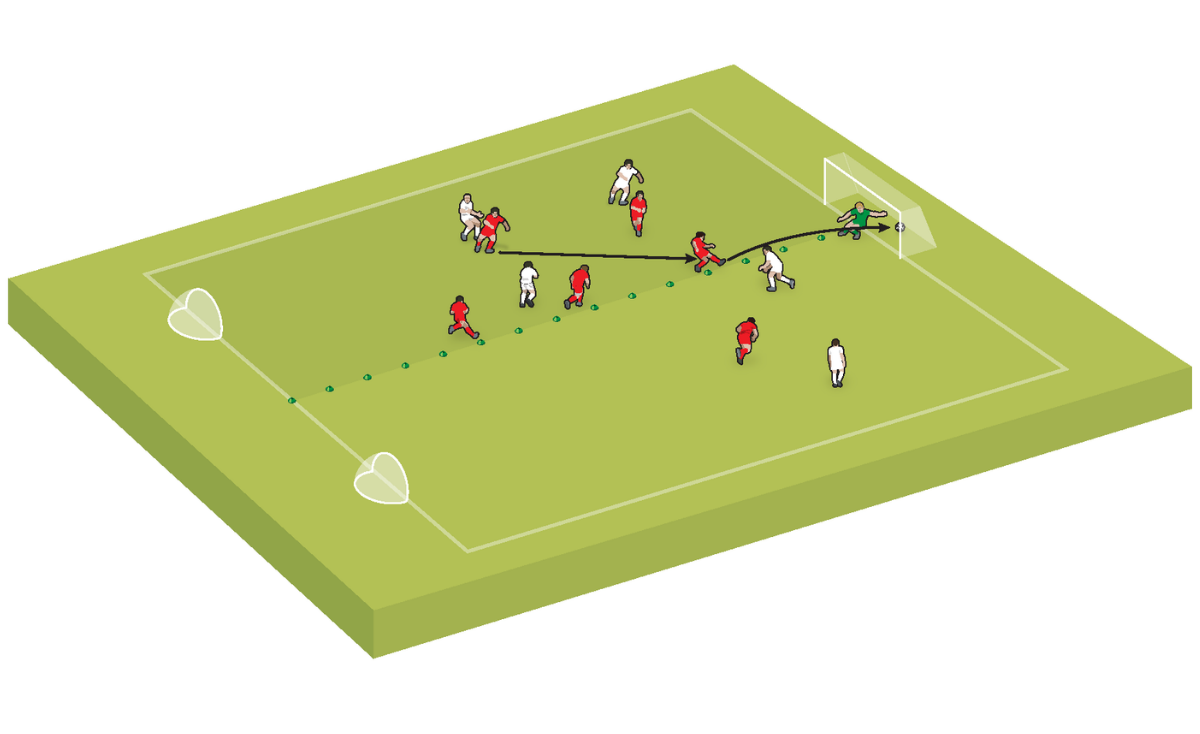
Therefore, adding a challenge to a practice, such as passing the ball to a team-mate through a gate, can get players used to completing an additional task at the end of their dribble.
Support through matches
When a team starts playing games for the first time, we need to accept that it is going to be messy.
We can’t expect the players, as individuals, to stay in the position that we have allocated them, or the team as a whole to be able to keep the ball for a sustained period of time.
Players are going to want the ball, and will, therefore, chase after it. When they do have it, they will be reluctant to share it with any of their team-mates.
Accepting that this is going to happen will mean you are not tempted to help them too much. This does not mean we shouldn’t help them at all – we just need to consider how we can provide a form of support, while ensuring it doesn’t affect their enjoyment of playing the game.
One of the most effective ways to do this is to provide individual or team challenges.
For instance, as we are not expecting the players to pass the ball very often, we might challenge each player, prior to the game, to pass the ball at least twice during the first period.
Then, during the first break, we can revisit this challenge – concentrating only on this and nothing else.
We will likely be tempted to talk about a number of other things that we observed on the pitch, but we can’t fix everything at once.
We also need to remember that young players only have a short attention span, so we can only give them a small amount of information. Referring back to the initial challenge gives them a little reminder of what they have been asked to try and do.
We might also give them a few tips on how they could improve to help them succeed in the challenge.
For instance, for this particular task, we might remind the players about the importance of not crowding around the player who has the ball. If it is going well, we could even set them a new challenge of trying to pass the ball more than they did in the previous period.
In addition to this, the players will also need plenty of encouragement.
They are bound to make a lot of mistakes and experience a fair amount of failure. It is, therefore, really important that we give them lots of praise – not just for doing something well, but for attempting things, too.
We need to ensure that their levels of enthusiasm, and the excitement that they have for playing the game, are not affected by anything that happens – and, more importantly, by anything that we say.
Conclusion
When preparing players to play a game for the first time, we need to introduce them to the key principles of invasion games, plus the unique elements of soccer, during training.
Doing so will allow them to see pictures comparable to those they will see in the game, while also performing similar actions they will need to execute when playing.
This will make the gameday environment a lot more familiar, which, in turn, will make it less daunting and even more exciting.
Takeaways: playing a match for the first time
- Do not dampen their enthusiasm!
- Expect the game to be messy
- Use individual and team challenges to help the players develop game understanding.
- Do not try to fix too much.
- Produce practices that are linked to the main characteristics of invasion games and, more specifically, soccer.
- Encourage players to dribble and stay on the ball, but give them a task to complete at the end of it – for example, to complete a pass or take a shot.
Related Files

Carl Wild
Latest Issue

Subscribe Today
Subscriber Testimonials

Gerald Kearney, Downtown Las Vegas Soccer Club

Paul Butler, Florida, USA

Rick Shields, Springboro, USA

Tony Green, Pierrefonds Titans, Quebec, Canada
Subscribe Today
Newsletter Sign Up

Coaches Testimonials
Gerald Kearney, Downtown Las Vegas Soccer Club
Paul Butler, Florida, USA
Rick Shields, Springboro, USA
Tony Green, Pierrefonds Titans, Quebec, Canada
Subscribe Today
Latest Issue

Discover the simple way to become a more effective, more successful soccer coach
In a recent survey 89% of subscribers said Soccer Coach Weekly makes them more confident, 91% said Soccer Coach Weekly makes them a more effective coach and 93% said Soccer Coach Weekly makes them more inspired.
*includes 3 coaching manuals
Get Weekly Inspiration
All the latest techniques and approaches


Soccer Coach Weekly offers proven and easy to use soccer drills, coaching sessions, practice plans, small-sided games, warm-ups, training tips and advice.
We've been at the cutting edge of soccer coaching since we launched in 2007, creating resources for the grassroots youth coach, following best practice from around the world and insights from the professional game.
