
 close
close


 LOGIN
LOGINYou are viewing 1 of 1 free articles
Why giving players time to develop is important
Patience is a virtue and it could also be the making of a young player. Mark Thomas explains why waiting to allow teenagers to bloom, and not rush them, can really pay off



As coaches, we all want our players to develop and reach their full potential.
We all want to say that every one of our players makes it to the next age group or we get them into a better team, as it validates us as a coach - to ourselves and to others.
But the first priority is always removing our own ego and meeting the needs of the players, not ourselves, especially when working with children.
To develop a player, we need to understand that there are many building blocks that need to be coached across all aspects of the game.
We need to set these solid foundations in place as early as possible and cannot just jump to the last block.
If we rush it or miss a foundation block, at some point the player will fall short because they will not have been coached how to do something that may have seemed simple but is actually vital in their development. You would not start building a house from the roof down, would you?
It would be easy to tell a child: “Run this line and when you shoot, go across the goalkeeper”. If the child scores in the next game, it’s job done, right?
Well, no. We need to look at why the player is not doing it initially, or why they might be failing to score. If the first thought is, “I gave them the answer and there was still no result, so it must be the player", this is simply just expecting results too quickly.
We need to look at the early fundamentals - body shape, foot position, head position, the area of the foot being used and many more.
If we can support the player in developing these aspects of their performance and help them understand why they may have to alter these fundamentals depending on the situation, then that is true development. But it will take time. No professional players were the finished product at 12 years old.
As coaches, we can rush the development without even meaning to, because we care and want the best for our players. There is a time limit to everything and we only have so much time with those we coach.
This is why it is important we give players the best foundations possible. It is easy to find ourselves giving to much information - and almost a running commentary - during games or training sessions, so we can say “Well I did tell them that” if someone does not reach the levels we expect.
We sometimes need to step back and let players have a little autonomy over their own development. We need to let them get things wrong so we can see what information has been taken on and what is missing.
One more thing to bear in mind is the way people learn. The manner in which we all soak in information is usually categorised in three main ways: watching (visual learning), listening (auditory learning) and doing (kinaesthetic learning).
Some models also include verbal (linguistic learning), social (interpersonal learning) and logical (mathematical learning) categories, too - but visual, auditory and kinaesthetic are the three styles ever-present in all models.
When coaching, it is not as simple as selecting the single ‘best’ method of delivery. Few people, if any, will fall completely into one specific learning style.
Therefore, we should try to provide elements of all these learning methods with our players to help them develop.
There is also the social and physical elements that need to be considered. For instance, a player may need to develop their communication skills or need some support in fitting in with the group.
It is possible this will impact their overall development as they will be less likely to open up and try new things even if they have lots of technical and tactical ability.
This can be true of their physical development, too. Children develop physically at different rates, so we need to take into consideration when specifically they were born.
Those whose birthday is towards the end of the year will, studies show, often develop quicker, compared to those born at the start. This is known as the Relative Age Effect, and is something The Late Birthday Project have led on.
We also need to look at other sports that youngsters may play, their health needs and many other factors that could impact someone’s physical development.
There will obviously be limitations on what players can do at certain stages of their physical development but it can also change rapidly.
If we take all of the above into consideration and start to recognise the need to be patient when it comes to player development - understanding that it takes time - then we can really help them to reach their full potential.
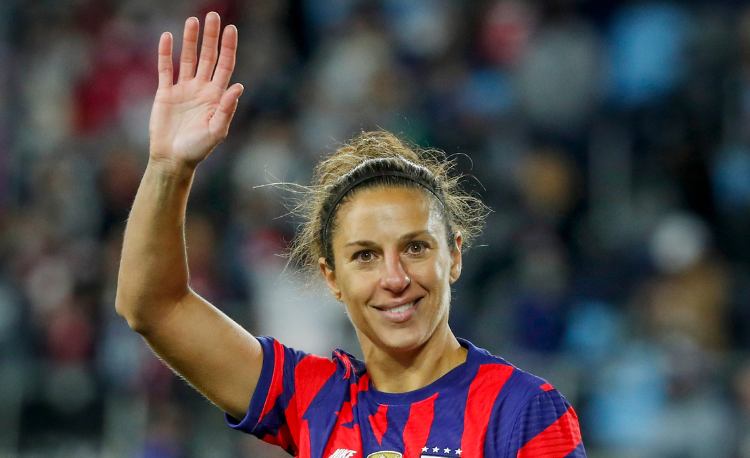
BE PATIENT: DO NOT PASS UP ON THE NEXT GRIEZMANN, RICE or LLOYD
Related Files
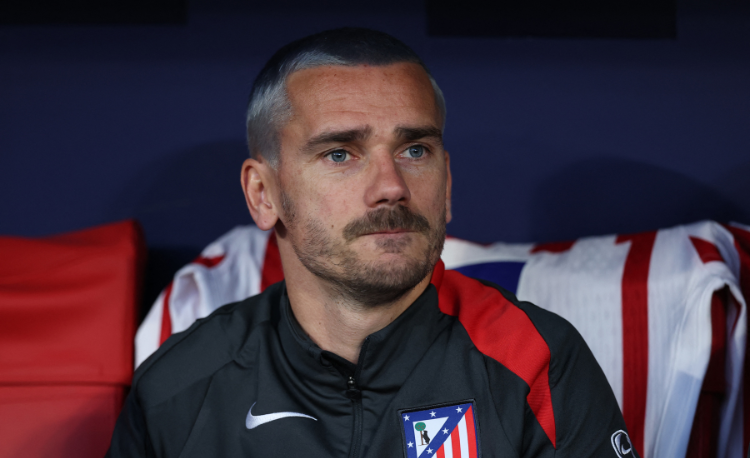
Several top players have succeeded in spite of being rejected in their early years.
One example is French forward Antoine Griezmann (above), who between the ages of eight and 14 played in the youth section of his hometown club, Macon.
He went on several trials with pro teams, but was often told he was “timid, too small and lightweight”.
Griezmann was not given time to settle in socially, develop physically and hone his craft, because the process was rushed and they wanted a finished article at 11 years old.
In the end, his undoubted skill earned him a chance, as he impressed Real Sociedad scouts. The rest is history.
England midfielder Declan Rice almost suffered a similar fate. Having been released by Chelsea at 14, he was nearly cut too by West Ham.
Speaking to Sky Sports, he said: "I was really small when I was a kid. Then when they [West Ham] were thinking about getting rid of me, I was in the middle of a growth spurt. I just looked so gangly and unorthodox.
"I knew if they gave me the time, I had the ability. It was just my running technique - I looked long in the legs, everything was off.
"Once they gave me that time and space to grow into my body, everything else came through."
So there you have it. Do not rush your players’ development. Give them the best foundations possible. Give them time to learn, let them make mistakes but then show them how to fix it.
Not every player will make it - in fact, fewer than 1% will. So, where we can, let’s develop them as people, as well as players.
By using the different methods of learning and taking into consideration the social and physical elements of the game, we can help ensure that we do not rush the process and potentially pass up on the next Greizmann, Rice or Lloyd.

Mark Thomas
Latest Issue

Subscribe Today
Subscriber Testimonials

Gerald Kearney, Downtown Las Vegas Soccer Club

Paul Butler, Florida, USA

Rick Shields, Springboro, USA

Tony Green, Pierrefonds Titans, Quebec, Canada
Subscribe Today
Newsletter Sign Up
Coaches Testimonials
Gerald Kearney, Downtown Las Vegas Soccer Club
Paul Butler, Florida, USA
Rick Shields, Springboro, USA
Tony Green, Pierrefonds Titans, Quebec, Canada
Subscribe Today
Latest Issue

Discover the simple way to become a more effective, more successful soccer coach
In a recent survey 89% of subscribers said Soccer Coach Weekly makes them more confident, 91% said Soccer Coach Weekly makes them a more effective coach and 93% said Soccer Coach Weekly makes them more inspired.
*includes 3 coaching manuals
Get Weekly Inspiration
All the latest techniques and approaches


Soccer Coach Weekly offers proven and easy to use soccer drills, coaching sessions, practice plans, small-sided games, warm-ups, training tips and advice.
We've been at the cutting edge of soccer coaching since we launched in 2007, creating resources for the grassroots youth coach, following best practice from around the world and insights from the professional game.
