
 close
close


 LOGIN
LOGINYou are viewing 1 of 1 free articles
Recycle with a backpass
When you watch the teams at the top of the Premier League they always play the ball back to keep possession when there is no easy way forward – a pass back allows teams to keep the ball until a pass forward is ‘on’.


When you watch the teams at the top of the Premier League they always play the ball back to keep possession when there is no easy way forward – a pass back allows teams to keep the ball until a pass forward is ‘on’.
Why use it
Your players will come up against teams that defend well and are hard to break down so going forwards is difficult. By going back teams can attack from a completely different area of the pitch
Set up
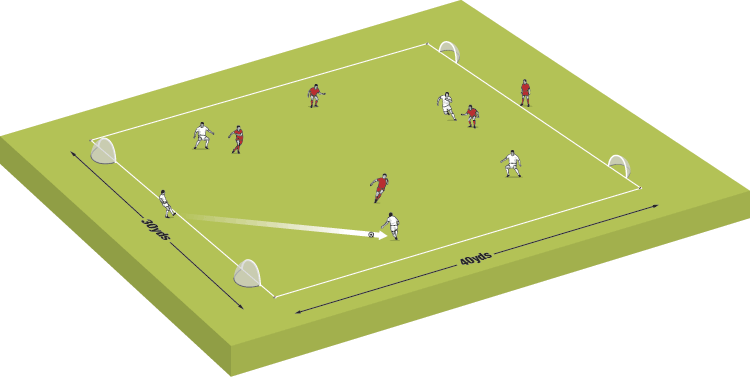
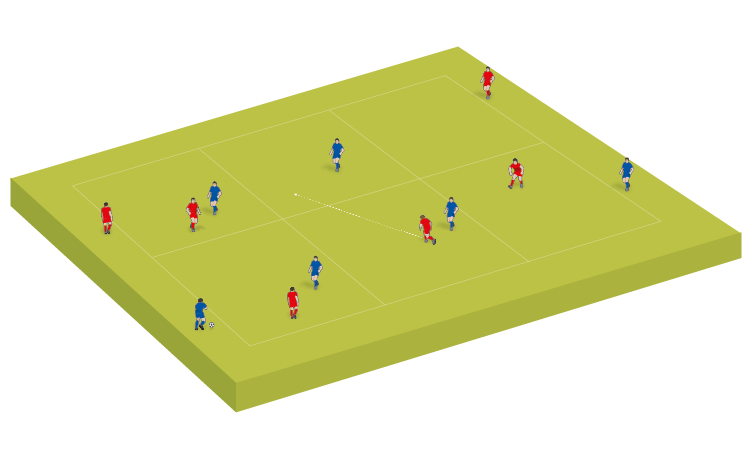
You need balls, bibs, cones and two mini goals at each end of the pitch. Set up an area 40 x 30 yards. We used 10 players in the session.
How to do it
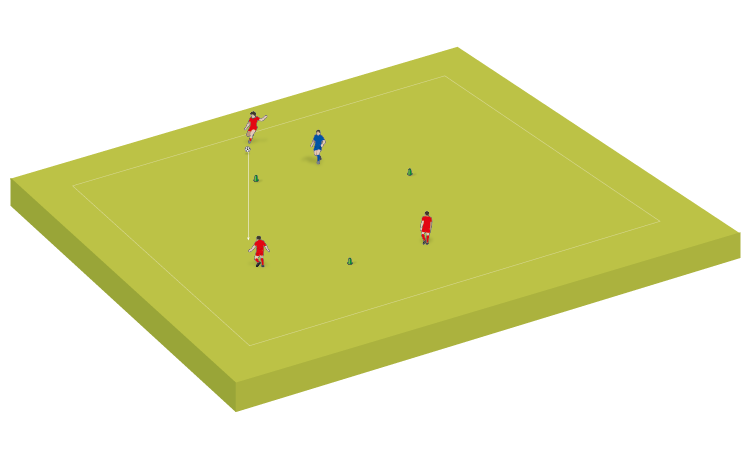
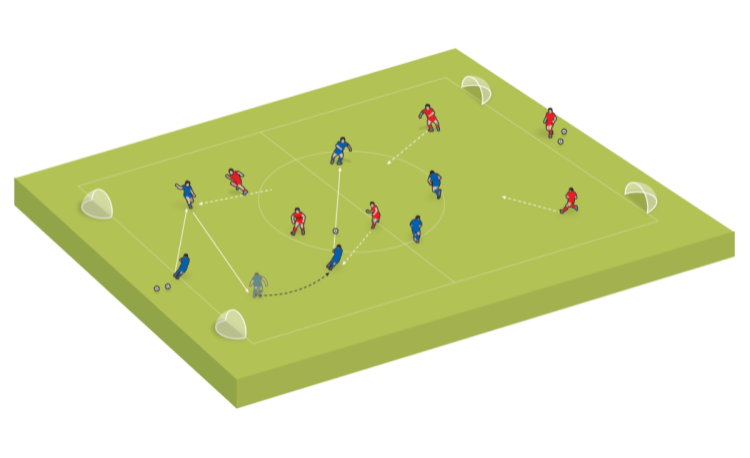
Split your players into two teams of 5. Each team has one player start as the anchor player who stands off the pitch between the two mini goals. Teams score into the mini goals and the game is directional. If the team cannot go forward they pass back to the anchor player who dribbles onto the pitch – the player who passed the ball must become the anchor player. Play for 10 minutes.
Technique
Reading the game is important so players get the most out of using the anchor player. Good passing, receiving and movement.
- 1. Play starts with the anchor player who stands off pitch between the two mini goals at either end of the pitch
- 2. Set teams up so they are pressing tight and forcing play away from the goal bringing the anchor man into play
Related Files
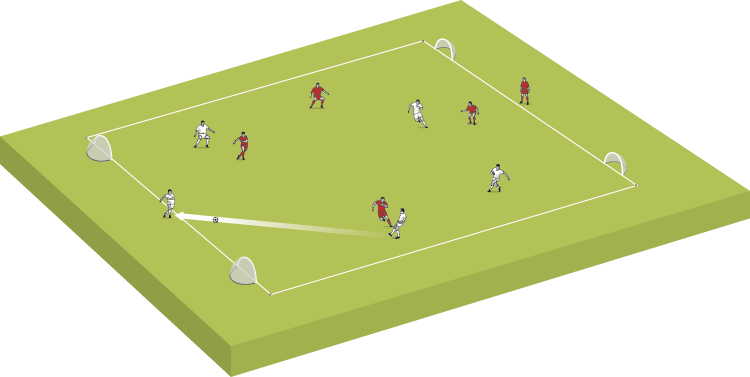
- 3. When the ball is passed back to the anchor man the player who passed the ball switches and takes over the anchor role
- 4. The anchor man can see the whole pitch so should know where the areas of space are and where the free players are
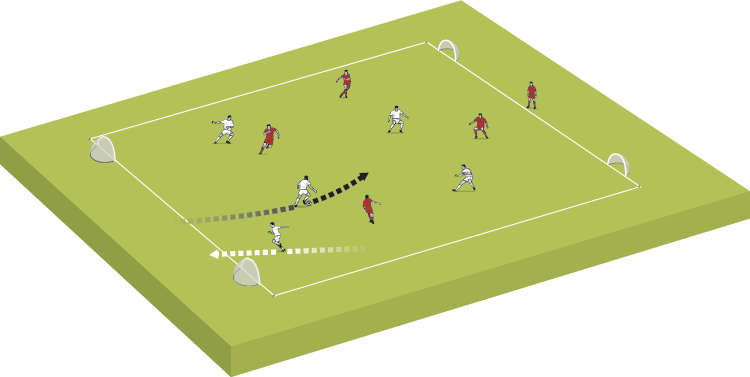
- 5. Here the space is in the middle and as the anchor man dribbles into that space options to pass open up around him

Dave Clarke
Latest Issue

Subscribe Today
Soccer Drills
Subscriber Testimonials

Gerald Kearney, Downtown Las Vegas Soccer Club

Paul Butler, Florida, USA

Rick Shields, Springboro, USA

Tony Green, Pierrefonds Titans, Quebec, Canada
Subscribe Today
Coaches Testimonials
Gerald Kearney, Downtown Las Vegas Soccer Club
Paul Butler, Florida, USA
Rick Shields, Springboro, USA
Tony Green, Pierrefonds Titans, Quebec, Canada
Latest Issue
Soccer Drills

Discover the simple way to become a more effective, more successful soccer coach
In a recent survey 89% of subscribers said Soccer Coach Weekly makes them more confident, 91% said Soccer Coach Weekly makes them a more effective coach and 93% said Soccer Coach Weekly makes them more inspired.
*includes 3 coaching manuals
Get Weekly Inspiration
All the latest techniques and approaches


Soccer Coach Weekly offers proven and easy to use soccer drills, coaching sessions, practice plans, small-sided games, warm-ups, training tips and advice.
We've been at the cutting edge of soccer coaching since we launched in 2007, creating resources for the grassroots youth coach, following best practice from around the world and insights from the professional game.
