
 close
close


 LOGIN
LOGINFlexible practices - an example
Tweaking a core idea can open up many possibilities when it comes to session planning. Here’s an example...
Core practice
WHY USE IT
This is the ‘core practice’. Any time this practice is to be used for a specific topic, the core practice should be used first, before the changes are made to it. This is so the players become active immediately.
SET UP
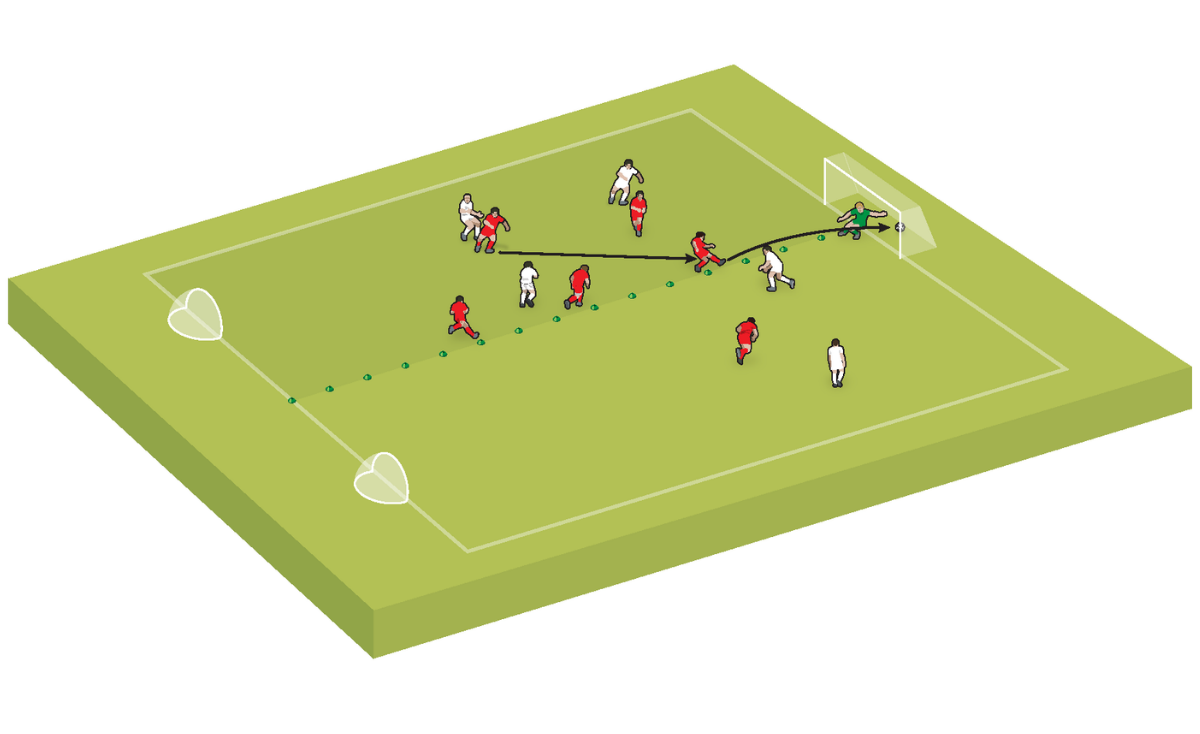
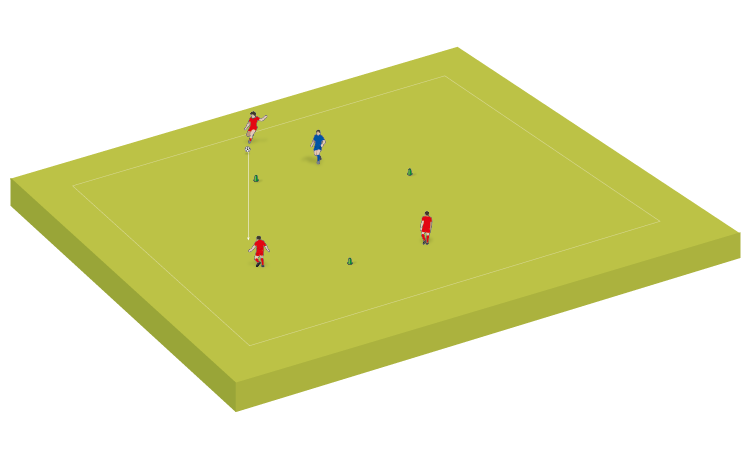
Set up an area suitable for the number, age and ability of your players. Split players into two teams – within those teams, players work in pairs, lining up next to their goal, with one player on each side. One of the players has a ball.
HOW TO PLAY
One pair enters the area to attack their opponent’s goal. Once a player has tried a shot, that attack is over; there are no rebounds. If the defenders win the ball they become attackers and attempt to score. At the end of each attack, whether a player has scored or not, a pair from the other team enters and attacks the opposite goal. The pair who have just finished attacking become defenders and look to prevent the other pair from scoring. The practice continues thus – pairs enter as attackers, then become defenders and finally leave the pitch and rejoin the line.
COACHING POINTS
- Positive play: always travel forward and do not turn back.
- Decisive decision making: When to retain the ball and when to pass it?
- Supporting player: consider where your run takes you.
Be a more effective, more successful youth soccer coach
- Win more games, without sacrificing the crucial element of fun
- Develop every player, regardless of vast differences in ability
- Run a respected, professional programme - even with a full-time job and limited time
Subscribe for full access
Or register and unlock 2 free articles,
receive our weekly newsletter, and
get a FREE coaching e-book.
Or if you are already a subscriber login for full access.

Carl Wild
Latest Issue

Subscribe Today
Soccer Drills & Games
Subscriber Testimonials
Gerald Kearney, Downtown Las Vegas Soccer Club

Paul Butler, Florida, USA

Rick Shields, Springboro, USA

Tony Green, Pierrefonds Titans, Quebec, Canada
Subscribe Today
Coaches Testimonials
Gerald Kearney, Downtown Las Vegas Soccer Club
Paul Butler, Florida, USA
Rick Shields, Springboro, USA
Tony Green, Pierrefonds Titans, Quebec, Canada
Latest Issue
Soccer Drills & Games

Discover the simple way to become a more effective, more successful soccer coach
In a recent survey 89% of subscribers said Soccer Coach Weekly makes them more confident, 91% said Soccer Coach Weekly makes them a more effective coach and 93% said Soccer Coach Weekly makes them more inspired.
*includes 3 coaching manuals
Get Weekly Inspiration
All the latest techniques and approaches


Soccer Coach Weekly offers proven and easy to use soccer drills, coaching sessions, practice plans, small-sided games, warm-ups, training tips and advice.
We've been at the cutting edge of soccer coaching since we launched in 2007, creating resources for the grassroots youth coach, following best practice from around the world and insights from the professional game.
